
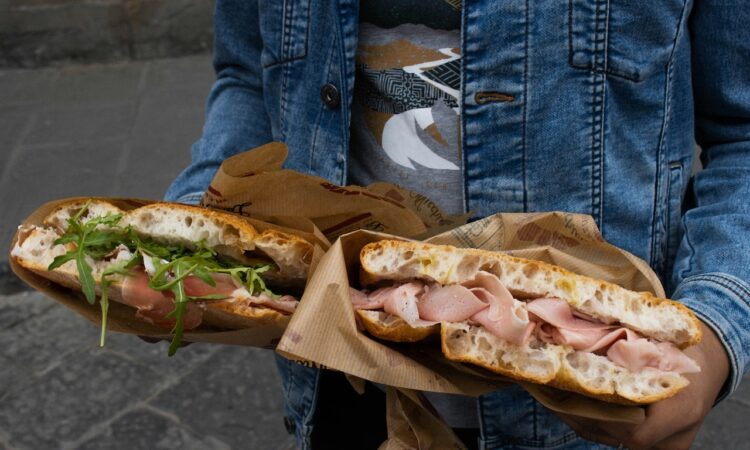
The Florence City Council has approved a five-year extension of the so-called UNESCO Regulation, prolonging its validity until 2031 and introducing new restrictions on economic activities in the historic centre. The measure had already been approved and discussed by the city’s executive (Giunta) in March and now becomes fully operational following the Council’s final vote.
The measure confirms the ban on new food and beverage businesses across the UNESCO area, while expanding the number of streets subject to stricter protection and tightening rules on specific types of activities. City officials said the changes are aimed at preserving the liveability of the centre and maintaining a more balanced commercial mix.
More streets under protection
With the latest update, the number of streets subject to enhanced protection rises to 71, nine more than before.
Among the newly added locations, some will allow only high-end or “qualifying” commercial activities—such as fashion retail, art galleries, bookshops and traditional crafts—while others will be subject to a ban on the transfer of existing food-related licences within the UNESCO area.
The updated lists now include streets such as Via dei Gondi, Via Vacchereccia and Sdrucciolo dei Pitti among those reserved for specific high-quality retail, and Via Palazzuolo, Corso dei Tintori, Borgo dei Greci and Via dei Benci among those where food and beverage licences cannot be relocated.
Ban confirmed on new food businesses
The regulation maintains one of its central provisions: no new food and beverage activities can open in the historic centre, including transfers from other locations within the UNESCO zone.
The restriction also applies to businesses operating under agricultural entrepreneur status, extending the scope of the ban compared to previous versions of the regulation.
In several of the city’s main squares—including Piazza del Duomo, Piazza della Signoria and Piazza Santa Croce—existing food-related businesses cannot relocate into new premises, further limiting the spread of such activities in the most heavily visited areas.
New rules on cooking schools and ATMs
Among the main changes approved by the Council are new limits on cooking schools and standalone ATM machines.
New cooking schools will be restricted in the historic centre, while the installation of new ATMs outside commercial premises will be prohibited. The measures target activities seen as increasingly oriented towards short-term tourism rather than local residents.
Another new rule concerns small premises: businesses offering on-site consumption without table service will not be allowed to open if the usable space is below 100 square metres.
Limits on expansion of existing venues
The regulation also introduces stricter limits on the expansion of existing food and beverage businesses.
Any increase in floor space will be allowed only for service areas such as kitchens, bathrooms or technical rooms, and not for customer-facing areas. The aim is to prevent further growth in capacity of already established venues in a densely used urban environment.
A longer regulatory framework
The renewed regulation will now last five years instead of three, providing a longer planning horizon for both the administration and businesses.
The process leading to the renewal involved the city’s economic activities and tourism department, coordination with the Tuscany regional government, and notification to the heritage authority (Soprintendenza), which oversees cultural preservation in Italy.
Focus on residents and local economy
Mayor Sara Funaro said the updated regulation represents a targeted intervention to protect both the quality of life in the city centre and its economic structure.
According to the administration, the measures are intended to respond to long-standing concerns from residents about the concentration of tourist-oriented businesses and the decline of neighbourhood services.
Economic development councillor Jacopo Vicini said the regulation remains a key tool to balance tourism with everyday life, support local shops and preserve traditional commercial activities.
What it means for Florence
Florence’s historic centre has been a UNESCO World Heritage Site since 1982, and the regulation is one of the main local instruments used to manage the impact of mass tourism.
By extending and tightening these rules, the city is continuing a policy direction that prioritises limiting the expansion of food-related businesses and encouraging a more diverse retail environment.
For residents, the changes may help preserve access to everyday services and reduce pressure from tourism-related activities. For businesses, the framework sets clearer and stricter conditions for operating within one of Italy’s most regulated historic centres.
(Cover photo: M Polinder via Unsplash)
❤️ Support Florence Daily News
If you liked this article, please consider supporting Florence Daily News.
We are an independent news site, free from paywalls and intrusive ads, committed to providing clear and reliable reporting on Florence and Tuscany for everyone.
Your support — whether a one-time gift or a regular contribution — helps us stay independent and keep telling the stories that matter.
Donate securely via Stripe below.
Make a one-time donation
Make a monthly donation
Make a yearly donation
Choose an amount
Or enter a custom amount
Your contribution is appreciated.
Your contribution is appreciated.
Your contribution is appreciated.
Discover more from Florence Daily News
Subscribe to get the latest posts sent to your email.