
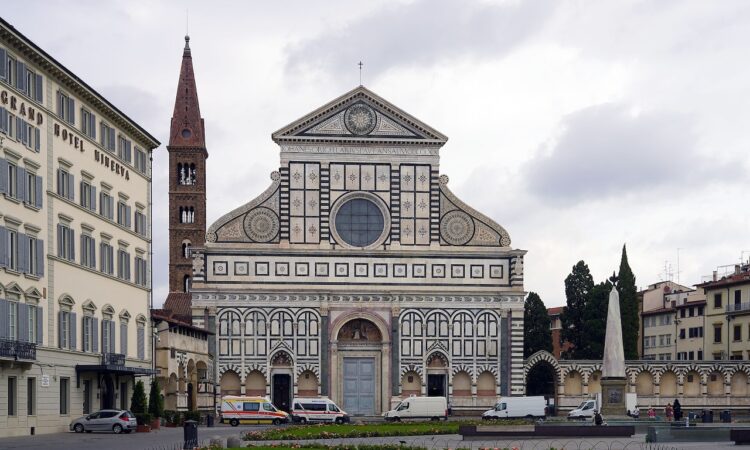
A three-year conservation project on Masaccio’s Trinity has been completed at the Basilica of Santa Maria Novella in Florence, with restorers carrying out structural work designed to protect the fresco from future damage.
The intervention focused on stabilising the famous early Renaissance masterpiece by separating its support structure from the wall behind it. According to conservators, an old crack in the masonry had caused slight movements in the wall over time. Combined with changes in temperature and humidity, these movements risked creating new fractures in the artwork.
A gap created between the fresco and the wall
Restorers created a small gap between the fresco’s wooden framework and the surrounding wall so the structure can expand and contract independently.
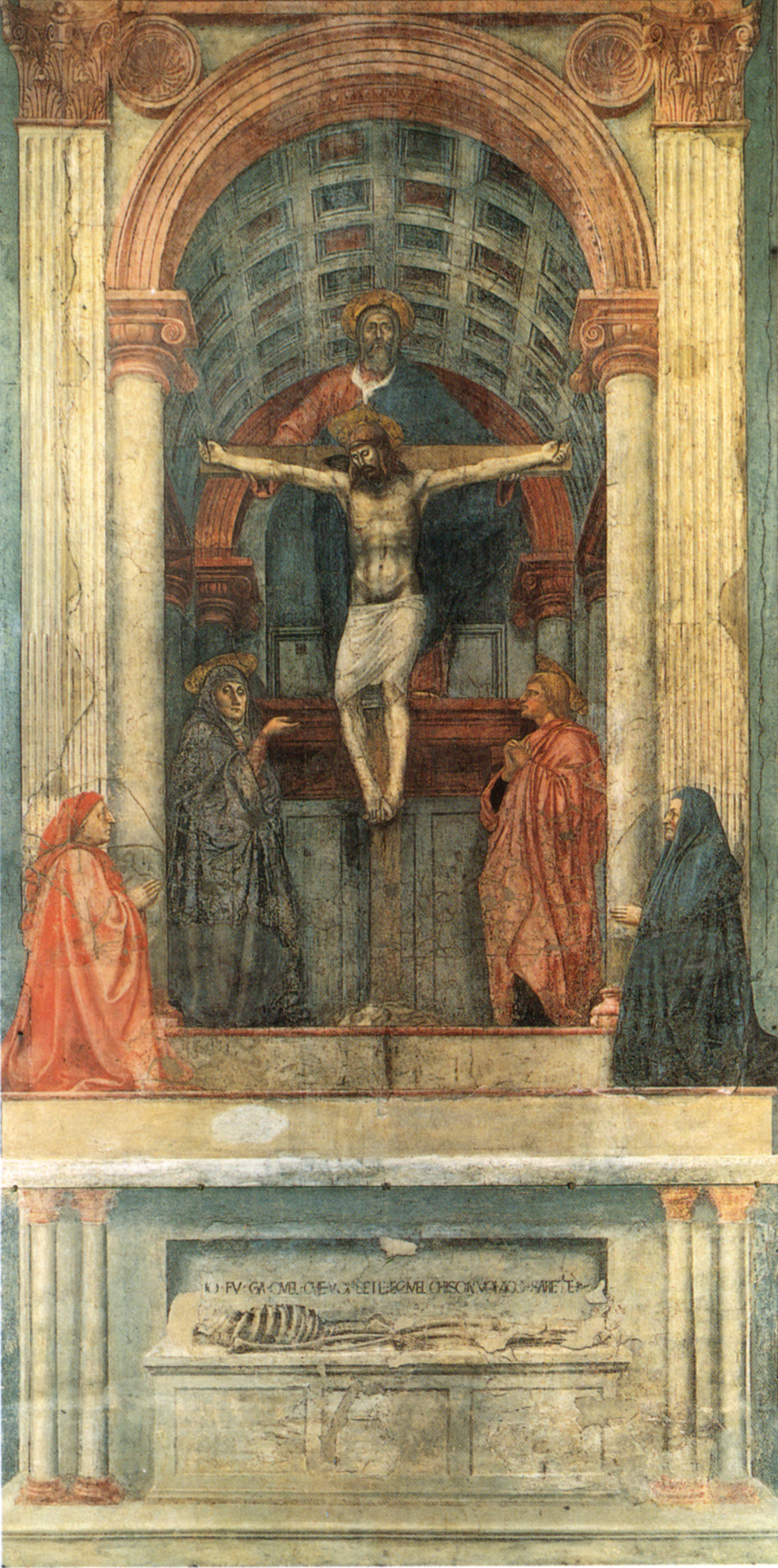
Simone Vettori, one of the restorers involved in the project, explained that the tension between the wooden support and the masonry had caused vertical cracks to appear in the central section of the painting. The intervention, he said, now allows the artwork to “breathe”.
Frate Manuel Russo, speaking on behalf of the Opera di Santa Maria Novella, described seeing the fresco uncovered again after three years of work as an emotional moment.
One of the defining works of the Renaissance
The fresco, painted by Masaccio between 1424 and 1425, is considered one of the defining works of early Renaissance painting and among the first major uses of linear perspective in Western art.
The work has undergone several transformations over the centuries. In the 16th century, Giorgio Vasari covered the fresco with an altar during renovations to the church. It was rediscovered only in the mid-19th century and later detached from the wall by restorer Gaetano Bianchi, who mounted it on a support made of reeds, plaster and wood.
In the 1950s, the fresco was returned to its current location in the western nave of the basilica.
State-funded conservation work
Antonella Ranaldi, superintendent for archaeology, fine arts and landscape for the Florence area, described the fresco as one of the clearest examples of Masaccio’s revolutionary approach to painting. She noted that, together with the Brancacci Chapel in the Church of Santa Maria del Carmine, the work shows the young artist introducing realism, physical presence and sculptural depth into Renaissance art.
The project was funded by Italy’s Interior Ministry through the Fondo Edifici di Culto, the state body that manages and preserves many historic religious buildings across the country.
❤️ Support Florence Daily News
If you liked this article, please consider supporting Florence Daily News.
We are an independent news site, free from paywalls and intrusive ads, committed to providing clear and reliable reporting on Florence and Tuscany for everyone.
Your support — whether a one-time gift or a regular contribution — helps us stay independent and keep telling the stories that matter.
Donate securely via Stripe below.
Make a one-time donation
Make a monthly donation
Make a yearly donation
Choose an amount
Or enter a custom amount
Your contribution is appreciated.
Your contribution is appreciated.
Your contribution is appreciated.
Discover more from Florence Daily News
Subscribe to get the latest posts sent to your email.