
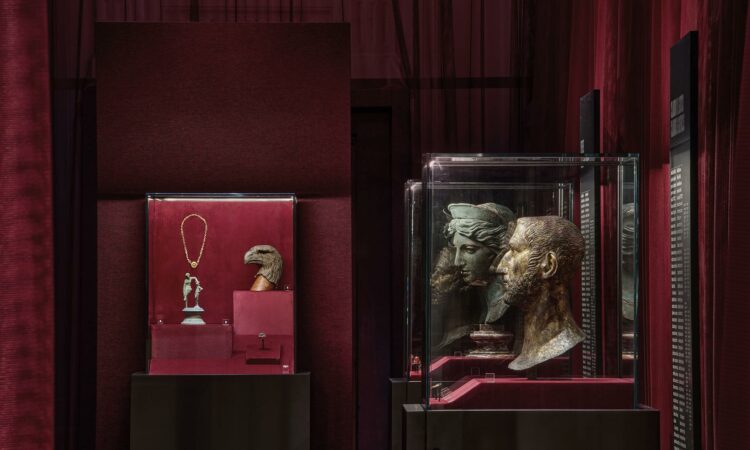
Until April 9, 2026, the National Archaeological Museum of Florence is hosting Icons of Power and Beauty, an exhibition exploring how images were used to convey and reinforce imperial authority in the Roman Empire during the third century AD.
Curated by Daniele Federico Maras and Barbara Arbeid, the museum’s director and curator, the exhibition gathers twenty ancient objects of symbolic significance, including four life-sized gilded bronze heads: three portraits of emperors from the Museo di Santa Giulia in Brescia and a Venus head from Florence’s historic Medici collections, recently restored by the Opificio delle Pietre Dure.
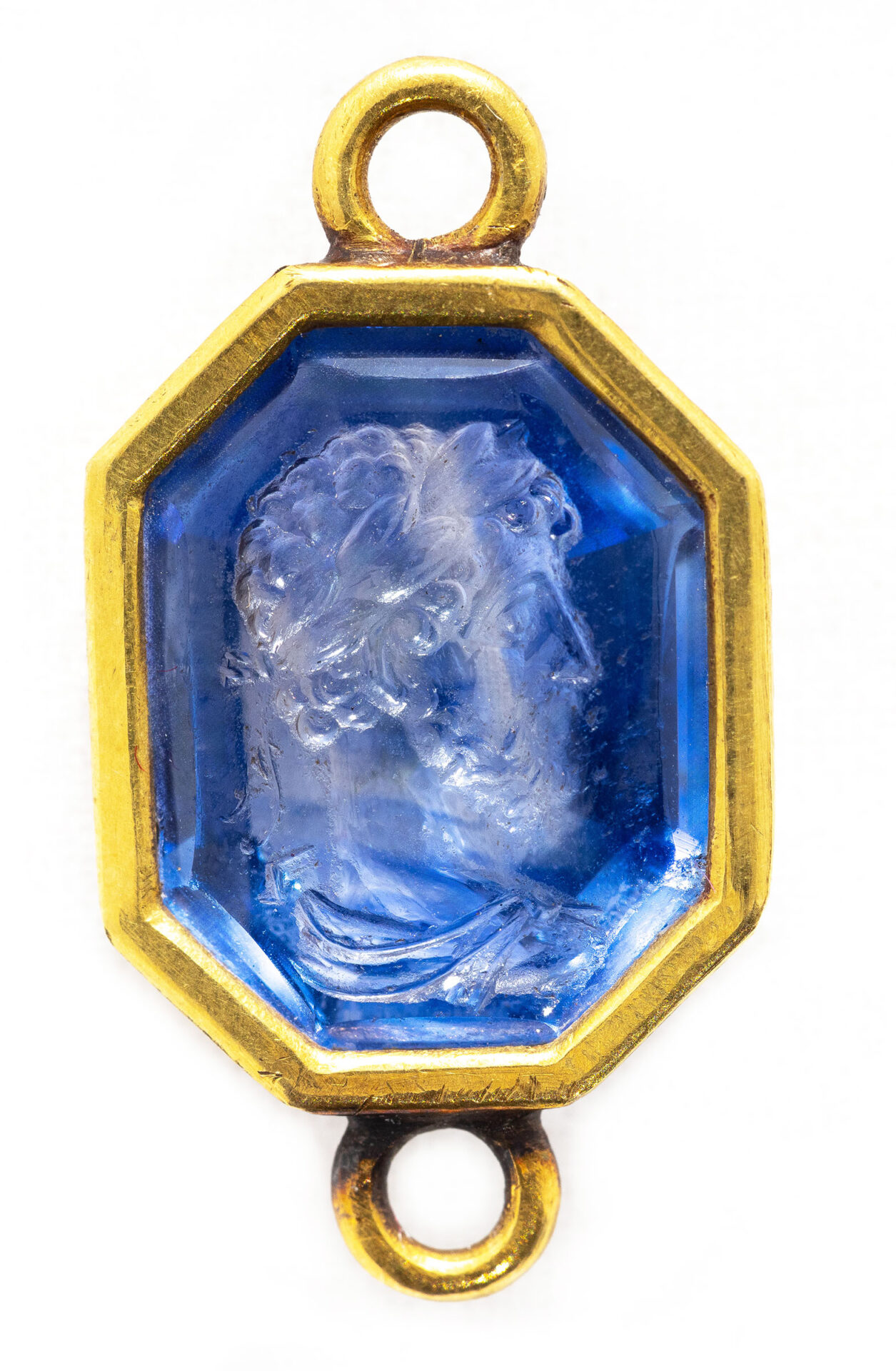
The display also features coins and medallions—aurei, sesterces, denarii and asses—that once carried the emperor’s image across the empire as a mark of legitimacy and continuity, together with gems, gold rings and necklaces intended for private use but equally charged with meaning. Among the highlights is a bronze eagle’s head, a symbol of Jupiter’s majesty.
The initiative forms part of a broader institutional collaboration between the Fondazione Brescia Musei and the National Archaeological Museum of Florence, under the patronage of the Directorate-General for Museums of Italy’s Ministry of Culture. It accompanies the twin exhibition Victoria Mater. L’idolo e l’icona in Brescia’s Roman Capitolium, where artist Francesco Vezzoli has created a contemporary installation pairing Brescia’s Winged Victory with the Idolino di Pesaro on loan from Florence.
The joint project, titled Idoli di bronzo (“Bronze Idols”), celebrates the bicentenary of the discovery of the Capitolium’s bronze treasure, where the Winged Victory was found in 1826.
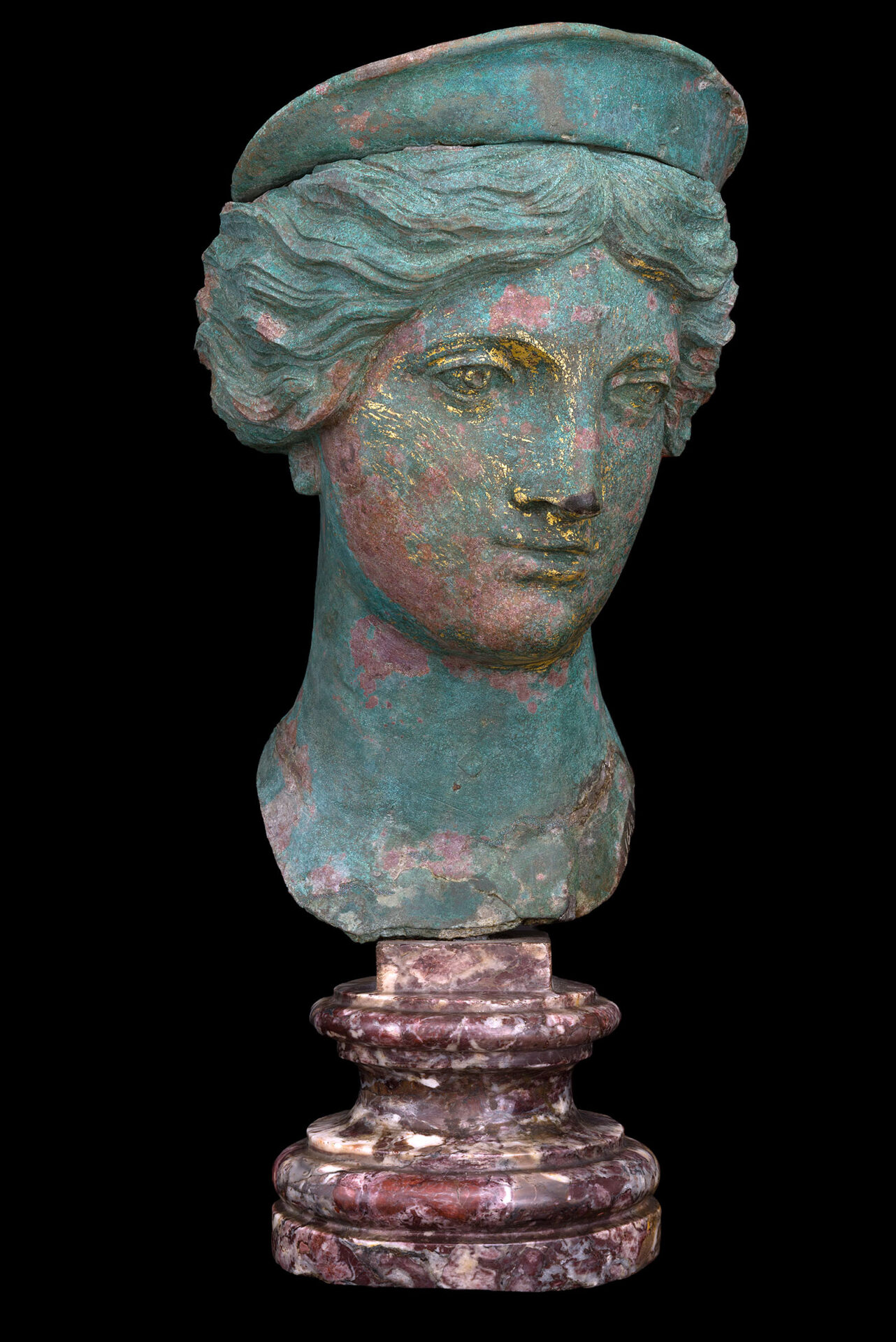
(Ancient Grand Ducal collections, National Archaeological Museum of Florence, inv. no. 1643).
Photo: © Italian Ministry of Culture, Opificio delle Pietre Dure, Photographic and Conservation Archive.
In Florence, the exhibition traces how the imperial portrait evolved in a period of political tension and succession crises. The heads of Septimius Severus, Probus and Claudius II Gothicus from Brescia exemplify the aesthetics of power: the emperors are depicted as mature, reflective and commanding, their distinctive hairstyles and beards reinforcing their recognisable image across the empire.
The show also highlights the role of women in shaping imperial imagery, such as Julia Domna, wife of Septimius Severus, whose coins depict her with elaborate hairstyles that became symbols of authority and influenced fashion for decades.
Beyond portraits, visitors will find other emblems of imperial identity—objects linked to religion, military command, prosperity and the protection of the arts—illustrating how personal charisma and divine favour combined to sustain the image of rule.
The exhibition design was developed by the Florence-based studio Deferrari+Modesti, with visual identity by Tassinari/Vetta. The catalogue, published by Allemandi, includes essays by scholars from across Italy and new photographs by Alessandra Chemollo.
(Cover photo by Alessandra Chemollo)
🎄 Support Florence Daily News this holiday season
If you value our work, please consider supporting Florence Daily News this Christmas.
We’re an independent news site — free from paywalls and intrusive ads — committed to offering clear and reliable reporting on Florence and Tuscany for everyone.
Your contribution helps us remain independent and continue telling the stories that matter.
As a small thank-you, supporters this holiday season will receive an original photograph of Florence — a simple, meaningful gift to celebrate the city we all love.
🎁 Donate securely via Stripe below and make your gift count for good journalism in Tuscany.
Make a one-time donation
Make a monthly donation
Make a yearly donation
Choose an amount
Or enter a custom amount
Your contribution is appreciated.
Your contribution is appreciated.
Your contribution is appreciated.
Discover more from Florence Daily News
Subscribe to get the latest posts sent to your email.