
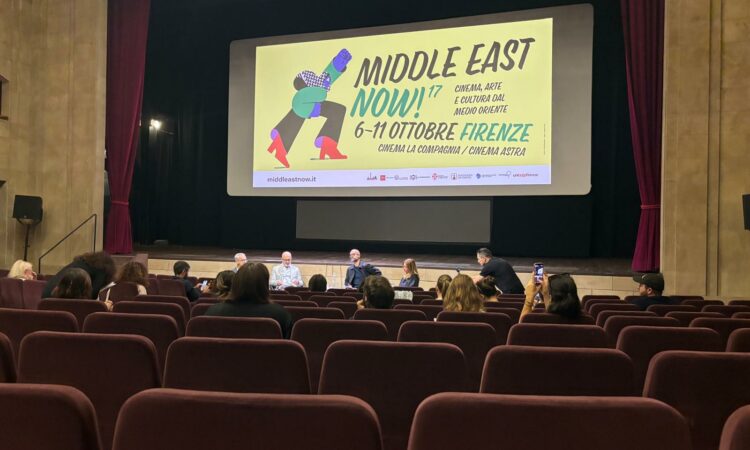
For six days, in Florence, the Middle East will be more than a news story.
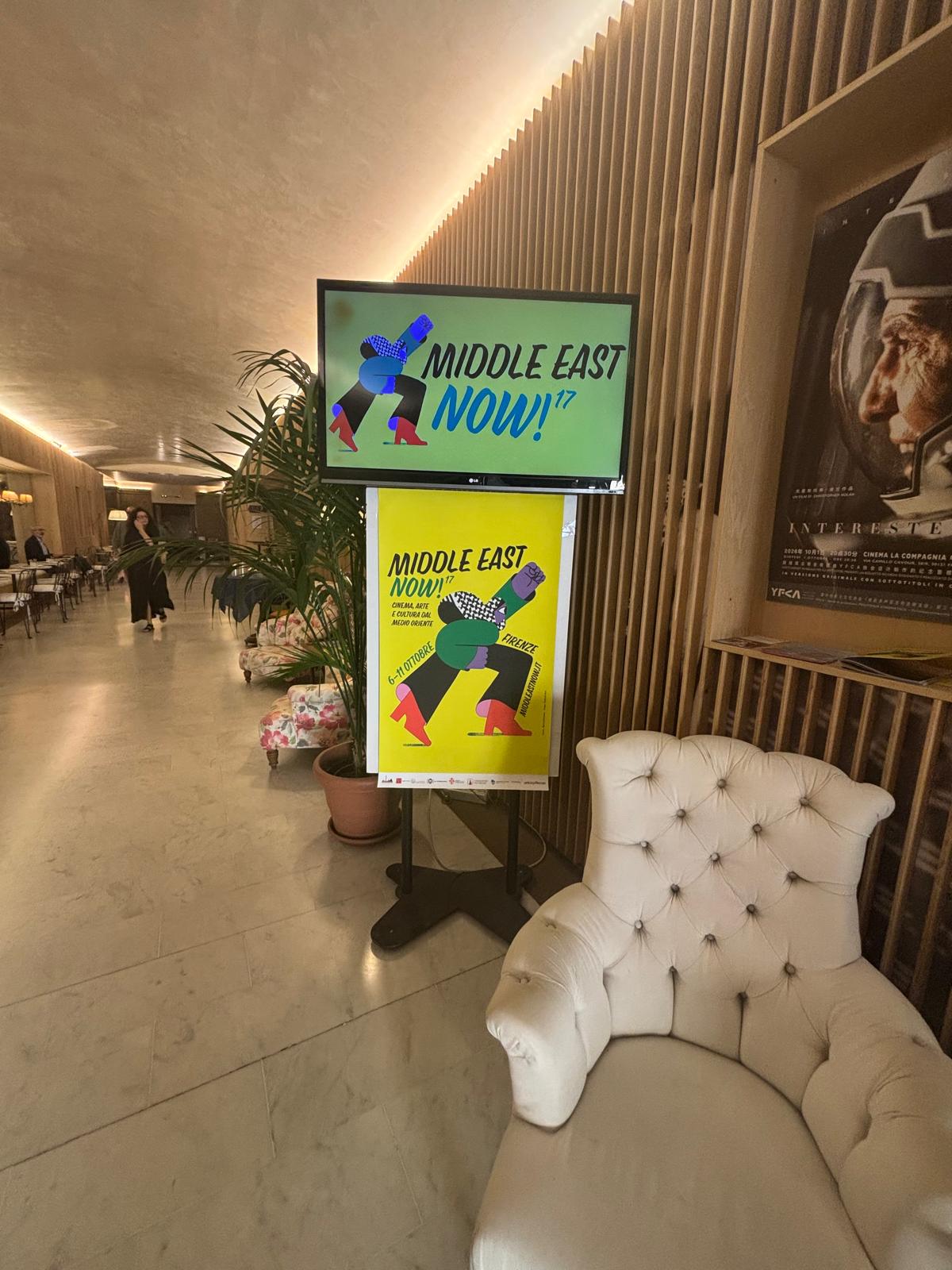
From October 6 to 11, Middle East Now returns for its seventeenth edition with 33 films and documentaries from countries and territories marked, in different ways, by war, migration and instability. The festival also opens this year’s edition of 50 Giorni di Cinema a Firenze, turning Cinema La Compagnia, Cinema Astra and other places across the city into temporary points of observation on a region we are accustomed to seeing mostly through quick images: a border, a demonstration, a bombing, a line of people.
Cinema moves more slowly.
This year’s theme, Radical Movements, begins with the idea of movement. Not only the movement of people crossing borders or forced to leave their homes, but also collective, personal and artistic movement. These are, as was said during the festival’s press conference, also “silent movements”: changes that do not necessarily produce spectacular images, but can alter a life.
The festival follows last year’s theme, Radical Imagination, and seems to shift the question: not only what can we imagine, but what happens when someone moves — out of a place, within a society, against a condition that once seemed immovable.
The programme travels through Iran, Palestine, Afghanistan, Iraq, Lebanon, Sudan, Syria, Turkey, Saudi Arabia and other countries. Iran occupies a particular place, with films such as A Fox Under a Pink Moon, made in part from images recorded over several years on the phone of a young Afghan artist, and Women of Revolution, which traces four decades of women’s political struggles in Iran. Palestine, meanwhile, returns through stories of everyday life, families, exile and humour, resisting the reduction of the region to the single language of war.
It is precisely this distance from simplification that Lisa Chiari, who directs the festival with Roberto Ruta, emphasised during the press conference. At a time when it may seem more urgent than ever to spend two hours watching a film about the Middle East, she observed, filmmakers do not necessarily ask us to take sides. They ask us to enter their everyday lives and understand their complexity.
The festival, moreover, does not end when the lights come back on. There will be photography exhibitions, discussions, a Migra Tour, a ceramics workshop whose proceeds will go to families in Gaza, and Come Back Home, featuring a Palestinian actor. The exhibition What Moves Us, with photographs by Turkish artist Erdem Varol, Tunisian photographer Skander Khlif and Egyptian photographer Ebrahim Bahaa-Eldin, will bring the question of movement into streets, urban landscapes and the memories of those who leave and those who remain.
Students will also be able to attend the festival free of charge, thanks to a donation from Fondazione CR Firenze.
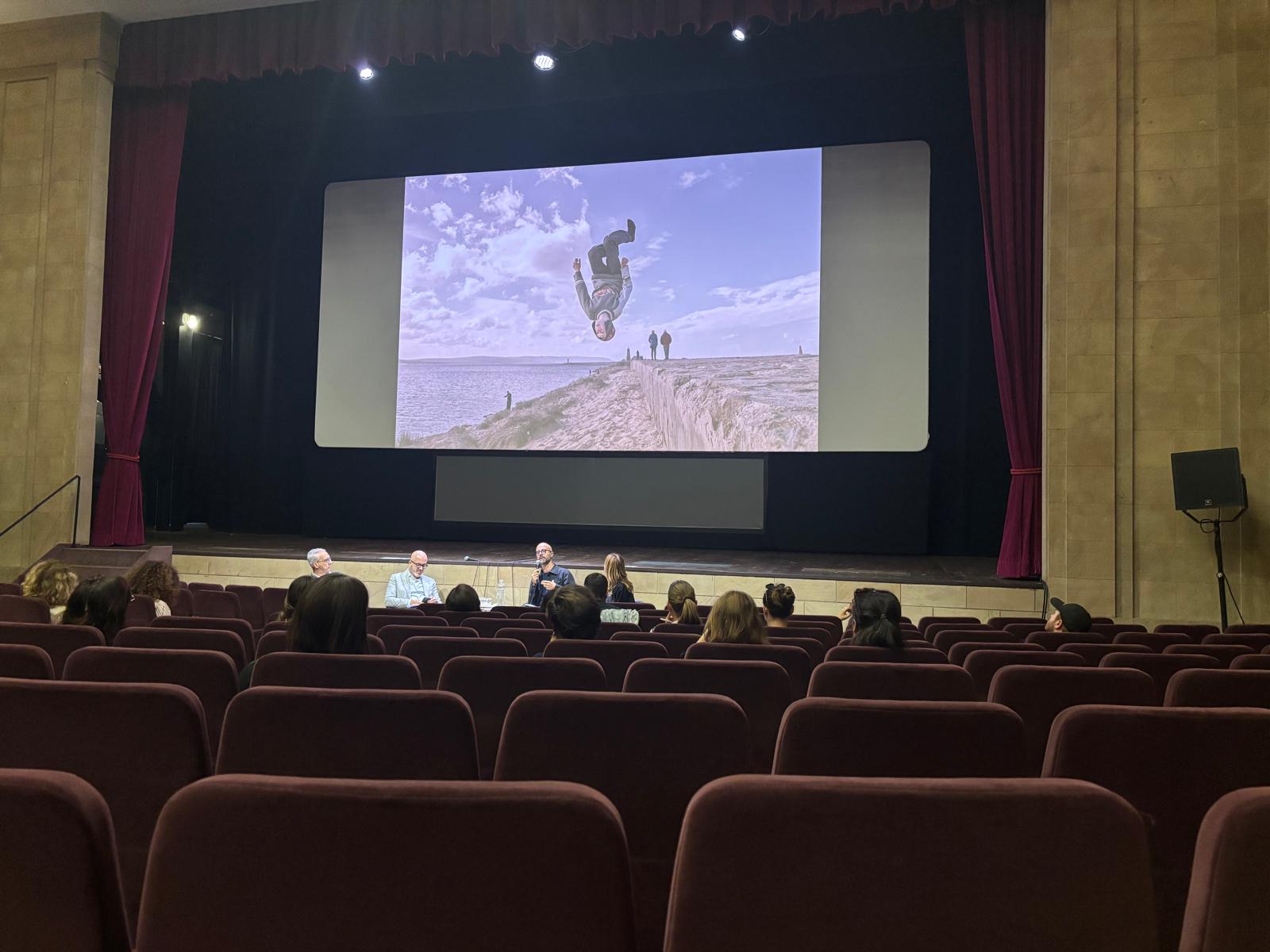
During the press conference, Florence’s councillor for culture observed that “cinema and stories inform, but rather they involve”; the regional councillor for culture described the festival as one of the ways of explaining a complex environment.
Perhaps cinema still retains the ability to slow down our gaze. Among images of war that follow one another until they become background, a film gives time back to faces, houses and voices. The Middle East is no longer only a distance or a news story, but an everyday life taking shape.
The most radical movement, then, is the slow and almost invisible one that a story makes inside the person watching it.
❤️ Support Florence Daily News
If you liked this article, please consider supporting Florence Daily News.
We are an independent news site, free from paywalls and intrusive ads, committed to providing clear and reliable reporting on Florence and Tuscany for everyone.
Your support — whether a one-time gift or a regular contribution — helps us stay independent and keep telling the stories that matter.
Donate securely via Stripe below.
Make a one-time donation
Make a monthly donation
Make a yearly donation
Choose an amount
Or enter a custom amount
Your contribution is appreciated.
Your contribution is appreciated.
Your contribution is appreciated.

Eirini Lavrentiadou is an actress and singer, born in Thessaloniki in 1992. She lives in Florence, where she trained at the city’s Theatre Academy and the Fiesole School of Music. She has performed in classical Greek and European plays, worked with international directors and companies, and appeared in concerts ranging from opera to jazz. She contributes to Florence Daily News as a writer.
Discover more from Florence Daily News
Subscribe to get the latest posts sent to your email.