
A previously unknown musical manuscript containing 16 bars composed by Giacomo Puccini could change the established chronology of Turandot, the Italian composer’s final, unfinished opera.
The manuscript, dated 13 May 1919, was discovered by journalist and writer Maurizio Sessa, who examines its significance in a new book, L’orologio cinese di Turandot. Lo spartito inedito di Puccini tra Firenze e Capalbio (The Chinese Clock of Turandot: Puccini’s Unpublished Score Between Florence and Capalbio), published by Medicea Edizioni.
The discovery is particularly relevant in 2026, which marks the centenary of the opera’s posthumous premiere at Milan’s Teatro alla Scala on 25 April 1926.
A manuscript that predates the accepted chronology
According to Sessa, the 16 bars found in the manuscript were later incorporated into the children’s chorus in Turandot.
The document bears a date more than a year earlier than the period traditionally associated with the beginning of Puccini’s work on the opera, generally placed in the spring or summer of 1920.
The finding suggests that Puccini, who was born in Lucca in Tuscany in 1858, had already begun developing musical ideas that would eventually become part of Turandot in 1919.
Although the manuscript does not necessarily establish when Puccini began composing the opera as a whole, it provides evidence that some of its musical material existed earlier than previously thought.
The connection with China
The manuscript also reveals an unusual connection between Puccini and a former Italian naval officer, Olinto Ulisse Cecconi, to whom the composer gave the sheet of music.
Cecconi had commanded a ship in Chinese waters in 1900. According to the account presented in Sessa’s book, he may have encountered the melody through a Chinese musical clock or music box.
This connection offers another perspective on Puccini’s interest in Chinese musical themes, which became an important element of Turandot, an opera set in an imagined imperial China.
From Florence to the Tuscan coast
Sessa’s book also explores Puccini’s relationship with Florence and southern Tuscany during the final years of his life.
In 1919, the composer acquired Torre della Tagliata, a historic Spanish coastal watchtower at Ansedonia, near Orbetello in the province of Grosseto. The tower stands on the Maremma coast, an area of southern Tuscany where Puccini spent time during the later part of his career.
The book traces the composer’s movements and personal connections between Florence, Capalbio and the surrounding coastal landscape, placing the newly identified manuscript within the broader cultural and biographical context of the period.
A discovery a century after the premiere
Puccini died in Brussels on 29 November 1924, leaving Turandot unfinished. The opera was subsequently completed by composer Franco Alfano using Puccini’s surviving sketches.
Its premiere took place at La Scala in April 1926, conducted by Arturo Toscanini, who famously ended the first performance at the point where Puccini’s completed music stopped.
A century later, the manuscript described by Sessa adds a new element to the history of the opera’s creation.
The book was presented in Milan at the headquarters of the Amici del Loggione della Scala, an association connected with the city’s operatic tradition.
The discovery does not alter the finished score of Turandot, but it raises new questions about how early Puccini began developing the musical ideas behind his final work.
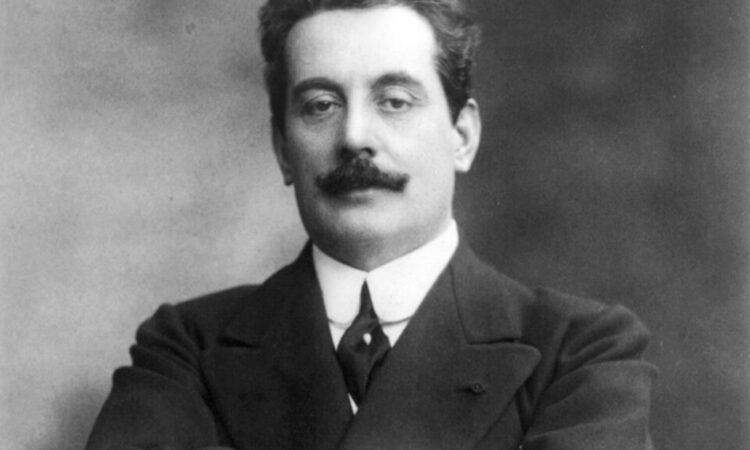
(Cover photo: copyrighted by A. Dupont, New York. – Prints and Photographs Division Library of the Congress – Public domain)
❤️ Support Florence Daily News
If you liked this article, please consider supporting Florence Daily News.
We are an independent news site, free from paywalls and intrusive ads, committed to providing clear and reliable reporting on Florence and Tuscany for everyone.
Your support — whether a one-time gift or a regular contribution — helps us stay independent and keep telling the stories that matter.
Donate securely via Stripe below.
Make a one-time donation
Make a monthly donation
Make a yearly donation
Choose an amount
Or enter a custom amount
Your contribution is appreciated.
Your contribution is appreciated.
Your contribution is appreciated.
Discover more from Florence Daily News
Subscribe to get the latest posts sent to your email.