
What started as the discovery of a single apartment listed on Airbnb has become one of Florence’s most sensitive housing controversies.
The story first emerged when Corriere Fiorentino reported that two apartments in via Guelfa, owned by Montedomini, one of Florence’s oldest public welfare institutions, was being advertised for short-term tourist rentals. The finding immediately raised questions about why a public body whose mission is to provide welfare services was using part of its property for tourism rather than social housing.
As journalists and opposition groups looked further into the issue, the case expanded beyond a single apartment. More properties linked to Montedomini were identified on short-term rental platforms, prompting requests for transparency over how the institution had managed its real estate portfolio. Regional authorities also became involved, while Montedomini launched an internal review of the contracts.
The institution later acknowledged that 11 apartments had been used for short-term rentals out of a portfolio of 232 residential properties. Its president, Luigi Frittelli, argued that these represented only a small share of the estate and that the income helped finance care services for elderly residents. He also pointed out that many apartments remain vacant because they require costly renovation before they can be rented.
The controversy, however, extends beyond the number of apartments involved.
Documents dating back to 2015 show that Montedomini’s governing board gradually removed social-use restrictions from part of its housing stock, allowing properties to be managed primarily as revenue-generating assets. The strategy reflected a broader approach aimed at increasing the institution’s financial resources rather than reserving every available apartment for social housing.
That background makes the case particularly awkward for Florence’s current administration. Mayor Sara Funaro has made access to housing one of the city’s flagship policies, introducing some of Italy’s toughest restrictions on new short-term rentals in the UNESCO-listed historic centre. Before becoming mayor, however, she spent ten years in Dario Nardella’s administration as councillor responsible for welfare and housing, and she also previously served as deputy president of Montedomini.
The decisions to change the use of part of Montedomini’s housing stock were taken by the institution’s governing bodies, not by Funaro personally. Nevertheless, they were adopted during the same political administration that is now arguing public policy should reduce the impact of tourist rentals on the city’s housing market.
Following the controversy, Florence City Council has announced plans to work with Montedomini to recover around 30 vacant apartments and convert them into affordable housing with support from the European Investment Bank. The move appears to mark a shift away from the strategy pursued over the past decade.
The Montedomini affair is therefore no longer simply about a handful of tourist apartments. It has become a test of whether the principles Florence applies to private landlords should also govern the management of housing owned by public institutions.
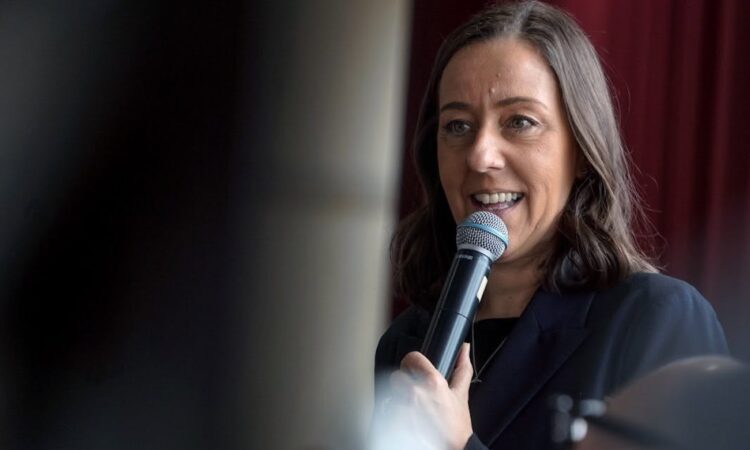
(Cover photo: Sara Funaro via her Facebook page)
❤️ Support Florence Daily News
If you liked this article, please consider supporting Florence Daily News.
We are an independent news site, free from paywalls and intrusive ads, committed to providing clear and reliable reporting on Florence and Tuscany for everyone.
Your support — whether a one-time gift or a regular contribution — helps us stay independent and keep telling the stories that matter.
Donate securely via Stripe below.
Make a one-time donation
Make a monthly donation
Make a yearly donation
Choose an amount
Or enter a custom amount
Your contribution is appreciated.
Your contribution is appreciated.
Your contribution is appreciated.
Discover more from Florence Daily News
Subscribe to get the latest posts sent to your email.