
There is a peculiar habit in modern European politics: when a decision becomes difficult enough, politicians rediscover direct democracy.
Not because constitutions require it, but because referendums offer something irresistibly convenient, a way for governments and parliaments to transfer responsibility for consequential choices to the electorate.
France did it in 2005, when Jacques Chirac submitted the European Constitutional Treaty to a referendum. Nine countries had already ratified it, most through their parliaments. The French rejected it, and a project negotiated by elected governments across Europe was derailed at the ballot box.
David Cameron went further in 2016. There was no constitutional requirement to hold a referendum on Britain’s EU membership. It was a political gamble, intended in no small part to resolve a conflict within his own party. A question of extraordinary economic, constitutional and geopolitical complexity was reduced to a binary choice. The gamble failed, the prime minister resigned, and the country was left to deal with the consequences.
Greece offered another variation in 2015. Alexis Tsipras asked voters to reject the bailout terms proposed by the country’s European creditors. They did, decisively. Yet days later, his government accepted a new bailout under similarly demanding conditions: a reminder that even referendum results cannot make the realities of negotiation disappear.
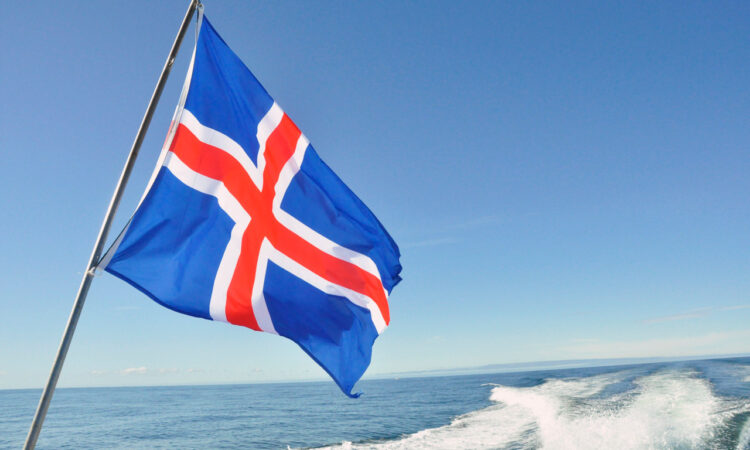
Now Iceland offers an almost perfect illustration of how far this logic can go. Yesterday, Icelanders were not asked to approve an agreement with the European Union. There was no agreement. They were not even asked whether Iceland should join the EU. They were asked whether their government should resume negotiations, whether elected politicians should simply sit down with Europe and discover what terms might be available.
If even the decision to negotiate requires a referendum, what exactly are governments for?
That is the question Europe should be asking.
Representative democracy is not an inferior approximation of direct democracy. It exists for a reason. Citizens elect politicians to study complex questions, negotiate competing interests, make decisions and take responsibility for them. Voters then judge those decisions at the next election.
Referendums can have an important place in a democracy, particularly when constitutional rules require them or when fundamental changes to the political order demand exceptional popular legitimacy. But used as an escape hatch from political responsibility, they can weaken rather than strengthen democracy.
There is something paradoxical about politicians invoking “the will of the people” precisely when they are unwilling to exercise the authority the people entrusted to them.
Leadership means choosing. It means negotiating before asking citizens to judge the result. It means defending a course of action, accepting political risk and, if necessary, losing an election because of it.
A democracy in which elected leaders increasingly ask voters to make the decisions they themselves were elected to make may look more democratic. It may, in fact, be less capable of governing.
And history rarely waits for politics to find its courage.
(Cover photo: Piotr Wojtkowski, public domain)
❤️ Support Florence Daily News
If you liked this article, please consider supporting Florence Daily News.
We are an independent news site, free from paywalls and intrusive ads, committed to providing clear and reliable reporting on Florence and Tuscany for everyone.
Your support — whether a one-time gift or a regular contribution — helps us stay independent and keep telling the stories that matter.
Donate securely via Stripe below.
Make a one-time donation
Make a monthly donation
Make a yearly donation
Choose an amount
Or enter a custom amount
Your contribution is appreciated.
Your contribution is appreciated.
Your contribution is appreciated.

Marco Bastiani is an Italian journalist based in Florence. He is the founder of Florence Daily News, launched in 2011, and has been working in journalism since 1998. Formerly political editor at Il Giornale della Toscana, he later took on senior communication roles in both public and private institutions. A board member of the Tuscan Foundation of the Order of Journalists and a member of ASET, the Tuscan association of food, wine and agri-food journalists, he loves the sea and Greece, and has two children.
Discover more from Florence Daily News
Subscribe to get the latest posts sent to your email.