
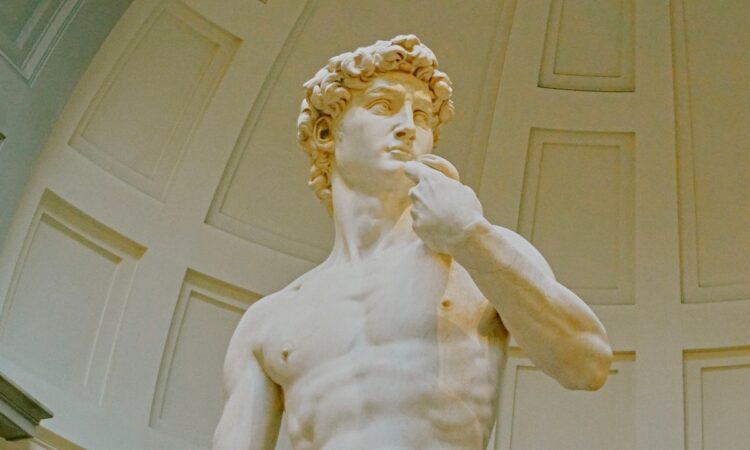
Florence’s main state sculpture museums are entering a new phase with the creation of the unified system bringing together the Galleria dell’Accademia di Firenze and the Musei del Bargello.
The network includes seven venues across the historic centre: the Museo Nazionale del Bargello, the Museo delle Cappelle Medicee, the Museo di Palazzo Davanzati, the Complesso di Orsanmichele, the Museo di Casa Martelli and, once restoration works are completed, the former church of San Procolo.
Together they hold 50,632 works — including sculptures, paintings, tapestries, ivories, jewellery, ceramics, coins, textiles, musical instruments and historic arms — displayed across 18,610 square metres. In 2025, the museums recorded more than 3 million visitors.
The system is now under the direction of Andreina Contessa, who is overseeing a reorganisation aimed at strengthening coordination, improving visitor services and developing thematic connections between collections.
Single tickets and unified opening hours
From 15 March 2026, visitors will be able to purchase two cumulative tickets.
A €38 pass will grant access to all seven museums over 72 hours. A second option, costing €26, will allow entry to the Accademia and the Bargello over 48 hours. A family ticket is also under consideration.
Individual ticket prices changed from 1 February 2026:
- Accademia: from €16 to €20
- Bargello: from €10 to €12
- Palazzo Davanzati: from €6 to €8
- Medici Chapels: from €9 to €11
- Orsanmichele: from €8 to €10
The ticket for Michelangelo’s so-called Secret Room at the Medici Chapels remains €32 and continues to require mandatory booking.
Casa Martelli remains free of charge on its current opening days — Tuesday afternoon and Saturday morning — although a paid ticket is planned in the future.
All tickets will be available through the Ministry of Culture’s official concessionaire, Giunti-Opera Laboratori, via the call centre (+39 055 294883) and online through the museums’ official websites.
From 15 March, all museums will adopt the same opening hours, Tuesday to Sunday, 8.15 a.m. to 6.50 p.m., with the exception of Casa Martelli, where ongoing works may affect access.
Three cross-museum thematic routes
From May 2026, after staff training, the new system will introduce three transversal thematic itineraries linking different sites and collections.
Michelangelo and innovation
The first route focuses on Michelangelo’s technical and symbolic innovations. It connects masterpieces housed at the Bargello — including the Bacchus, Tondo Pitti, David-Apollo and Brutus — with the celebrated David, the Prisoners, St Matthew and the Pietà of Palestrina at the Accademia.
The itinerary concludes at the Medici Chapels, in the New Sacristy of San Lorenzo, where Michelangelo integrated sculpture and architecture in the tombs of Giuliano and Lorenzo de’ Medici.
Florence and its symbols
The second route examines civic identity through heraldry, patron saints and allegorical imagery. It links Orsanmichele, historically associated with Florence’s guilds, to works at the Bargello and the Accademia, offering visitors a broader understanding of how art shaped the city’s political and religious self-representation.
The art of detail
The third itinerary explores clothing, textiles and decorative arts from the Middle Ages to the early modern period. It connects works at the Accademia and Bargello with the domestic settings of Palazzo Davanzati and Casa Martelli, highlighting how dress and material culture reflected social identity and international exchange.
Casa Martelli: family coat of arms returns home
A significant symbolic moment in the reorganisation is the relocation of the monumental Martelli family coat of arms to Casa Martelli, where it now crowns the main staircase.
The 1.93-metre-high polychrome stone sculpture, depicting a shield with a golden griffin on a red field, had been displayed at the Bargello since 1998. Historically attributed to Donatello, recent scholarship suggests it may instead be by Desiderio da Settignano.
Originally installed on a palace façade in what is now Via Martelli, the coat of arms was removed in 1799 during the Napoleonic period, when aristocratic emblems were taken down. Its return restores a key element of the house museum’s historical narrative.
Major restoration works in 2026
The Bargello will undergo an extensive rethinking of its entrance area and Michelangelo Room, including updates to ticketing spaces, courtyard access and climate and lighting systems.
Several high-profile restorations will also begin in 2026, including the marble base and bronze statuettes of Cellini’s Perseus, as well as bronze works by Valerio Cioli and Giambologna displayed in the Verone terrace. These works will take place as open conservation sites visible to the public.
At the Accademia, ongoing restorations include four painted panels by Spinello Aretino, Bernardo Daddi and the so-called Master of 1416. Room 4 on the first floor will be reorganised as a visible storage and study space.
The Medici Chapels will see cleaning of the polychrome marbles in the Chapel of the Princes and conservation of the dome and interior surfaces of the New Sacristy. Orsanmichele will restore its historic stained-glass windows and address corrosion affecting bronze sculptures.
Casa Martelli is undergoing energy-efficiency upgrades funded through Italy’s National Recovery and Resilience Plan (PNRR), along with restoration of wall textiles, frescoes and historic decorative floors.
Works continue at the former church of San Procolo, which will eventually join the museum network once restoration and energy-efficiency interventions are complete.
Education and inclusion
The unified system is also expanding its educational and accessibility programmes.
Initiatives include music workshops developed with the Centro Studi Arte & Musica, programmes for secondary school students combining training and work experience, guided visits in Italian Sign Language (LIS), tactile tours, activities for neurodivergent visitors and people with dementia, and digital guides.
The aim, according to the museum leadership, is to reinforce the civic and social role of Florence’s state museums while preserving the distinct identity of each site within a coordinated cultural vision.
(Cover photo by T. Selin Erkan via Unsplash)
❤️ Support Florence Daily News
If you liked this article, please consider supporting Florence Daily News.
We are an independent news site, free from paywalls and intrusive ads, committed to providing clear and reliable reporting on Florence and Tuscany for everyone.
Your support — whether a one-time gift or a regular contribution — helps us stay independent and keep telling the stories that matter.
Donate securely via Stripe below.
Make a one-time donation
Make a monthly donation
Make a yearly donation
Choose an amount
Or enter a custom amount
Your contribution is appreciated.
Your contribution is appreciated.
Your contribution is appreciated.
Discover more from Florence Daily News
Subscribe to get the latest posts sent to your email.