
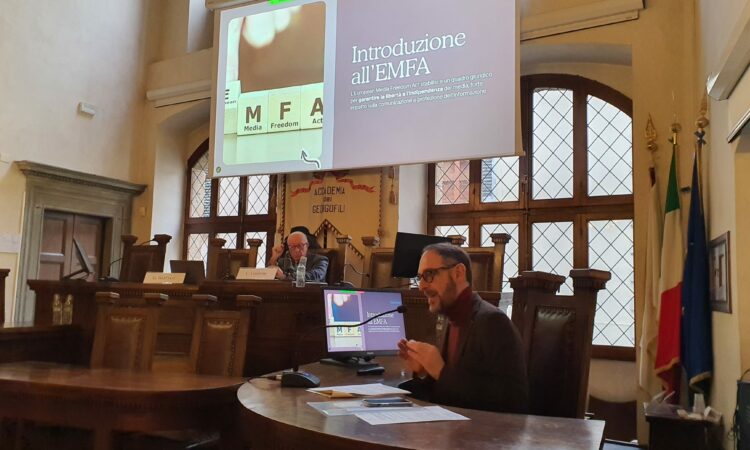
How should journalists report on food, wine and local products without turning information into advertising? And what ethical and professional tools are needed in a sector where economic interests, territorial identity and public communication often overlap?
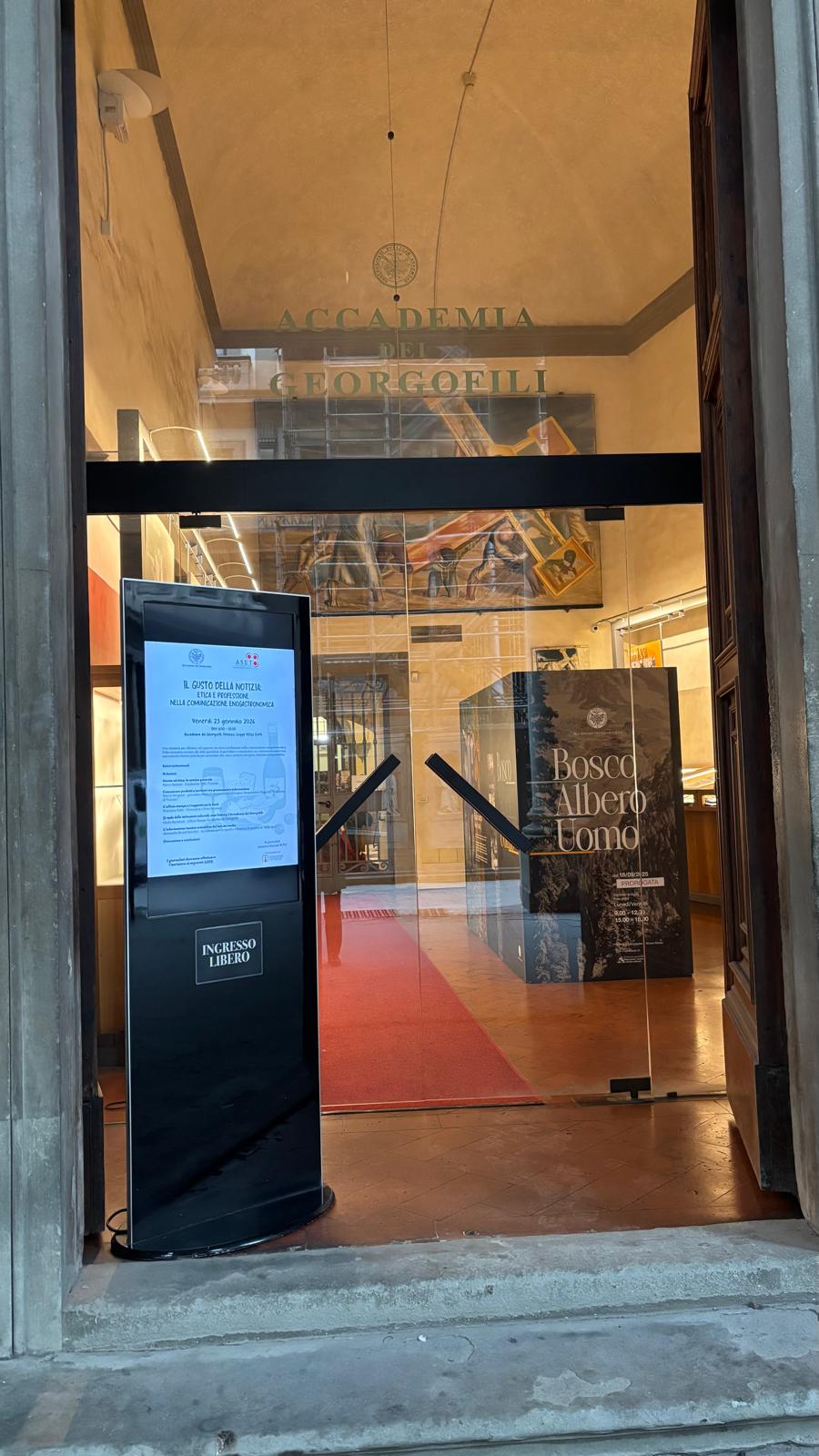
These questions were at the centre of The Taste of the news: ethics and profession in food and wine communication, a one-day course and conference held on Friday January 23, 2026, at the Accademia dei Georgofili in Florence.
The meeting was jointly organised by the Accademia and ASET, the Tuscan association of food, wine and agri-food journalists, chaired by Leonardo Tozzi, with the cooperation of the Foundation of the Order of Journalists of Tuscany.
The video of the meeting is published on the Accademia dei Georgofili’s YouTube channel. English automatic subtitles can be activated in the YouTube video settings.
A sector that cannot be treated as “light” journalism
Opening the programme, Marco Bastiani (member of both ASET and the Foundation of the Order of Journalists of Tuscany) framed food and wine journalism as a central part of contemporary reporting, not a marginal or lifestyle genre. He outlined the regulatory and ethical framework that now shapes journalistic work, from the European Media Freedom Act to the Digital Services Act and the new AI Act, alongside the Italian code of ethics for journalists.
Rather than a legal lecture, Bastiani focused on how these rules affect everyday practice: transparency of funding, the separation between editorial content and advertising, the protection of sources and the responsible use of artificial intelligence. In a digital environment where everyone can produce content, he argued, professional journalism must reaffirm its role through method, verification and accountability.
Between storytelling and promotion
The tension between promotion and information was addressed by Marzia Morganti (wine press officer), who reflected on how to tell the story of products, events and territories without slipping into covert advertising. Drawing on long-term changes in the sector, she described territorial marketing as a powerful but risky tool: capable of creating shared value, but also of eroding identity and quality when numbers and visibility become the only goal.
She stressed the growing influence of press offices, especially as newsrooms shrink, and the need for clear ethical boundaries. Press material can be an opportunity for journalists, she noted, but only if handled with transparency and professional distance.
Press offices and ethical conflicts
The role of press offices was examined in more detail by Francesca Puliti (communications officer), who outlined the specific challenges of communication in the food and agri-food sectors. She highlighted common points of friction in relationships with clients and sources, and reviewed real cases in which ethical conflicts emerged around brands and companies.
Her contribution focused on practical tools and good practices, aimed at helping both press officers and journalists manage sensitive information while preserving credibility.
Institutions, science and reliable sources
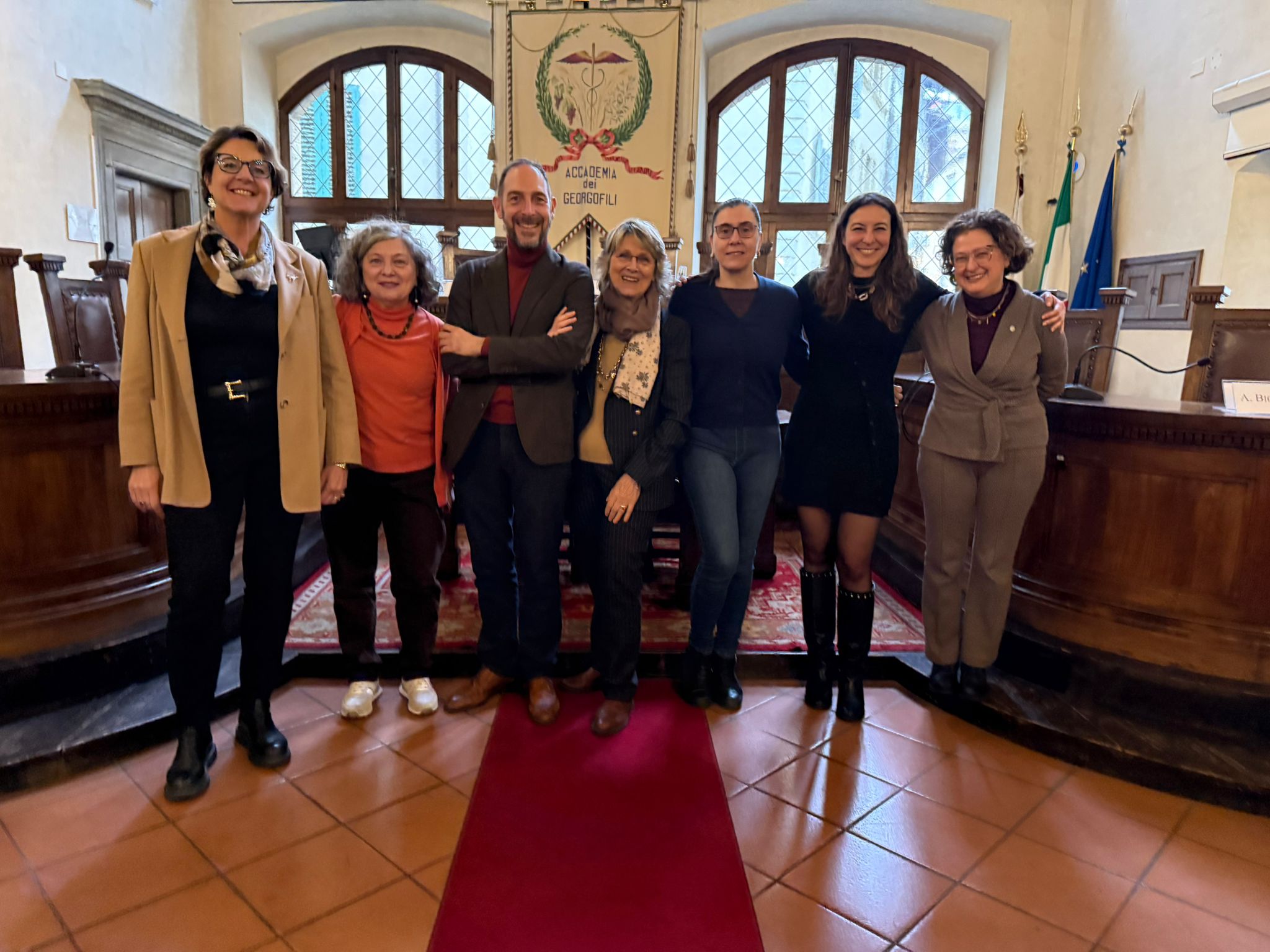
The perspective of cultural and scientific institutions was provided by Giulia Bartalozzi (press officer, Accademia dei Georgofili), who presented the communication work of the Accademia dei Georgofili, founded in Florence in 1753. She described a multi-channel system based on press releases, publications, social media and open-access materials, designed to ensure rigour and accessibility.
Despite this, she warned, inaccurate or misleading reporting on agriculture, food and the environment remains frequent. For journalists, she argued, collaboration with accredited institutions and careful source verification are essential to counter misinformation.
The day concluded with Alessandra Biondi Bartolini (agronomist and science communicator), who explored the distinction between technical journalism and scientific journalism in the food and wine field. Technical reporting, she explained, addresses professionals with specialised language, while scientific journalism speaks to the wider public and must translate complex research without simplification or ideology.
In food and wine media, she observed, science is often underrepresented, while technical details dominate without adequate explanation. Strengthening scientific journalism, she suggested, would help improve the quality and depth of public debate on agriculture, nutrition and sustainability.
A shared message
Across different roles and perspectives, the speakers converged on a common point: reporting on food and wine in Tuscany is not just about taste or tradition, but about economy, health, environment and culture. For journalists, this means applying the same standards of accuracy, independence and transparency required in any other field of reporting.
❤️ Support Florence Daily News
If you liked this article, please consider supporting Florence Daily News.
We are an independent news site, free from paywalls and intrusive ads, committed to providing clear and reliable reporting on Florence and Tuscany for everyone.
Your support — whether a one-time gift or a regular contribution — helps us stay independent and keep telling the stories that matter.
Donate securely via Stripe below.
Make a one-time donation
Make a monthly donation
Make a yearly donation
Choose an amount
Or enter a custom amount
Your contribution is appreciated.
Your contribution is appreciated.
Your contribution is appreciated.
Discover more from Florence Daily News
Subscribe to get the latest posts sent to your email.