
Ti Amo has been selected as the official song of the international communication campaign for the Winter Olympic Games of Milano Cortina 2026 The decision was made by the International Olympic Committee, which chose one of the most recognisable songs in Italian pop history to accompany the visual narrative of the Games.
The short film built around the song invites a worldwide audience to connect emotionally with the Italian-hosted Olympics. The campaign emphasises passion, dedication and emotional intensity as shared values between sport and music. The video has been distributed globally through the official broadcasters and digital platforms of the Olympic Movement and is also available on YouTube.
Originally written in 1977 for Umberto Tozzi, Ti Amo is one of the best-known works of Florentine songwriter Giancarlo Bigazzi. Over the decades, the song has been translated into 24 languages and has remained in circulation worldwide, becoming a long-lasting reference point in international pop music.
A song born in Florence
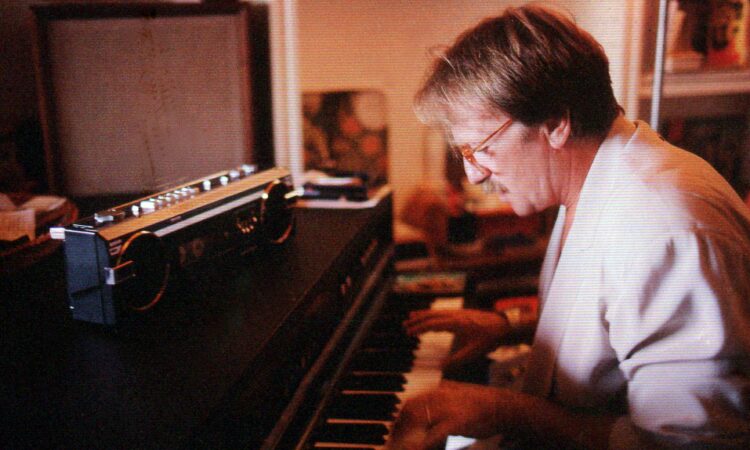
The song was composed in a remarkably short time. Bigazzi developed the initial idea after attending La Gatta Cenerentola by Roberto De Simone at the Teatro della Pergola. Struck by the hypnotic rhythm of the tammorra used in the performance, he returned home and worked through the night at the piano in his villa “La Cingallegra” in Settignano, overlooking Florence.
From that house, where Bigazzi lived and worked for decades, came many of the songs that would later travel far beyond Italy. Ti Amo marked the beginning of a long artistic partnership with Tozzi, which also produced international hits such as Gloria and continued until the early 1990s.
Bigazzi’s musical legacy
Born in 1940 and passing away in 2012, Giancarlo Bigazzi was one of the most influential figures in Italian songwriting. He was a co-founder of the satirical music group Squallor and the author of numerous film soundtracks, including Mediterraneo, which won the Academy Award for Best Foreign Language Film.
Today, Bigazzi remains the Italian songwriter with the highest number of global streams. His former home in Settignano now hosts the Fondazione Giancarlo Bigazzi and the historic label GB Music, run by his son Giovanni. The original piano used to compose many of his songs is still preserved there.
❤️ Support Florence Daily News
If you liked this article, please consider supporting Florence Daily News.
We are an independent news site, free from paywalls and intrusive ads, committed to providing clear and reliable reporting on Florence and Tuscany for everyone.
Your support — whether a one-time gift or a regular contribution — helps us stay independent and keep telling the stories that matter.
Donate securely via Stripe below.
Make a one-time donation
Make a monthly donation
Make a yearly donation
Choose an amount
Or enter a custom amount
Your contribution is appreciated.
Your contribution is appreciated.
Your contribution is appreciated.
DonateDonate monthlyDonate yearlyDiscover more from Florence Daily News
Subscribe to get the latest posts sent to your email.