
Florence is preparing for several days of ceremonies combining one of the city’s oldest religious traditions with the annual remembrance of its Second World War Liberation.
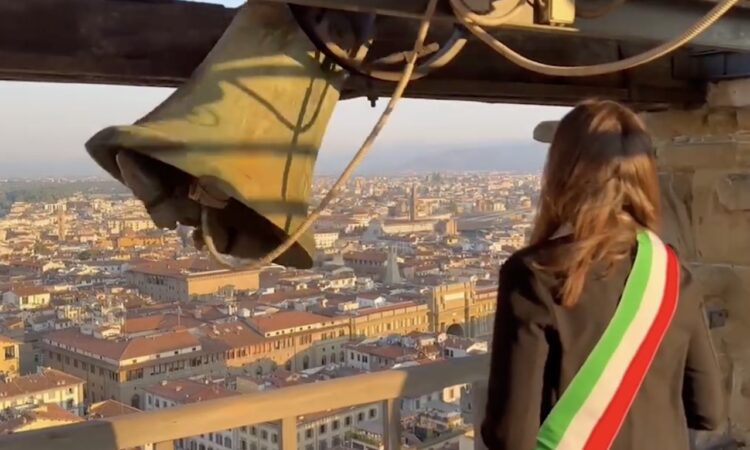
Monday 10 August is dedicated to San Lorenzo, co-patron saint of Florence. The following morning, 11 August, the city will mark the 82nd anniversary of the 1944 uprising that began when the Martinella bell sounded from Palazzo Vecchio.
San Lorenzo celebrations on 10 August
The San Lorenzo programme begins at 10.15 a.m. on Monday 10 August, when costumed members of the Calcio Storico Fiorentino will leave Piazza della Signoria in a procession towards Piazza San Lorenzo.
The procession will also include representatives carrying the Gonfalone, Florence’s official civic banner.
At 11 a.m., Mass will be celebrated at the Basilica of San Lorenzo, accompanied by the traditional offering of candles. San Lorenzo is one of Florence’s co-patron saints, alongside the city’s principal patron, St John the Baptist.
The celebrations return to Piazza San Lorenzo in the evening. From 9 p.m., the square will host the traditional neighbourhood gathering, with free pasta with ragù and watermelon distributed to participants. According to the city programme, the pasta will be prepared by chefs from the Unione Regionale Cuochi Toscani, while the watermelons are provided by Florence’s Mercato Centrale.
The City of Florence describes the San Lorenzo festival as one of the city’s oldest popular traditions.
Florence remembers the Liberation of 1944
The San Lorenzo celebrations fall immediately before another significant date in Florence’s calendar.
On 11 August 1944, the sound of the Martinella, the bell in the tower of Palazzo Vecchio, gave the signal for the city’s uprising against the occupying German forces and Fascist forces.
The insurrection had been organised by the Tuscan Committee of National Liberation, known by its Italian initials CTLN, in coordination with the Allies. Partisan forces entered the fighting as German troops withdrew northwards from the centre.
The date is remembered in Florence as the city’s Liberation Day, although fighting did not end everywhere on 11 August. German forces continued to hold positions in northern parts of the area, and Florence was not completely liberated until the beginning of September.
This year’s programme marks the 82nd anniversary of the uprising.
Commemorations begin before 11 August. On Saturday 8 August at 7.30 p.m., a ceremony in Piazza Santo Spirito will remember the Liberation of the Oltrarno district and partisan commander Aligi Barducci, known as Potente, who was fatally wounded during the fighting.
On Sunday 9 August at 9 a.m., a ceremony at Rifredi cemetery will commemorate partisans killed during the Liberation of Florence.
Another ceremony will take place at 6 p.m. on Monday 10 August, outside Stazione Leopolda on the Via Elio Gabbuggiani side, remembering Sikh soldiers who died during the campaign to liberate Florence in August 1944.
The Martinella will sound again on 11 August
The main commemorations take place on Tuesday 11 August.
At 7 a.m., the Martinella will ring from Palazzo Vecchio, repeating the signal heard across Florence in August 1944.
At 8 a.m., a wreath will be placed at the monument to jurist and anti-Fascist figure Piero Calamandrei at Trespiano cemetery.
A second wreath-laying ceremony will follow at 9 a.m. at the plaque commemorating the Liberation on the Via dei Gondi side of Palazzo Vecchio. The inscription was written by Calamandrei.
At 9.45 a.m., a formal ceremony will be held in Piazza dell’Unità Italiana, near Santa Maria Novella, in memory of those who died.
The main institutional ceremony begins at 10.30 a.m. outside Palazzo Vecchio in Piazza della Signoria, with the city’s traditional Chiarine trumpeters, the Italian and European anthems and addresses by institutional representatives.
Wreaths and laurel decorations will also be placed at Liberation memorials in neighbourhoods across Florence.
The commemorations recall a particularly important episode in the city’s modern history. The CTLN moved into Palazzo Medici Riccardi during the uprising and began establishing a new local administration while fighting was still under way, making the Liberation not only a military event but also the beginning of Florence’s return to democratic government.
The city’s Memoriale delle Deportazioni, dedicated to the memory of deportation and Nazi persecution, also remains open during August on Fridays, Saturdays, Sundays and Mondays from 10 a.m. to 1 p.m.
At a glance
Saturday 8 August
7.30 p.m. — Liberation of the Oltrarno commemoration, Piazza Santo Spirito.
Sunday 9 August
9 a.m. — Commemoration of fallen partisans, Rifredi cemetery.
Monday 10 August
10.15 a.m. — Calcio Storico historical procession, from Piazza della Signoria to Piazza San Lorenzo.
11 a.m. — Mass and traditional candle offering, Basilica of San Lorenzo.
6 p.m. — Ceremony remembering Sikh soldiers, outside Stazione Leopolda.
9 p.m. — San Lorenzo celebrations with free pasta and watermelon, Piazza San Lorenzo.
Tuesday 11 August
7 a.m. — Martinella bell sounds from Palazzo Vecchio.
8 a.m. — Ceremony at Trespiano cemetery.
9 a.m. — Wreath-laying at Palazzo Vecchio, Via dei Gondi.
9.45 a.m. — Commemoration in Piazza dell’Unità Italiana.
10.30 a.m. — Official Liberation ceremony, Palazzo Vecchio, Piazza della Signoria.
❤️ Support Florence Daily News
If you liked this article, please consider supporting Florence Daily News.
We are an independent news site, free from paywalls and intrusive ads, committed to providing clear and reliable reporting on Florence and Tuscany for everyone.
Your support — whether a one-time gift or a regular contribution — helps us stay independent and keep telling the stories that matter.
Donate securely via Stripe below.
Make a one-time donation
Make a monthly donation
Make a yearly donation
Choose an amount
Or enter a custom amount
Your contribution is appreciated.
Your contribution is appreciated.
Your contribution is appreciated.
Discover more from Florence Daily News
Subscribe to get the latest posts sent to your email.