
Paying for public transport in Florence with a credit card or smartphone is generally straightforward, but passengers who believe they have successfully tapped their card may still face a fine if inspectors cannot verify a valid ticket.
Several accounts brought to the attention of Florence Daily News have raised concerns about this situation, particularly among international visitors unfamiliar with the local transport system.
In one case, a visitor from Hong Kong in his eighties reported receiving a €43 fine in September 2026 after boarding bus number 37 towards Galluzzo, on the southern outskirts of Florence. He said he had tapped his credit card when boarding, but an inspector subsequently found no valid payment recorded.
A similar experience was reported by a Greek student in November 2026, whose payment was reportedly processed by the bank only after the ticket inspection had taken place. Other complaints involving contactless payments and bus fines have emerged in the past.
These individual accounts do not establish whether the transactions were successfully registered or whether the penalties were issued correctly. They do, however, highlight the importance of understanding how Florence’s contactless ticketing system works.
A bank charge may appear days after the journey
Autolinee Toscane, the company operating public buses throughout Tuscany, allows passengers to purchase tickets directly on board using contactless debit or credit cards, smartphones and smartwatches.
According to the company’s official guidance, a successful transaction is confirmed by a green light on the validator’s screen and an audible signal. A red light indicates that the transaction has failed.
Importantly, the company explains that the actual charge may not appear in a passenger’s bank account until several days later, depending on the bank’s processing times.
This means that the absence of an immediate debit does not necessarily indicate that a payment has failed.
However, a delayed bank transaction is different from a ticket that was never successfully validated. During inspections, passengers must be able to demonstrate that they have a valid ticket by presenting the card or device used for payment.
Passengers can also check their contactless ticket transactions through the company’s online portal, emv.at-bus.it, where purchases may be listed as pending, paid or unpaid.
Travelling within 90 minutes? You still need to tap again
Another important rule concerns passengers changing buses or transferring between buses and Florence’s tram network.
An ordinary urban ticket in Florence is valid for 90 minutes. During this period, passengers can change between urban services without paying for another ticket.
However, anyone using contactless payment must tap their card or phone every time they board another bus or tram, even when the original ticket is still valid.
Autolinee Toscane confirms that its system automatically recognises the same payment method and does not charge another fare if the original urban ticket remains valid.
Passengers must consistently use the same card or device. A physical bank card and the same card stored in a smartphone wallet are treated as different payment methods and may generate separate charges.
The rules differ for suburban and mixed-fare bus routes, where passengers must tap both when boarding and when leaving the vehicle. Urban and suburban tickets are also treated separately by the contactless system.
How to challenge a bus fine in Florence
Passengers who believe they have received a fine despite correctly paying for their journey can submit a formal appeal to Autolinee Toscane.
The company allows passengers to present a written defence within 30 days of receiving the penalty notice, using a specific form available on its website.
For international travellers, the company provides an English-language form and an email address: [email protected]
The appeal should include the completed form, a copy of the penalty notice and a valid identity document. Passengers disputing a contactless transaction should also provide any available evidence, including payment records and details of the journey.
Autolinee Toscane states that paying a fine normally closes the procedure and prevents a subsequent appeal. Anyone intending to challenge a penalty should therefore consult the official instructions before making a payment.
Submitting an appeal does not suspend the payment deadlines.
The instructions and appeal forms are available on the company’s official fines page.
What passengers should remember
For residents, students and tourists using Florence’s public transport system, the most important precaution is to check that the validator confirms a successful tap with a green light.
When changing urban buses or transferring to a tram, passengers should tap again using exactly the same payment method, even within the 90-minute validity period.
If a fine is issued despite an apparently successful payment, passengers can request a review through the company’s formal procedure rather than assuming the penalty cannot be challenged.
The distinction between a delayed bank charge, an unsuccessful validation and an incorrectly recorded transaction is particularly important in a system where passengers do not receive a paper ticket.
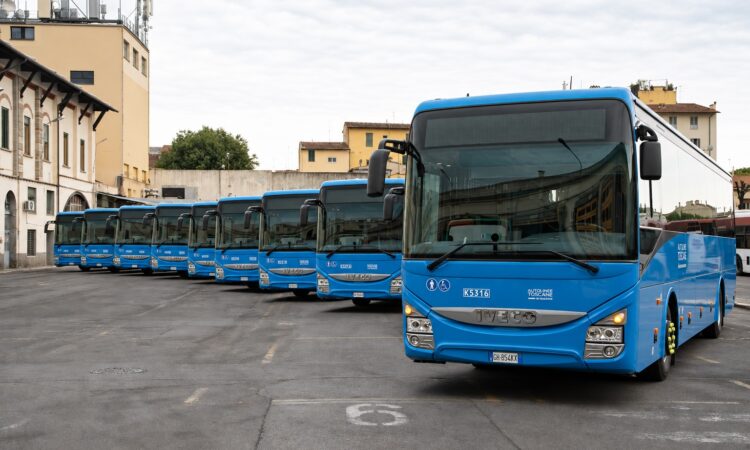
(Cover photo by AT edited with AI)
❤️ Support Florence Daily News
If you liked this article, please consider supporting Florence Daily News.
We are an independent news site, free from paywalls and intrusive ads, committed to providing clear and reliable reporting on Florence and Tuscany for everyone.
Your support — whether a one-time gift or a regular contribution — helps us stay independent and keep telling the stories that matter.
Donate securely via Stripe below.
Make a one-time donation
Make a monthly donation
Make a yearly donation
Choose an amount
Or enter a custom amount
Your contribution is appreciated.
Your contribution is appreciated.
Your contribution is appreciated.
Discover more from Florence Daily News
Subscribe to get the latest posts sent to your email.