
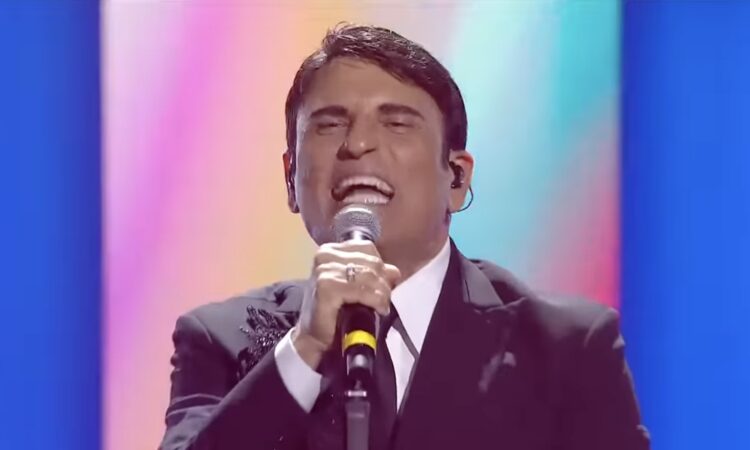
The Festival di Sanremo crowned Sal Da Vinci in 2026 with Per sempre sì, a melody rooted in traditional Neapolitan neomelodic sounds; now Italy is asking whether this is the image it wants to send to Europe on the stage of the Eurovision Song Contest.
The Eurovision Song Contest is one of the strangest cultural inventions Europe has ever produced: a music competition in which almost no one truly takes the competition seriously, yet almost everyone takes very seriously the idea of not embarrassing themselves.
Every year, when countries choose the song they will send to Eurovision, the same reflex appears: the anxiety of representation. The implicit question is not so much is this song surprising, memorable, or fun? but rather will it make us look sophisticated enough in front of the other Europeans? It is the etiquette of the diplomatic reception applied to pop music.
In Italy this tension almost inevitably passes through the filter of the Festival di Sanremo, which for decades has functioned as a kind of informal ministry of the nation’s musical image. The winner of the festival becomes the natural candidate for Eurovision, and with that choice comes a weight of expectations that has less to do with music than with cultural reputation.
It is a curious concern, because it rests on a misunderstanding of what the event actually is. Eurovision has never been an academic contest, nor a showcase of cultural prestige. It is, quite simply, a continental spectacle in which irony, theatricality, melodrama, and pop coexist. It is a competition, certainly—but one in which the sense of play often matters as much as the result.
The history of the festival makes this rather clear. On the same stage one may find solemn ballads alongside deliberately eccentric performances. The heavy-metal monsters of Lordi have won the contest; the bearded diva Conchita Wurst turned it into a cultural statement; and surreal figures like Verka Serduchka have become continental icons. More than a music competition, Eurovision resembles a European carnival where kitsch and emotion coexist without asking permission from critics.
When countries worry too much about “making a good impression,” they often lose sight of that balance. Eurovision works precisely because it is unafraid of excess, lightness, or even a certain degree of absurdity. It is a space in which the continent, for one evening, allows itself not to be entirely serious.
And yet beneath this festive surface the festival continues to reveal something deeper about contemporary Europe. In recent years several artists have chosen not to participate, or have openly criticized the presence of Israele in the competition during the conflict in the Middle East. One may agree or disagree with these choices, but their meaning is clear: for many musicians Eurovision is not merely television entertainment. It remains one of the rare European stages where pop culture still carries the political and moral convictions of those who create it.
Perhaps this is the most interesting paradox of the festival. An event born as light entertainment that continues, year after year, to reflect the tensions, ironies, and contradictions of the continent. Even when it sings beneath colored lights, Europe never entirely stops arguing with itself.
❤️ Support Florence Daily News
If you liked this article, please consider supporting Florence Daily News.
We are an independent news site, free from paywalls and intrusive ads, committed to providing clear and reliable reporting on Florence and Tuscany for everyone.
Your support — whether a one-time gift or a regular contribution — helps us stay independent and keep telling the stories that matter.
Donate securely via Stripe below.
Make a one-time donation
Make a monthly donation
Make a yearly donation
Choose an amount
Or enter a custom amount
Your contribution is appreciated.
Your contribution is appreciated.
Your contribution is appreciated.
DonateDonate monthlyDonate yearly
Eirini Lavrentiadou is an actress and singer, born in Thessaloniki in 1992. She lives in Florence, where she trained at the city’s Theatre Academy and the Fiesole School of Music. She has performed in classical Greek and European plays, worked with international directors and companies, and appeared in concerts ranging from opera to jazz. She contributes to Florence Daily News as a writer.
Discover more from Florence Daily News
Subscribe to get the latest posts sent to your email.