
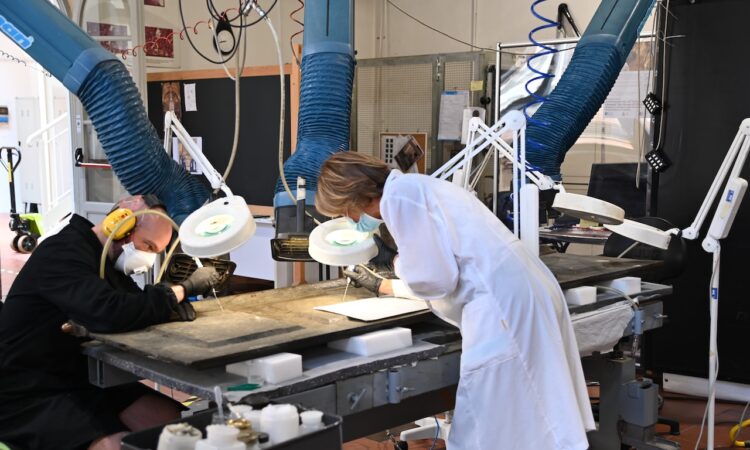
Two of the most significant works by Donatello have been returned to their original setting in the Old Sacristy of the Basilica di San Lorenzo after an extensive conservation campaign.
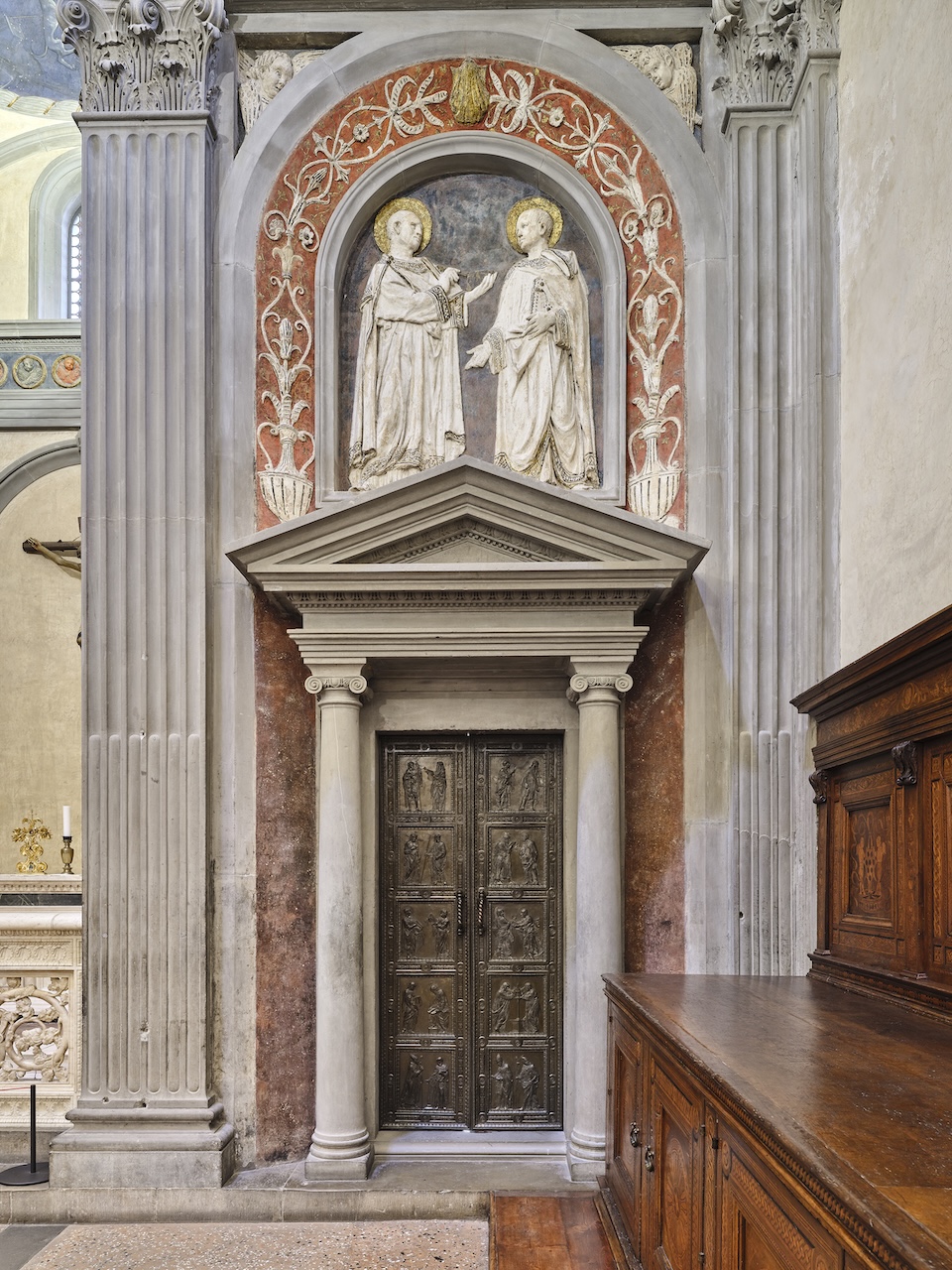
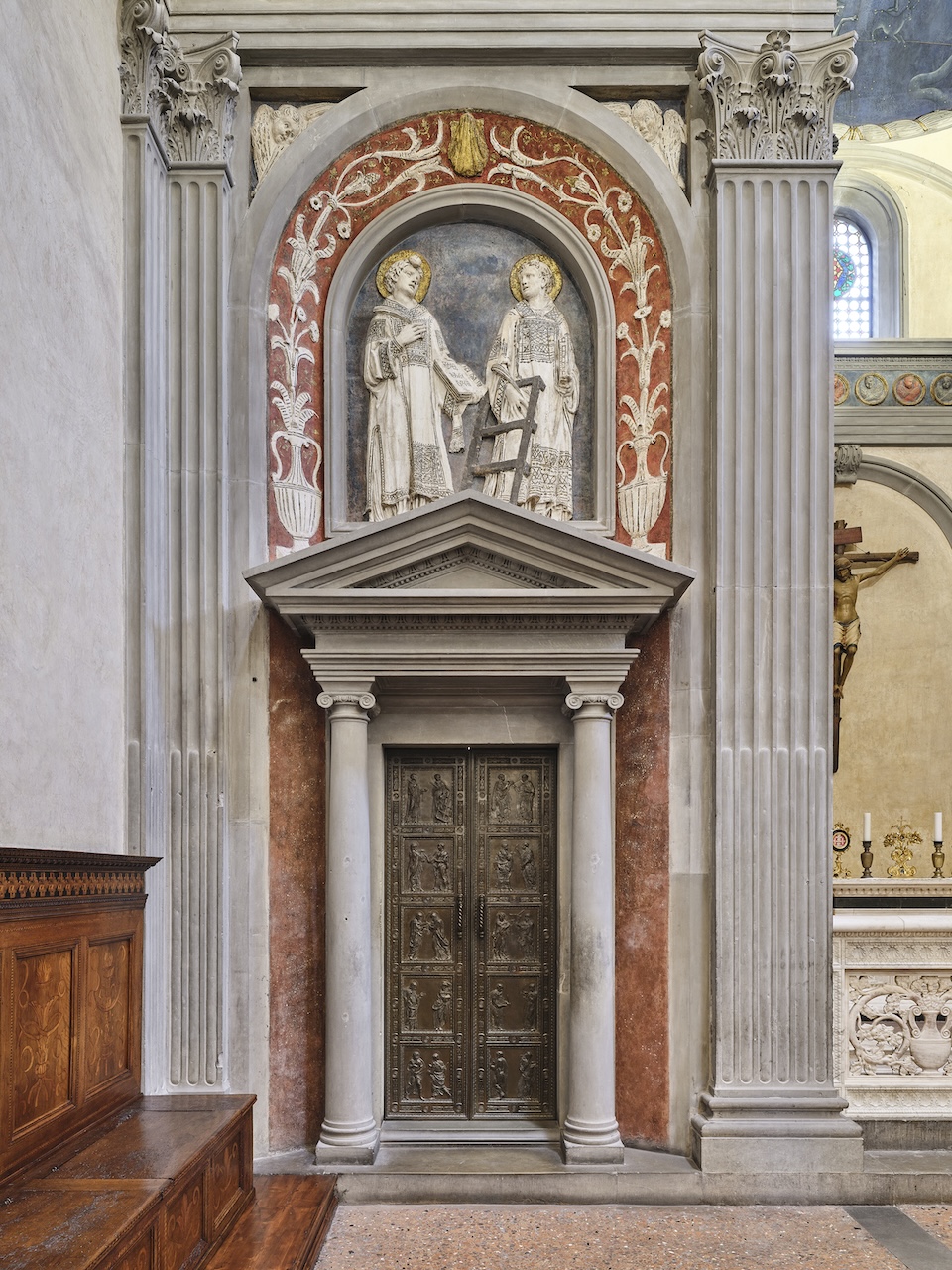
The Martyrs’ Door and the Apostles’ Door, executed between around 1440 and 1442, were presented to the public on Thursday morning during a study meeting outlining the results of the restoration. The event was followed by a visit to the Sagrestia Vecchia (Old Sacristy), where the doors have now been reinstalled.
The restoration was carried out by the Bronze and Arms Department of the Opificio delle Pietre Dure (OPD), Florence’s state conservation institute under the Ministry of Culture. Work began with the Martyrs’ Door, completed in time for the 2022 exhibition Donatello. Il Rinascimento at Palazzo Strozzi, and later continued with the Apostles’ Door, made possible thanks to support from Friends of Florence.
The Apostles’ Door was restored between June 2024 and 1 October 2025, thanks to funding from Friends of Florencethrough a donation by Michael and Sandy Collins.
A Medici commission in bronze
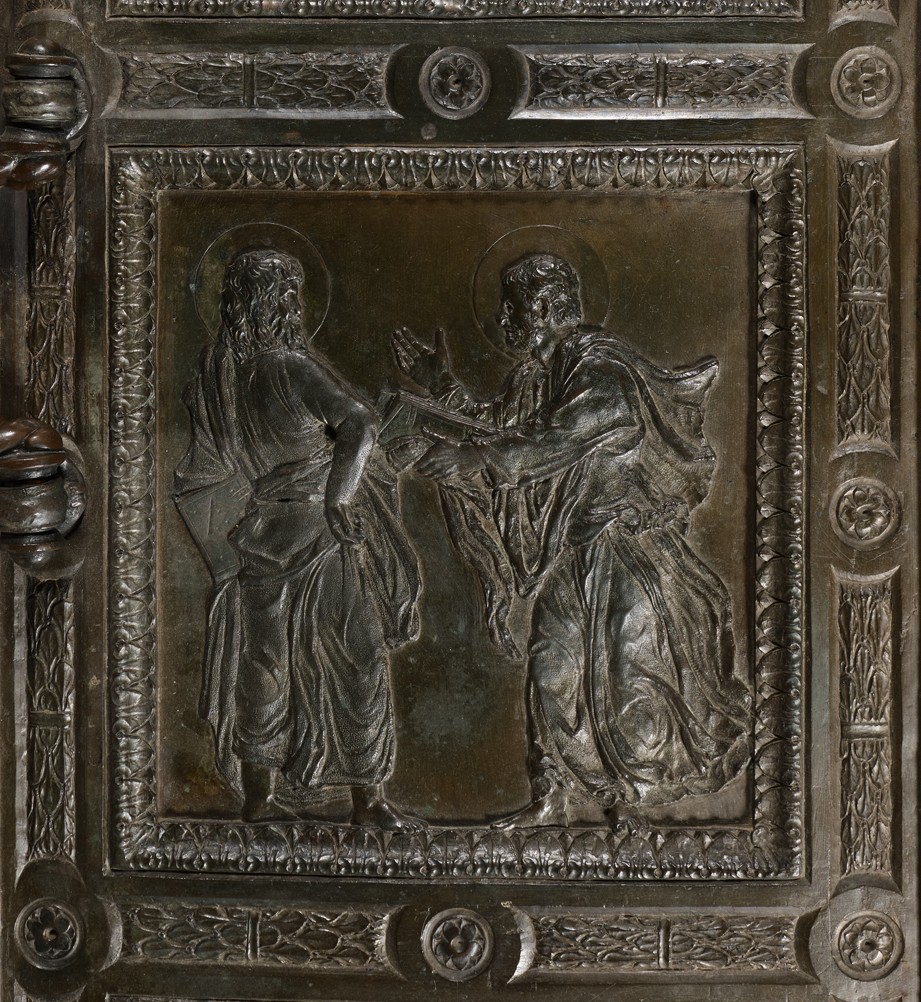
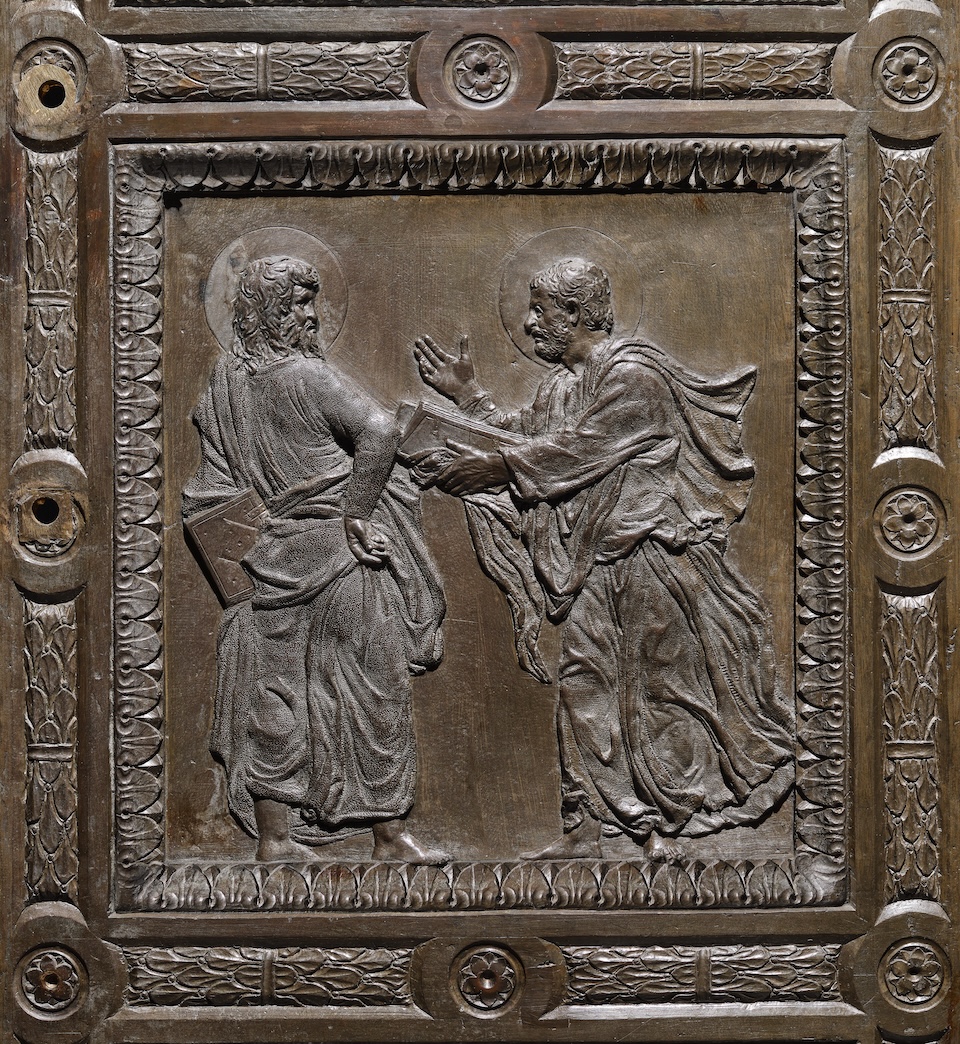
Commissioned by the Medici family, the two doors are among the most innovative examples of Donatello’s mature sculptural research. Each door consists of two leaves cast in bronze using the lost-wax technique and structured like a relief polyptych set within a projecting pietra serena architectural frame.
The frames are articulated with Ionic columns supporting an entablature and triangular pediment. Each leaf contains five large panels depicting pairs of saints.
On the Martyrs’ Door — so called because each figure holds a palm branch, symbol of martyrdom — identifiable figures include Saint Stephen, Saint Lawrence, and Saints Cosmas and Damian, patrons of the Medici family.
The Apostles’ Door features Saint John the Baptist, the Church Fathers and the Evangelists. Decorative friezes interrupted by rosettes frame the panels. The current handles, in the form of intertwined ropes, are not original.
The four leaves measure approximately 4–5 centimetres in thickness, slightly increasing at the top to facilitate movement. Diagnostic analysis confirmed that each leaf was cast in a single piece, without mechanical joints, including for the large hinges. Conservators described the quality of the casting as exceptional, with finely worked surfaces: highly polished backgrounds contrast with delicate punchwork in the drapery and hair to create subtle light effects.
Diagnostic investigations and conservation issues
Before treatment, the OPD’s Scientific Laboratory carried out a 3D scan and an extensive diagnostic campaign to assess the condition of the works and refine the conservation methodology.
Over time, thick deposits of dust and oily-waxy substances — partly from previous maintenance treatments — had accumulated, flattening the detailed surface modelling. Green alterations caused by the degradation of waxes and by bronze corrosion products were particularly visible on the lower sections, near the floor, where heavy concretions obscured details.
Cleaning and protection
After an initial dry cleaning, conservators carried out a steam wash combined with swabs and brushes to remove surface deposits. Cleaning was further refined using solvent mixtures tailored to different areas.
A final phase included cryogenic micro-abrasion — a technique that uses small pellets of ice propelled by compressed air — to free the minute surface detailing of the friezes and figures. On the reverse sides, cleaning was calibrated to preserve traces of historic patinas and residual casting materials in non-worked areas.
Thick concretions along the edges were removed with vibro-incisors. The doors were then protected with microcrystalline wax.
The restoration has restored legibility to the reliefs and highlighted the complexity of Donatello’s surface treatment, allowing visitors to appreciate once again the sculptor’s technical and expressive innovation within one of Florence’s key Renaissance spaces.
Practical information
The Old Sacristy of San Lorenzo can be visited as part of the Basilica complex in Florence’s historic centre. Opening hours and ticket information are available on the official website of the Basilica and the Musei del Bargello network, which manages the monument.
❤️ Support Florence Daily News
If you liked this article, please consider supporting Florence Daily News.
We are an independent news site, free from paywalls and intrusive ads, committed to providing clear and reliable reporting on Florence and Tuscany for everyone.
Your support — whether a one-time gift or a regular contribution — helps us stay independent and keep telling the stories that matter.
Donate securely via Stripe below.
Make a one-time donation
Make a monthly donation
Make a yearly donation
Choose an amount
Or enter a custom amount
Your contribution is appreciated.
Your contribution is appreciated.
Your contribution is appreciated.
DonateDonate monthlyDonate yearlyDiscover more from Florence Daily News
Subscribe to get the latest posts sent to your email.