
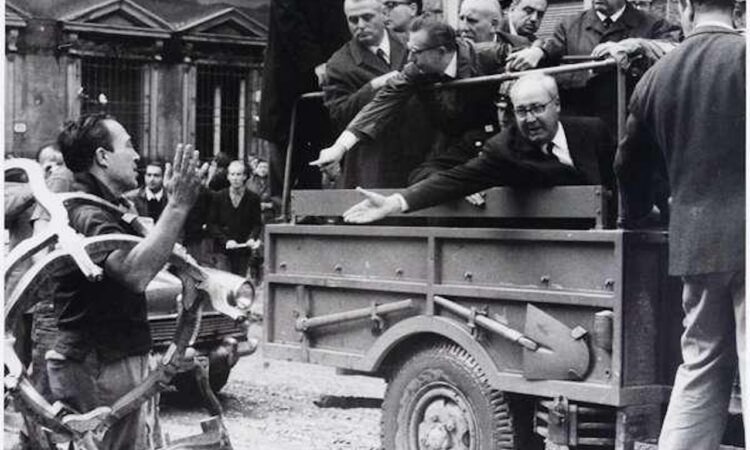
Sixty years after the Arno devastated Florence, the anniversary recalls not only the destruction of the city but also the delayed recognition of the emergency by Italy’s national authorities. President Giuseppe Saragat arrived two days after the flood, finding streets still covered in mud and residents frustrated by the response.
On 4 November 1966, the River Arno burst its banks and flooded Florence, killing dozens of people, destroying homes and businesses, and damaging some of the city’s most important works of art. Yet while residents struggled to survive and rescue what they could, the full scale of the disaster was not immediately understood in Rome.
It was not until Sunday 6 November, two days after the flood, that Italy’s President, Giuseppe Saragat, arrived in Florence to see the devastation for himself. His visit, which included a journey through the damaged streets in a military jeep, became one of the defining episodes of the emergency and exposed the gap between what was happening in the city and what national authorities initially understood.
The President’s jeep became stuck in the mud in Piazza Santa Croce, one of the areas worst affected by the flood. His arrival was met with protests from residents angry about the delays and disorganisation of the relief effort, although historical accounts also record expressions of support.
According to the official diary of the Italian presidency, Saragat reached Florence’s Prefecture at 10 a.m. on 6 November. After receiving an assessment from local authorities, he telephoned the interior minister to give instructions concerning urgent relief operations and then toured the city with Mayor Piero Bargellini and other officials.
A city flooded without warning
The catastrophe followed days of persistent rainfall across Tuscany. On the night of 3 November, the Arno began overflowing upstream of Florence, before floodwaters reached the city in the early hours of 4 November.
Residents received no effective general warning. Many discovered the danger when they looked out of their windows, saw water entering their streets or received telephone calls from relatives and neighbours before communications failed.
The flood swept through Gavinana, Santa Croce, San Frediano, Santo Spirito and other neighbourhoods. In some streets, the water rose to nearly five metres. Cars, furniture, tree trunks and debris were carried along by the current, mixed with mud and heating oil.
Electricity and telephone services failed, while road and railway connections were interrupted. Florence was effectively isolated at the very moment when it needed outside assistance.
The date was a public holiday in Italy, marking National Unity and Armed Forces Day. With many workplaces closed, the number of people exposed to the flood in shops, offices and workshops may have been lower than on a normal working day.
While Florence struggled, Rome underestimated the emergency
The failure to recognise the danger was not confined to the hours before the Arno overflowed.
According to the historical account published by Florence’s National Central Library, military authorities had already attempted to alert ministries and senior officers on 3 November as conditions deteriorated. Despite these communications, the danger was underestimated.
The library’s reconstruction also describes how news of the disaster reached international audiences while the extent of the damage was still poorly understood in Italy. By 11 a.m. on 4 November, the BBC was reporting the threat to Florence’s cultural heritage.
The difficulty was compounded by the collapse of communications and transport infrastructure. Telephone lines were disrupted, roads were flooded and railway services were interrupted, making it harder to assess the situation and coordinate assistance.
Florence’s mayor, Piero Bargellini, used the radio on the morning of 4 November to appeal for calm and request inflatable boats and amphibious vehicles for rescue operations. He warned that floodwaters had reached Piazza del Duomo and the first floors of buildings in some neighbourhoods.
The response was not entirely absent. Firefighters, police officers, military personnel and local volunteers carried out rescue operations, saving people trapped by the rising water. But Italy lacked the coordinated national civil protection system that exists today, and the organisation of the emergency was severely tested.
A historical reconstruction published by Corriere Fiorentino in 2016 reported that Rome had still not fully grasped the scale of the catastrophe on the morning of 5 November. The same account linked the broader mobilisation of the army to Saragat’s visit the following day.
The President’s arrival, two days later
When Saragat reached Florence on 6 November, the city was no longer facing only the immediate danger of rising water. It was confronting the enormous consequences of the flood.
Streets were filled with mud, shops had been destroyed and thousands of families were dealing with damaged homes and lost possessions. The President travelled through affected areas accompanied by Bargellini, ministers and local officials.
The image of his jeep stuck in the mud of Piazza Santa Croce became a symbol of the conditions he encountered.
Saragat’s visit also made clear how much the national authorities had underestimated the emergency. According to contemporary reporting recalled in historical accounts, the President himself acknowledged after inspecting the city that the damage was far worse than he had expected.
The visit lasted only a few hours. The official presidential record states that Saragat left Florence at 1.30 p.m. and returned to the Quirinal Palace in Rome at 4.45 p.m.
For Florence, however, the emergency was far from over. The task of removing mud, restoring essential services and rescuing damaged cultural collections would continue for weeks, months and, in some cases, decades.
The human and cultural cost
The flood caused deaths across Florence and its surrounding territory: 36 recognised victims in Florence and its province, including Mario Maggi, whose death was officially attributed to the disaster in 2023. Historical sources use different totals depending on the geographical area and the criteria applied.
The destruction also extended to Florence’s cultural heritage. Approximately 1,200 artworks were damaged, including paintings, frescoes and sculptures.
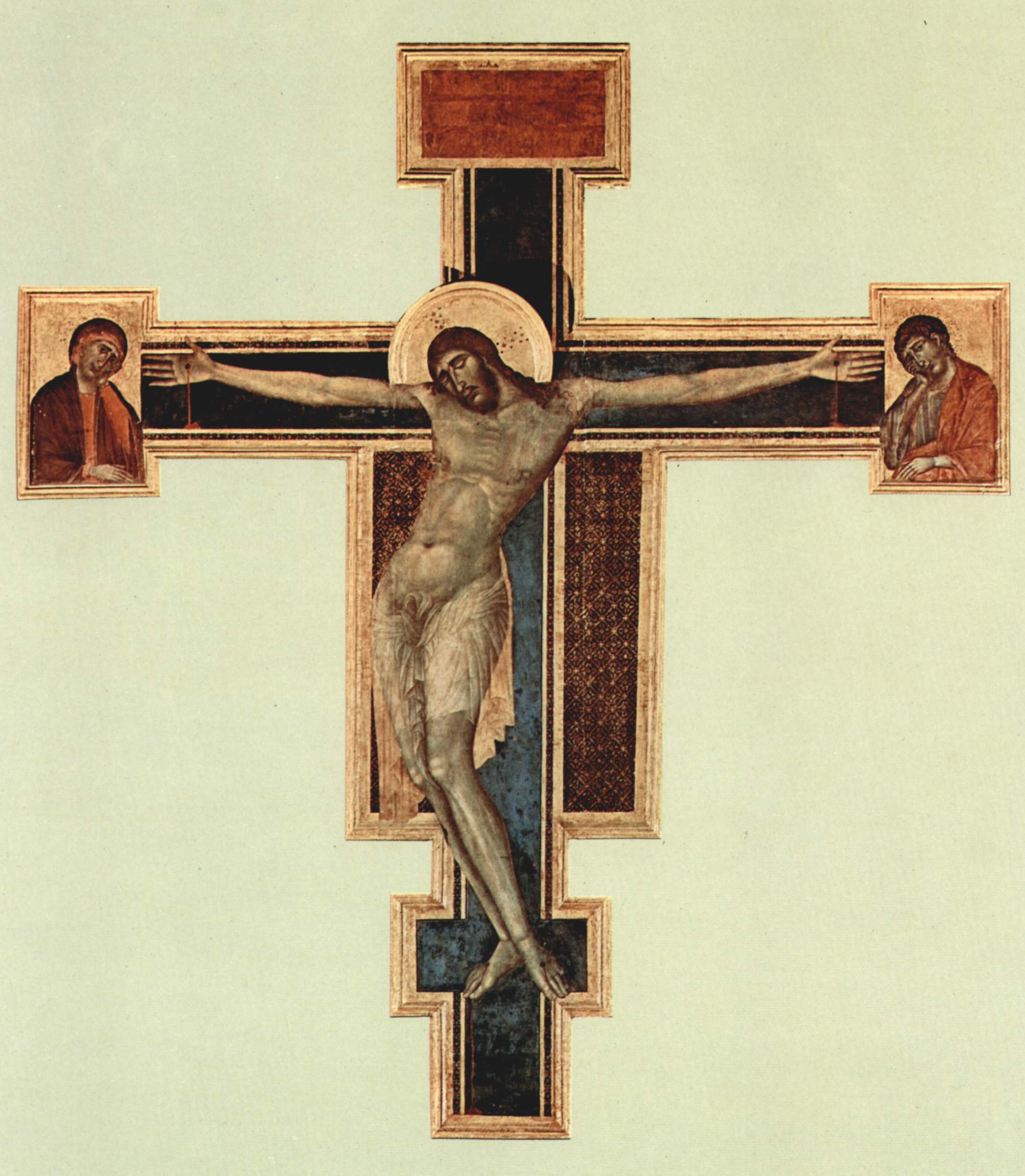
Among the most severely affected was Cimabue’s painted crucifix in the Basilica of Santa Croce, which became one of the most recognisable symbols of the catastrophe.
At the National Central Library, almost one million books were submerged. Around 250,000 volumes belonging to the Gabinetto Vieusseux, a historic cultural institution, were also flooded in storage areas beneath Palazzo Strozzi.
The flood damaged Ghiberti’s bronze Gates of Paradise at the Baptistery, dislodging panels from the Renaissance doors.
The effort to save Florence’s cultural heritage soon attracted volunteers from Italy and abroad. Thousands of young people travelled to the city to remove mud, recover books and assist restoration work. They became known as the Angeli del Fango, or Mud Angels, and their contribution remains central to the memory of the flood.
Sixty years later, a lesson in emergency preparedness
The flood of 1966 is remembered for the destruction it caused and the international solidarity that followed. But its history also raises questions about the ability of public institutions to recognise an approaching disaster, communicate the danger and organise an effective response.
The absence of adequate monitoring, advance warnings and coordinated emergency planning left Florence particularly vulnerable. The disaster subsequently became an important reference point in the development of Italy’s civil protection system.
Sixty years later, the image of President Saragat arriving in a mud-covered Florence two days after the Arno overflowed remains a reminder of how slowly the scale of a catastrophe can become clear beyond the places directly affected.
For the people of Florence, the emergency had begun long before the rest of the country fully understood what had happened.
(Cover photo from the Quirinale website)
❤️ Support Florence Daily News
If you liked this article, please consider supporting Florence Daily News.
We are an independent news site, free from paywalls and intrusive ads, committed to providing clear and reliable reporting on Florence and Tuscany for everyone.
Your support — whether a one-time gift or a regular contribution — helps us stay independent and keep telling the stories that matter.
Donate securely via Stripe below.
Make a one-time donation
Make a monthly donation
Make a yearly donation
Choose an amount
Or enter a custom amount
Your contribution is appreciated.
Your contribution is appreciated.
Your contribution is appreciated.
Discover more from Florence Daily News
Subscribe to get the latest posts sent to your email.