


Florence is preparing to extend its so-called UNESCO regulation, introducing stricter rules for businesses in the historic centre and adding seven more streets where the transfer of existing activities will be restricted.
The proposed update, discussed on 2 April in a city council committee, comes ahead of the regulation’s expiry between late April and early May. If approved, it will extend key measures for another five years, with additional safeguards in areas considered particularly sensitive.
More streets under restrictions
With the latest changes, the number of streets where business transfers are restricted rises to 60.
The newly added streets are:
- Via Palazzuolo
- Sdrucciolo de’ Pitti
- Corso Tintori
- Borgo de’ Greci
- Via de’ Benci
- Via Gondi
- Via Vacchereccia
In these areas, existing businesses will generally not be allowed to relocate to other streets within the UNESCO-listed historic centre. In most cases, they may only move within the same street, using another nearby premises.
An exception applies in some already heavily regulated streets—such as Via dei Neri, Borgo La Croce and Borgo San Lorenzo—where even this type of relocation is not permitted.
A five-year freeze on new food and hospitality businesses
The regulation also confirms a broader five-year freeze on new openings or relocations into the historic centre for several types of activities.
These include:
- food retail (such as minimarkets and grocery shops),
- restaurants, bars and pubs, including “home restaurants”,
- small-scale food production businesses (such as bakeries, pizza-by-the-slice shops and gelaterias),
- cooking schools, unless already linked to an existing restaurant.
Additional limits apply to small venues: businesses under 100 square metres face tighter rules on on-site consumption.
However, expansions aimed at improving service areas—such as kitchens, toilets or technical spaces—will still be allowed if they involve adjacent premises.
Protecting the commercial mix of the historic centre
The regulation, officially aimed at protecting the UNESCO World Heritage site of Florence’s historic centre, is designed to address concerns about the growing concentration of tourist-oriented businesses and the loss of traditional shops.
According to the city’s economic development councillor, the goal is to preserve not only monuments but also the everyday urban fabric, including neighbourhood shops and artisan activities.
The updated rules reinforce earlier provisions that limit the types of businesses allowed in some of Florence’s most prestigious streets—such as Via de’ Tornabuoni or Piazza Santa Trinita—where only specific categories like high-end retail, art galleries, traditional crafts and jewellery shops are permitted.
Impact on residents and visitors
The measures are likely to have a direct impact on how the historic centre evolves in the coming years.
For residents, the regulation aims to maintain a more balanced mix of services and reduce the dominance of short-term tourism-oriented businesses. For visitors, it may gradually shape a different retail and food landscape, with fewer new openings but potentially more emphasis on established and traditional activities.
The final decision on the extension is expected before the current regulation expires in the coming weeks.
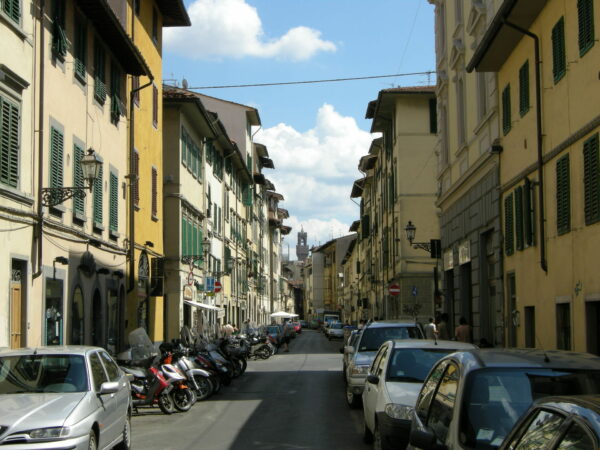
(Cover photo: via Palazzuolo, by Sailko, Wikimedia)
❤️ Support Florence Daily News
If you liked this article, please consider supporting Florence Daily News.
We are an independent news site, free from paywalls and intrusive ads, committed to providing clear and reliable reporting on Florence and Tuscany for everyone.
Your support — whether a one-time gift or a regular contribution — helps us stay independent and keep telling the stories that matter.
Donate securely via Stripe below.
Make a one-time donation
Make a monthly donation
Make a yearly donation
Choose an amount
Or enter a custom amount
Your contribution is appreciated.
Your contribution is appreciated.
Your contribution is appreciated.
DonateDonate monthlyDonate yearly