


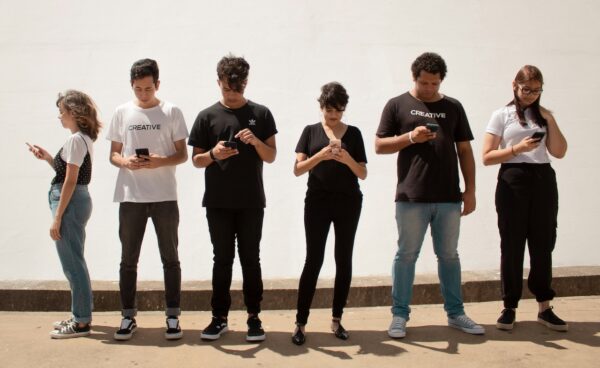
Greece’s decision to restrict access to social media for under-15s marks a significant shift in how governments are beginning to treat digital platforms: not as neutral tools, but as environments with measurable social and psychological risks.
There is a clear positive element in the move. The rationale cited by Prime Minister Kyriakos Mitsotakis (rising anxiety, sleep disruption and the addictive architecture of platforms) is increasingly supported by research and widely acknowledged by families and educators. The fact that around 80% of respondents in a recent poll support the measure suggests that this is not simply a top-down restriction, but a response to a broadly perceived problem.
At the same time, the Greek initiative reflects a more structural concern: social media are no longer primarily spaces for connection. Their original promise (facilitating relationships, conversations, communities) has been progressively overshadowed by other dynamics. Today, these platforms function largely as distribution systems for content, where promotion and advertising dominate in the most benign cases, and misinformation spreads in the worst ones.
The algorithmic logic that governs them tends to reinforce existing views rather than challenge them. Users are exposed to increasingly homogeneous content, creating a “bubble effect” in which it becomes easy to believe that one’s perspective is widely shared or even universally accepted. This has consequences not only for individual perception, but also for public discourse.
Another transformation is equally relevant: the shift from interaction to passive consumption. Social media are becoming more similar to television, with endless scrolling replacing active participation. Users spend more time watching than engaging, more time absorbing than producing. In this sense, platforms are evolving in a direction that is almost the opposite of their original design.
Seen from this perspective, limiting early exposure could be interpreted as an attempt to delay entry into a system that is increasingly complex and potentially distorting.
However, the measure also raises a fundamental question. If access is restricted until the age of 15, how will young people develop the critical skills needed to navigate these environments? Becoming a conscious, sceptical user requires experience: understanding how content is curated, recognising bias, identifying unreliable information. These are competencies that are difficult to acquire in theory alone.
There is therefore a risk that a strict age-based ban may postpone, rather than solve, the problem. A teenager who gains full access at 15 years and one day does not automatically become equipped to interpret what they encounter.
As a parent of two children aged 16 and 19, I have never taken a prohibitionist approach. Instead, I have tried to focus on education, encouraging a conscious and responsible use of digital tools. At the same time, it is difficult to ignore that social media are no longer just a private matter. Their impact extends well beyond individual behaviour, affecting public discourse, mental health and social dynamics. On issues with such broad consequences, it is reasonable for the state to set a framework within which individuals can operate, also with a view to limiting wider social and healthcare costs.
The effectiveness of such policies will likely depend on what accompanies them. If restrictions are combined with education (media literacy, critical thinking, and a clearer understanding of how platforms operate) they may help create more aware users. If not, the transition from exclusion to full exposure could remain abrupt and problematic.
Greece’s initiative, in this sense, is less a definitive solution than a signal. It highlights a growing recognition that the current model of social media raises issues that cannot be addressed solely at the level of individual responsibility, and that require broader regulatory and cultural responses.
(Cover photo: Creative Christians via Unsplash)
❤️ Support Florence Daily News
If you liked this article, please consider supporting Florence Daily News.
We are an independent news site, free from paywalls and intrusive ads, committed to providing clear and reliable reporting on Florence and Tuscany for everyone.
Your support — whether a one-time gift or a regular contribution — helps us stay independent and keep telling the stories that matter.
Donate securely via Stripe below.
Make a one-time donation
Make a monthly donation
Make a yearly donation
Choose an amount
Or enter a custom amount
Your contribution is appreciated.
Your contribution is appreciated.
Your contribution is appreciated.
DonateDonate monthlyDonate yearly
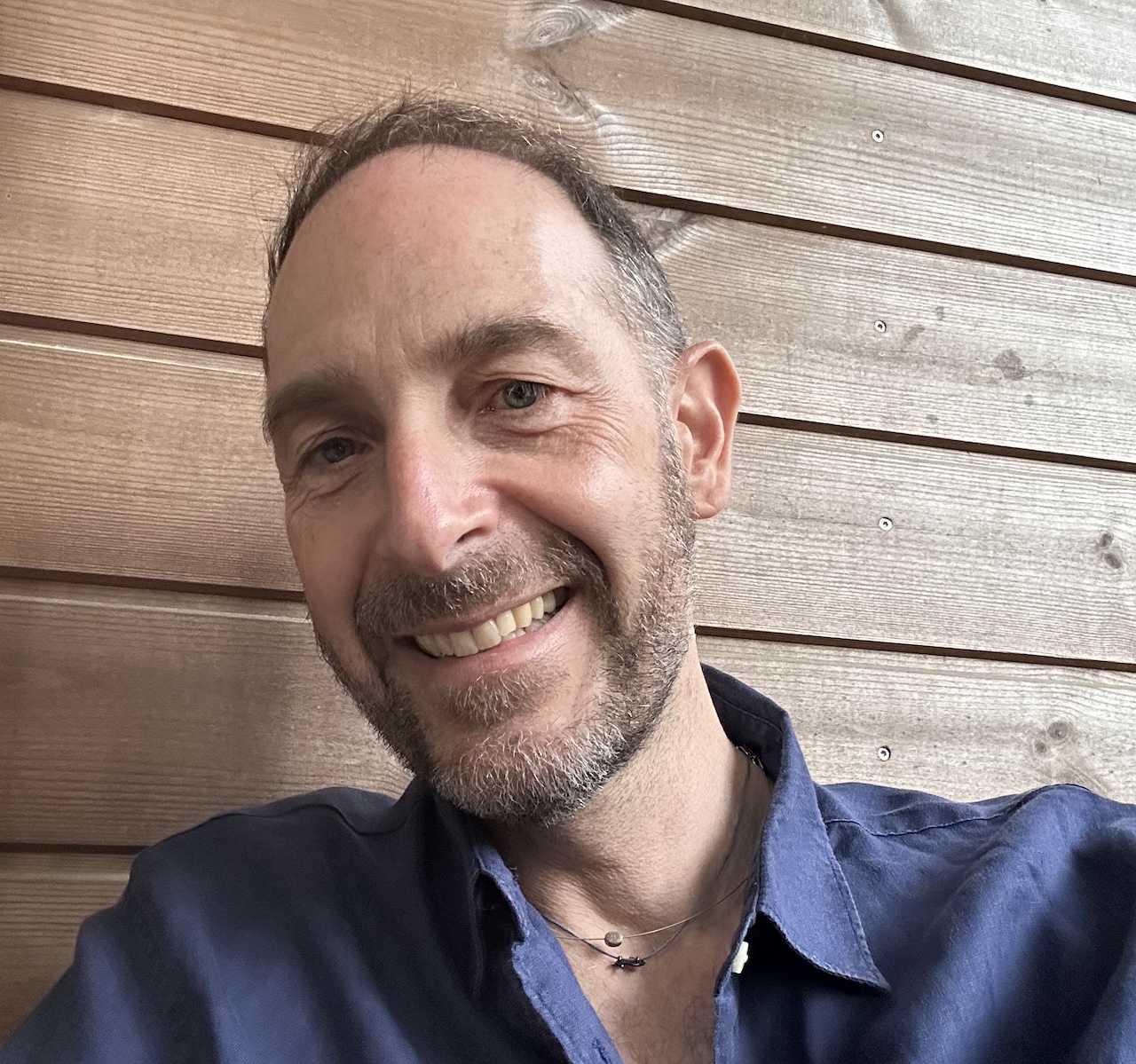
Marco Bastiani is an Italian journalist based in Florence. He is the founder of Florence Daily News, launched in 2011, and has been working in journalism since 1998. Formerly political editor at Il Giornale della Toscana, he later took on senior communication roles in both public and private institutions. A board member of the Tuscan Foundation of the Order of Journalists and a member of ASET, the Tuscan association of food, wine and agri-food journalists, he loves the sea and Greece, and has two children.