


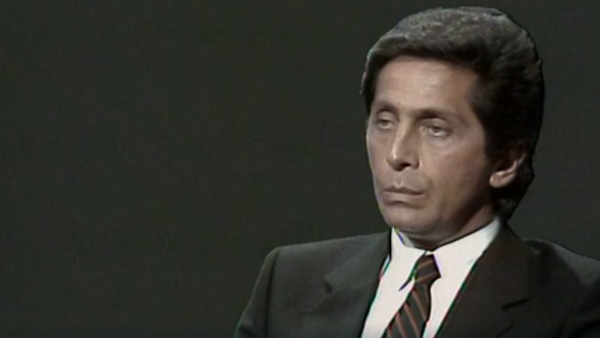
Italian fashion designer Valentino Garavani, known as Valentino, has died at the age of 93. His death marks the end of a career that helped define international haute couture and that began, decisively, in Florence.
Valentino’s breakthrough came on 22 July 1962, in the Sala Bianca, the historic room inside Palazzo Pitti that in the post-war years had become the stage for Italy’s first major international fashion shows. Exactly ten years after those events began, a 30-year-old designer from Voghera presented his first collection there.
The shows at Palazzo Pitti were curated by Giovan Battista Giorgini, the entrepreneur who played a central role in introducing Italian fashion to foreign buyers. Giorgini chose to place Valentino last in the programme, a cautious decision given that the designer was new to that elite circle. The response, however, was immediate: buyers placed orders for the entire collection within a short time, marking the start of Valentino’s international rise.
That debut in Florence was not only a professional turning point. Tuscany would remain part of Valentino’s personal geography for decades. Together with his business partner Giancarlo Giammetti, he spent long periods at Villa La Vagnola, an 18th-century property near Cetona, in southern Tuscany. The villa became a private retreat, especially during holiday periods, and a discreet presence respected by the local community. The property was later put on the market in 2019.
Valentino’s connection with the region also extended to its manufacturing traditions. Over the years, fabrics produced in the Prato textile district were used in his collections, particularly through collaborations in the 1970s and 1980s involving companies specialised in menswear. While Valentino was not a constant presence in Prato, the district’s textiles formed part of the broader supply network behind his work.
Florence, where his name first resonated with international buyers, remained a symbolic reference point throughout his career. The Sala Bianca debut placed him among the designers who transformed Italian fashion into a global industry, linking creativity, craftsmanship and commerce in a way that would define the Made in Italy label for generations.
With his death, Florence and Tuscany lose not only a visitor and resident by choice, but a figure whose story is inseparable from the region’s role in the history of modern fashion.
❤️ Support Florence Daily News
If you liked this article, please consider supporting Florence Daily News.
We are an independent news site, free from paywalls and intrusive ads, committed to providing clear and reliable reporting on Florence and Tuscany for everyone.
Your support — whether a one-time gift or a regular contribution — helps us stay independent and keep telling the stories that matter.
Donate securely via Stripe below.
Make a one-time donation
Make a monthly donation
Make a yearly donation
Choose an amount
Or enter a custom amount
Your contribution is appreciated.
Your contribution is appreciated.
Your contribution is appreciated.
DonateDonate monthlyDonate yearly