


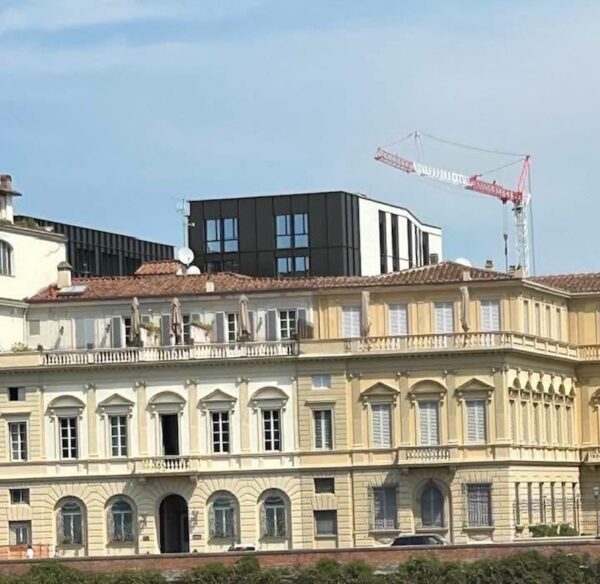
UNESCO’s World Heritage Centre in Paris has opened its own assessment of the so-called Black Cube or black and white tower, the new building constructed on the site of Florence’s former Teatro Comunale, amid concerns that the project may have altered the city’s historic skyline and architectural character.
According to comments reported by la Repubblica Firenze, UNESCO officials said they would work with the Italian authorities to support efforts to preserve Florence’s historic and architectural heritage and identify any corrective measures that may be needed.
Florence’s historic centre has been on the UNESCO World Heritage List since 1982. The World Heritage Centre is now evaluating whether the redevelopment has had an irreversible impact on the attributes that justified the site’s inscription.
A UNESCO spokesperson said that any project within a World Heritage site must ensure that it does not cause irreversible damage to the characteristics that underpin its Outstanding Universal Value.
The international review comes as prosecutors in Florence continue a separate criminal investigation into the project. Fifteen people are under investigation on various allegations, including false declarations, building code violations and breaches of Italy’s landscape protection legislation.
Those under investigation include municipal officials, company managers, architects involved in the project and former Florence superintendent for archaeology, fine arts and landscape Andrea Pessina. Under scrutiny are the building’s overall volume, its dark exterior, which investigators believe may be out of keeping with the protected historic setting, and compliance with landscape protection rules.
The redevelopment of the former Teatro Comunale site has become one of Florence’s most contentious urban planning cases, raising broader questions about how contemporary architecture can be introduced within one of the world’s most significant historic city centres while respecting UNESCO conservation standards.
❤️ Support Florence Daily News
If you liked this article, please consider supporting Florence Daily News.
We are an independent news site, free from paywalls and intrusive ads, committed to providing clear and reliable reporting on Florence and Tuscany for everyone.
Your support — whether a one-time gift or a regular contribution — helps us stay independent and keep telling the stories that matter.
Donate securely via Stripe below.
Make a one-time donation
Make a monthly donation
Make a yearly donation
Choose an amount
Or enter a custom amount
Your contribution is appreciated.
Your contribution is appreciated.
Your contribution is appreciated.