


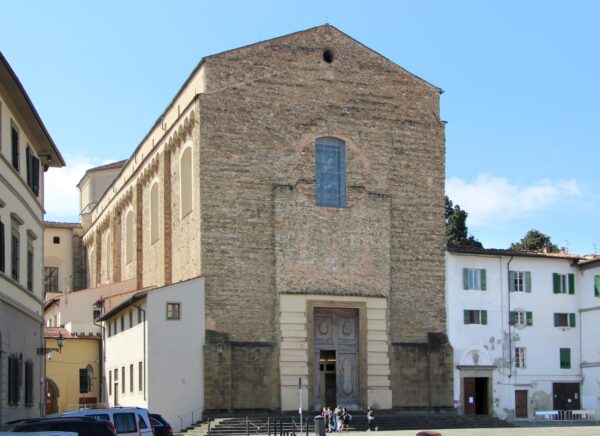
Visitors to Florence’s Basilica of Santa Maria del Carmine can once again admire a series of restored chapels following the completion of an extensive conservation project that has returned some of the church’s most important artistic spaces to their original appearance.
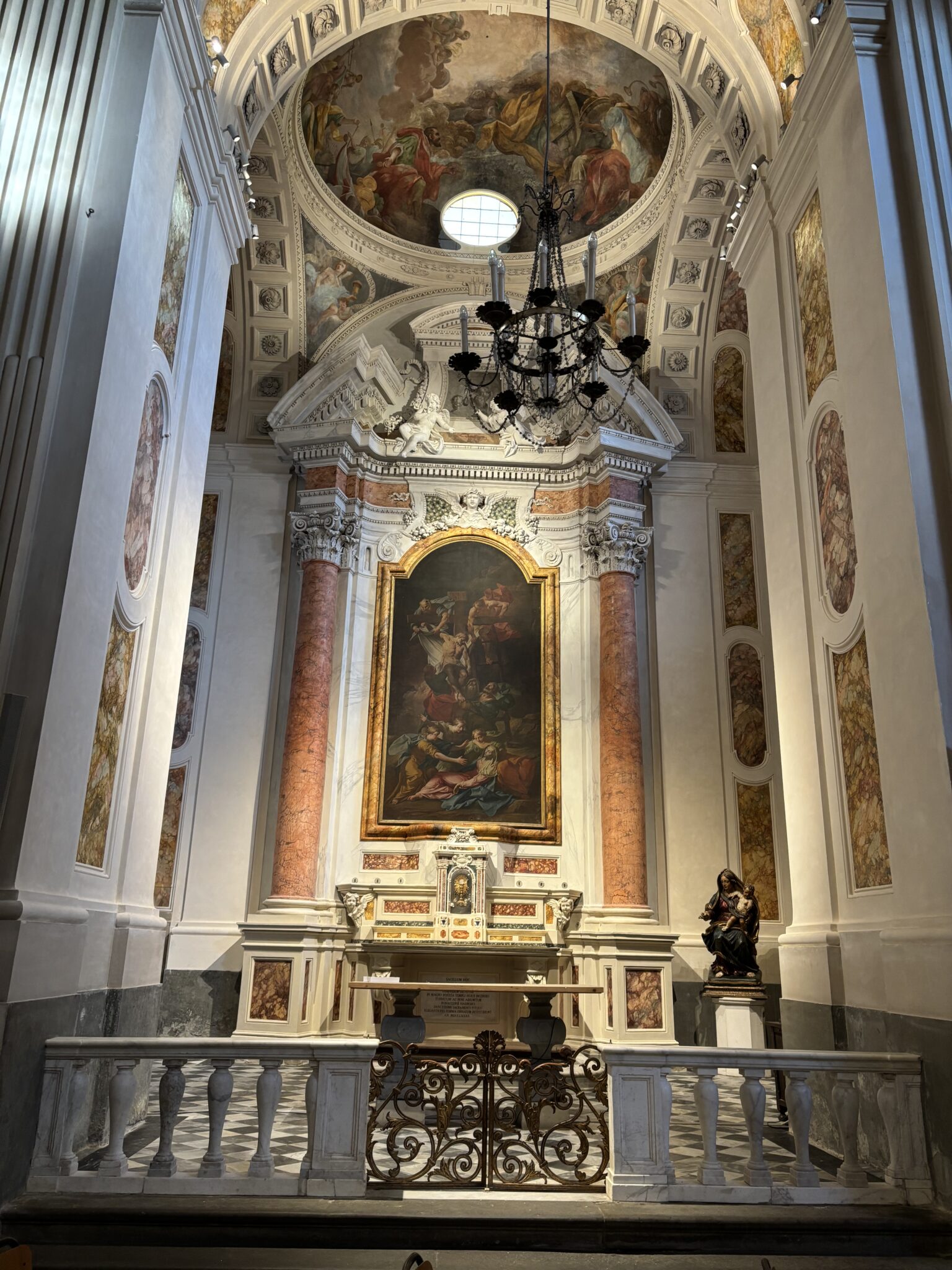
The restoration, completed ahead of schedule after work began in March 2025, focused on the basilica’s Main Chapel, the monumental Corsini Chapel and four eighteenth-century chapels in the transept, while also introducing new lighting and fire detection systems throughout much of the church.
Founded in 1268 by the Carmelite Order in Florence’s Oltrarno district, Santa Maria del Carmine is one of the city’s most significant religious monuments. It is internationally renowned for the Brancacci Chapel, whose frescoes by Masaccio, Masolino and Filippino Lippi are considered a cornerstone of early Renaissance painting.
This latest intervention, however, concentrated on the rest of the church, much of which dates from the rebuilding that followed the devastating fire of 1771. The blaze destroyed almost the entire interior of the medieval basilica, sparing only the Gothic sacristy and the two chapels at either end of the transept: the Brancacci Chapel and the Corsini Chapel. The church was rebuilt between 1775 and 1782 in a late Baroque style designed by architect Giuseppe Ruggieri.

Restoring Florence’s Baroque masterpiece
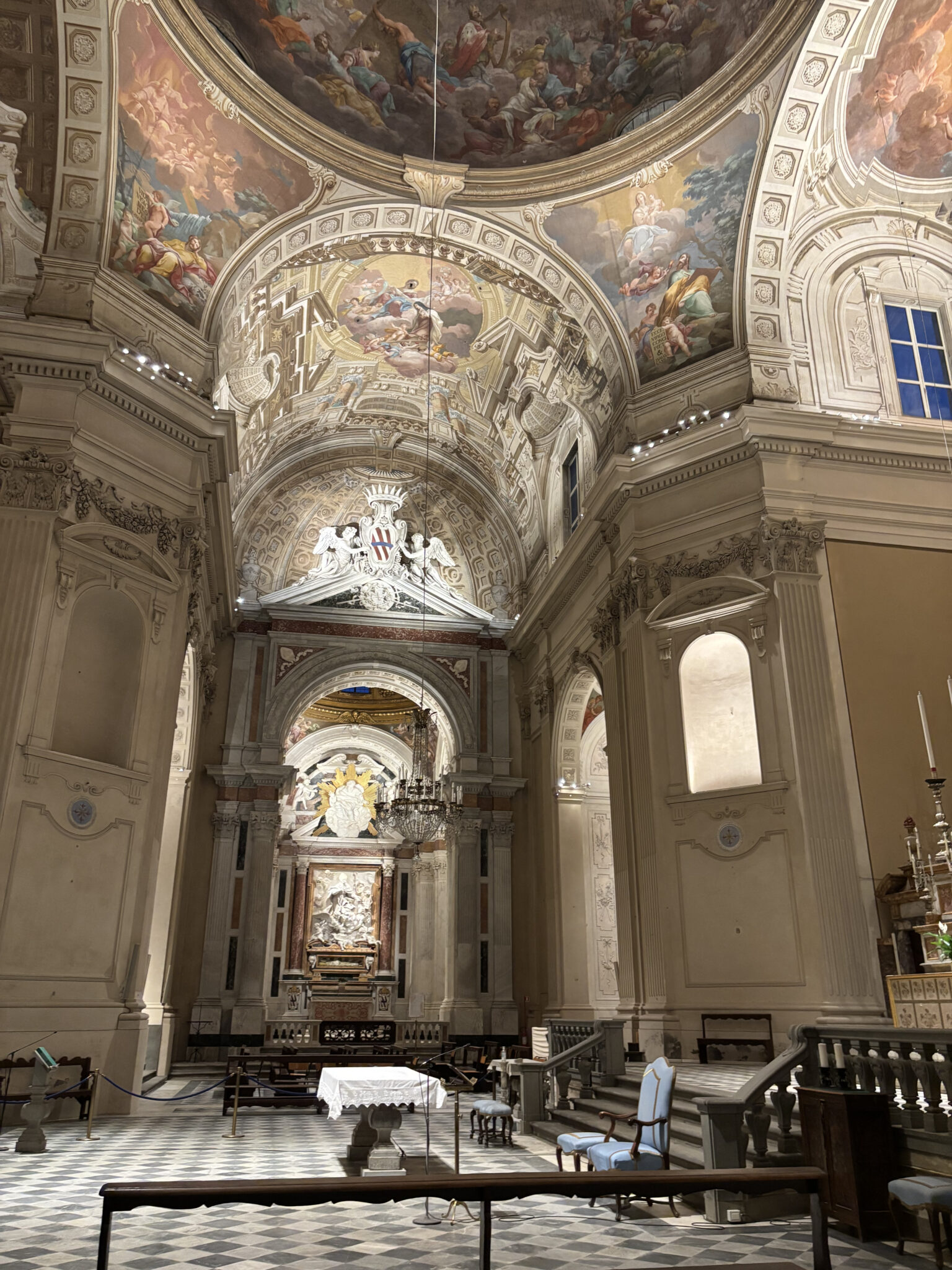
Among the highlights of the project is the restoration of the Corsini Chapel, regarded as Florence’s finest example of Roman-inspired Baroque architecture.
Built between 1675 and 1683 to honour Saint Andrew Corsini, the chapel combines architecture by Pier Francesco Silvani with marble reliefs designed by Giovanni Battista Foggini and frescoes by Luca Giordano.
Conservators cleaned the Carrara marble high reliefs, stabilised fractured stone panels, repaired decorative marble surfaces and restored the chapel’s large lunette windows. The work also included the wooden shrine of Saint Andrew Corsini and the silver lid of the saint’s sarcophagus, a late seventeenth-century masterpiece attributed to goldsmith Heinrich Brunick from a design by Foggini.
Chapels and artworks returned to view
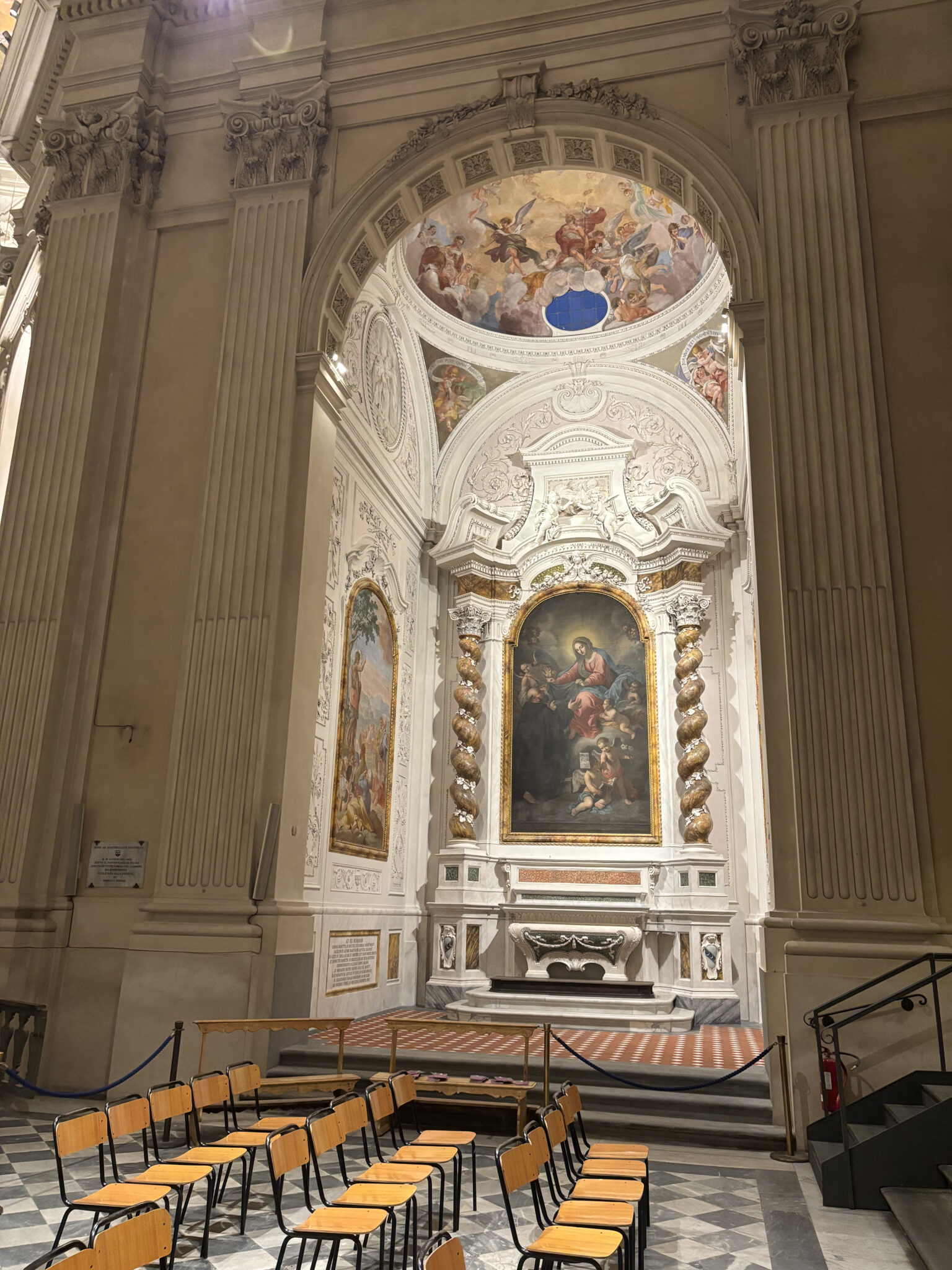
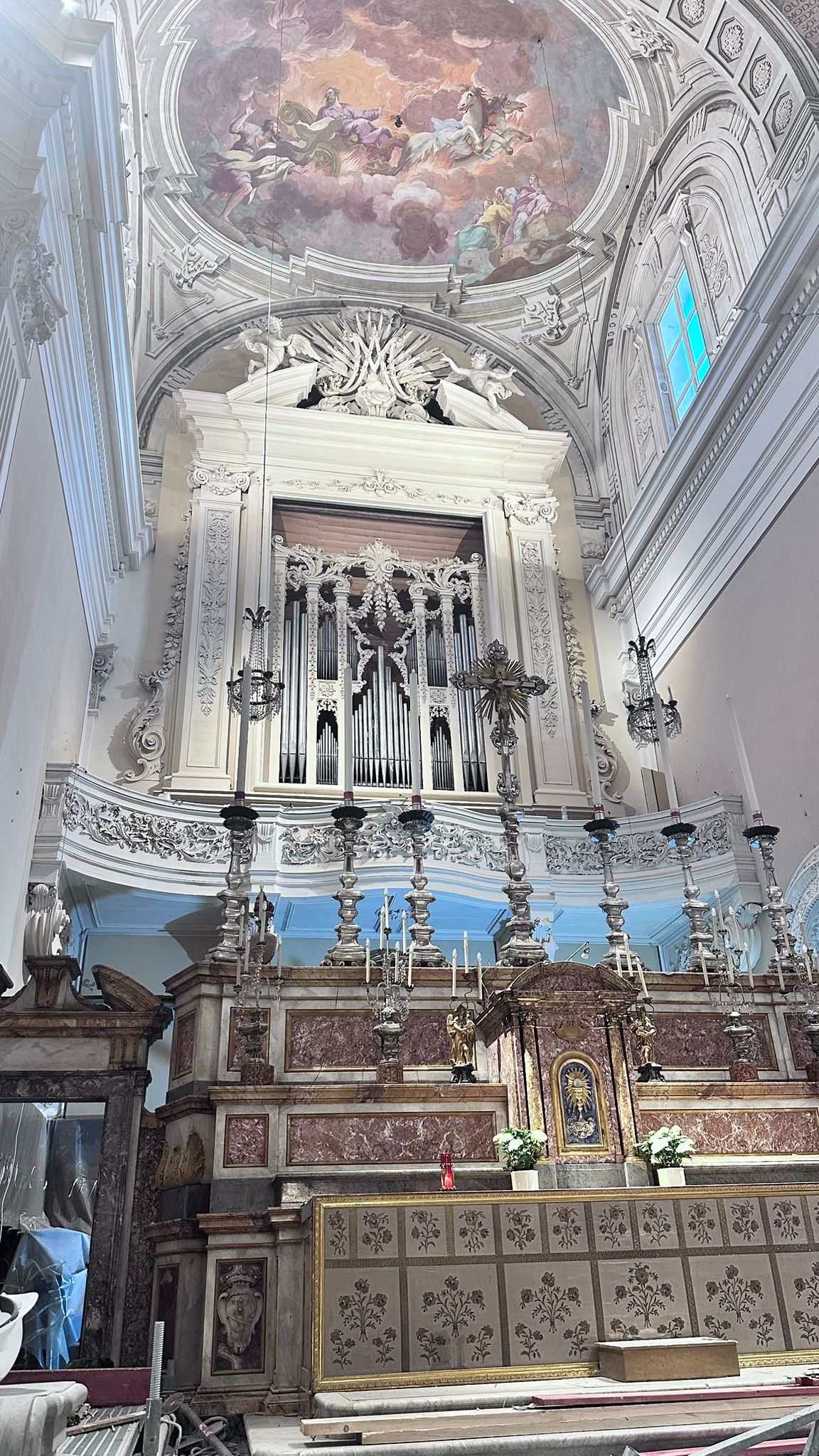
The project also restored the Main Chapel and choir, including the early sixteenth-century marble Soderini cenotaph, together with four eighteenth-century chapels dedicated to the Bonsi family, the Crucifix, Holy Communion and the Nerli family.
Before the restoration, these spaces suffered from widespread surface deposits and damage caused by water infiltration from the roof, particularly in the Communion and Nerli chapels. Conservators cleaned wall paintings, stucco decorations, stone elements and gilded wooden details while consolidating damaged surfaces.
The late Baroque Mannaioni pipe organ in the Main Chapel was also restored and highlighted as part of the intervention.

New technology for a historic church
Alongside the conservation work, the basilica received a new LED lighting system designed specifically for its historic interiors. The installation improves visibility while protecting artworks from ultraviolet and infrared radiation.
A new air-sampling fire detection system has also been installed throughout the church and its Gothic sacristy, providing significantly improved protection for the monument and its collections.
The project also included the restoration of the basilica’s main wooden entrance doors and new electrical systems in the sacristy.
Part of a wider conservation programme
The restoration was funded through a €3 million investment under Italy’s National Recovery and Resilience Plan (PNRR) and carried out by the Ministry of the Interior’s Religious Buildings Fund (Fondo Edifici di Culto), the Ministry of Infrastructure’s public works authority and the Superintendence of Archaeology, Fine Arts and Landscape for Florence and Prato.
It is the first of nine conservation projects involving churches owned by the Religious Buildings Fund to be completed in Florence and its metropolitan area. Similar restoration work is nearing completion at Santa Maria Novella, San Marco, Santa Maria Maddalena de’ Pazzi and San Gaggio.
(Cover photo by Francesco Bini via Wikimedia, other photos by Soprintendenza Archeologia, Belle Arti e Paesaggio di Firenze)
❤️ Support Florence Daily News
If you liked this article, please consider supporting Florence Daily News.
We are an independent news site, free from paywalls and intrusive ads, committed to providing clear and reliable reporting on Florence and Tuscany for everyone.
Your support — whether a one-time gift or a regular contribution — helps us stay independent and keep telling the stories that matter.
Donate securely via Stripe below.
Make a one-time donation
Make a monthly donation
Make a yearly donation
Choose an amount
Or enter a custom amount
Your contribution is appreciated.
Your contribution is appreciated.
Your contribution is appreciated.