


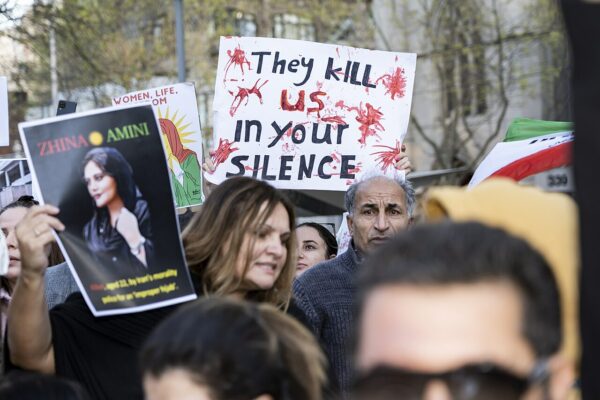
People often say that history repeats itself. The phrase returns whenever a country seems to circle back to an earlier moment — as in Iran, a nation that in the twentieth century appeared to be moving toward modernity, that in 1979 became an Islamic republic, and that today once again seems caught in cycles of tension and uncertainty.
But perhaps history does not truly repeat.
Perhaps we simply observe it from too shallow a distance.
Political change can happen quickly — sometimes within months. Societies, however, move much more slowly. The deeper structures of a culture — the relationships between religion, power, economic life, and collective identity — evolve over generations. When political transformation moves faster than social transformation, the result is rarely a lasting shift. More often, it is tension postponed.
Iran offers a clear example. The country’s modernization during the twentieth century was rapid and visible: expanding cities, universities, infrastructure, a growing middle class. Yet beneath these changes existed social forces that had never fully reconciled with one another. When the political order collapsed in 1979, those tensions did not disappear. They simply reorganized themselves.
External pressure often complicates this dynamic. When powerful countries intervene — through sanctions, political interference, or threats of force — the stated goal is often to accelerate change. Yet such pressure can produce the opposite effect. It strengthens internal authority by providing a narrative of national defense, turning criticism of power into a question of loyalty.
Social change, in other words, rarely moves at the speed outsiders expect. It requires time, institutions, and a process that grows from within a society rather than being imposed upon it.
In a world where conflicts unfold constantly before our eyes, the pressure is to take sides quickly — to align with one flag or another. But perhaps the more difficult choice is a different one: not to choose a side, but to choose a principle.
If humanitarian rules exist, they must apply to everyone.
And when those rules are broken, every country should be held accountable.
Because in the wars we watch from afar, the greatest danger is not only violence itself but the habit of division. And the only side worth choosing, in the end, is the side of humanity.
If we can remain there — each time humanity is placed in danger — we may eventually discover that, despite everything, we have always been on the same side.
❤️ Support Florence Daily News
If you liked this article, please consider supporting Florence Daily News.
We are an independent news site, free from paywalls and intrusive ads, committed to providing clear and reliable reporting on Florence and Tuscany for everyone.
Your support — whether a one-time gift or a regular contribution — helps us stay independent and keep telling the stories that matter.
Donate securely via Stripe below.
Make a one-time donation
Make a monthly donation
Make a yearly donation
Choose an amount
Or enter a custom amount
Your contribution is appreciated.
Your contribution is appreciated.
Your contribution is appreciated.
DonateDonate monthlyDonate yearly

Eirini Lavrentiadou is an actress and singer, born in Thessaloniki in 1992. She lives in Florence, where she trained at the city’s Theatre Academy and the Fiesole School of Music. She has performed in classical Greek and European plays, worked with international directors and companies, and appeared in concerts ranging from opera to jazz. She contributes to Florence Daily News as a writer.