


When the United States arrested the Venezuelan dictator Nicolás Maduro, the language used to describe the operation immediately sounded familiar. It was framed in terms of justice, freedom, and the end of a dictatorship. It is a vocabulary that never seems to age, even when history has already put it to the test.
In 2003, in Iraq, the same lexicon accompanied the fall of Saddam Hussein. Then too, the intervention was presented as a necessary, almost moral act. Democracy, it was said, would arrive right after. Instead came a power vacuum, the fragmentation of the state, and a long period of instability that still defines the country today.
The parallel does not concern the nature of the regimes that were removed, both authoritarian and indefensible. It concerns the method and the belief behind it: the idea that removing one man is enough to change a society. In Iraq, that belief produced a fragile state. In Venezuela, the risk is that it will produce the same illusion.
What makes the Venezuelan case even more problematic is the complete disregard not only for international law (at least in Iraq there was an appeal to old UN resolutions), but also for the US Congress. The removal of the dictator took place as a unilateral act, decided and carried out outside any shared legal framework.
Part of the political class and public opinion remembers Iraq not as a victory, but as a lesson. It is an uncomfortable memory, one that challenges the idea of an exportable, ready-made democracy, especially when it is unclear who sets the rules.
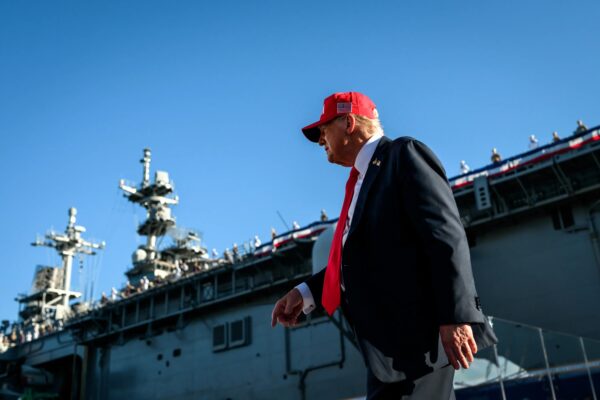
And yet the rhetoric returns. When Donald Trump speaks of “Make America Great Again”, the reference is not only economic or symbolic. That slogan also revives a broader vision: the idea of an America that reasserts its greatness by intervening beyond its borders, without having to answer to a shared international order. Within this framework, a fundamental question remains open: was the intervention in Venezuela really conceived as a move against drug trafficking, when Donald Trump himself said that the US will now manage the “transition” in Venezuela, without even using the word “democratic”?
History is remarkably consistent. Removing a dictator does not amount to building a democracy. Real change does not come from the outside, nor can it be imposed without consent. It emerges instead from an internal process, slow and imperfect, through which a people matures, comes together, and recognises itself as a political subject. Iraq and Venezuela, in different moments, seem to remind us of this with the same silent clarity.
🎄 Support Florence Daily News this holiday season
If you value our work, please consider supporting Florence Daily News this Christmas.
We’re an independent news site — free from paywalls and intrusive ads — committed to offering clear and reliable reporting on Florence and Tuscany for everyone.
Your contribution helps us remain independent and continue telling the stories that matter.
As a small thank-you, supporters this holiday season will receive an original photograph of Florence — a simple, meaningful gift to celebrate the city we all love.
🎁 Donate securely via Stripe below and make your gift count for good journalism in Tuscany.
Make a one-time donation
Make a monthly donation
Make a yearly donation
Choose an amount
Or enter a custom amount
Your contribution is appreciated.
Your contribution is appreciated.
Your contribution is appreciated.
DonateDonate monthlyDonate yearly

Eirini Lavrentiadou is an actress and singer, born in Thessaloniki in 1992. She lives in Florence, where she trained at the city’s Theatre Academy and the Fiesole School of Music. She has performed in classical Greek and European plays, worked with international directors and companies, and appeared in concerts ranging from opera to jazz. She contributes to Florence Daily News as a writer.