


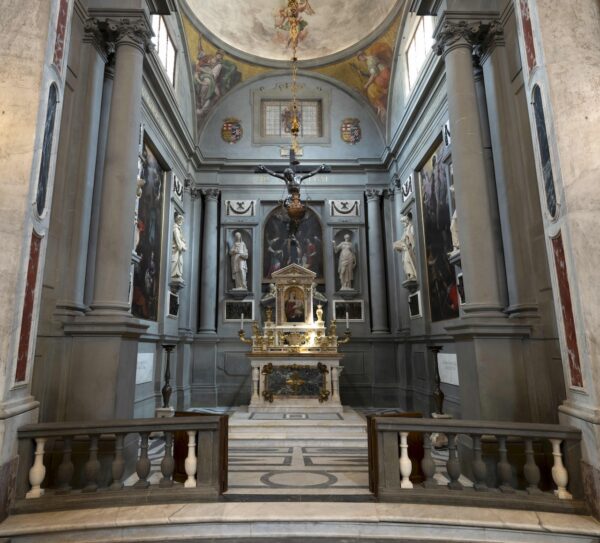
The restoration of the Chapel of the Madonna del Soccorso, known as the Giambologna Chapel, has been completed after almost 18 years of work carried out in stages. Friends of Florence supported several phases of the project, including the latest interventions on the sculptures, marble altar, paintings and pietra serena stonework in the Basilica of the Santissima Annunziata.
The foundation’s involvement began in 2010 with the restoration of the bronze Crucifix made by Giambologna for his own burial chapel. It later supported work on the six bronze reliefs depicting scenes from the Passion of Christ and the panel painting of the Madonna del Soccorso. In the final phase, its support made it possible to complete the restoration of the chapel’s sculptural decoration, altar, Paggi painting, lunettes and stone elements.
Friends of Florence thanked donors Robert and Kathy Craine, Sarah Wiggins and Christine Torretti, as well as its Board, for supporting the commitment to the chapel.

A chapel designed by Giambologna
The chapel lies in the ambulatory around the choir of the Basilica of the Santissima Annunziata. Giambologna, one of the leading sculptors active in Florence in the late 16th century, took possession of it in 1594 and designed its architecture and decorative scheme. The chapel was inaugurated at Christmas 1598. Giambologna was buried there in 1608, the day after his death, alongside his pupil Pietro Tacca.
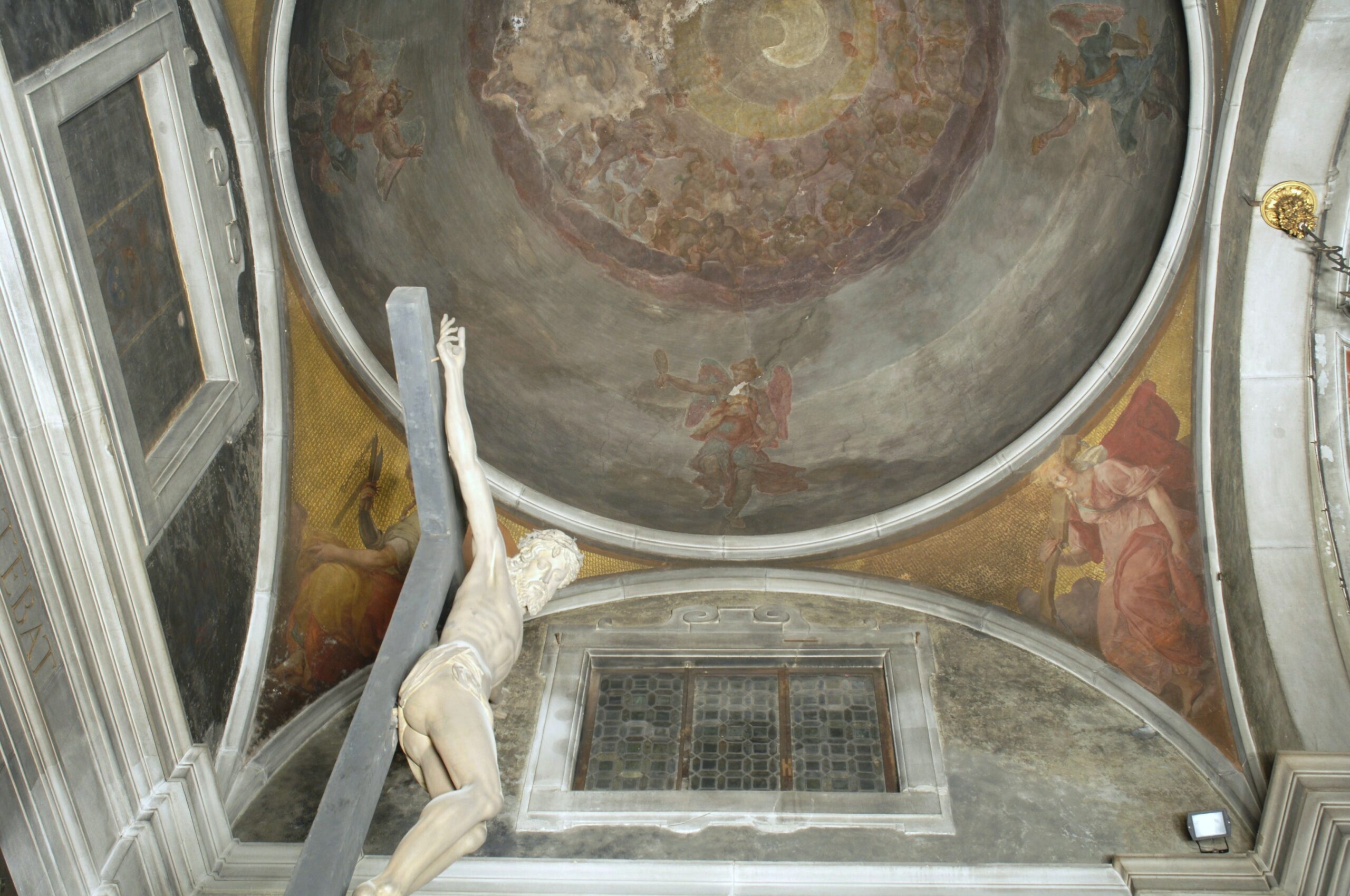
The chapel was conceived as a burial place for Giambologna and for artists from his homeland working in Florence. Its decoration brings together architecture, painting and sculpture: frescoes by Bernardino Poccetti cover the dome; paintings by Giovan Battista Paggi, Jacopo Ligozzi and Domenico Cresti, known as Passignano, occupy the walls; and Giambologna’s bronze Crucifix stands at the centre of the ensemble.
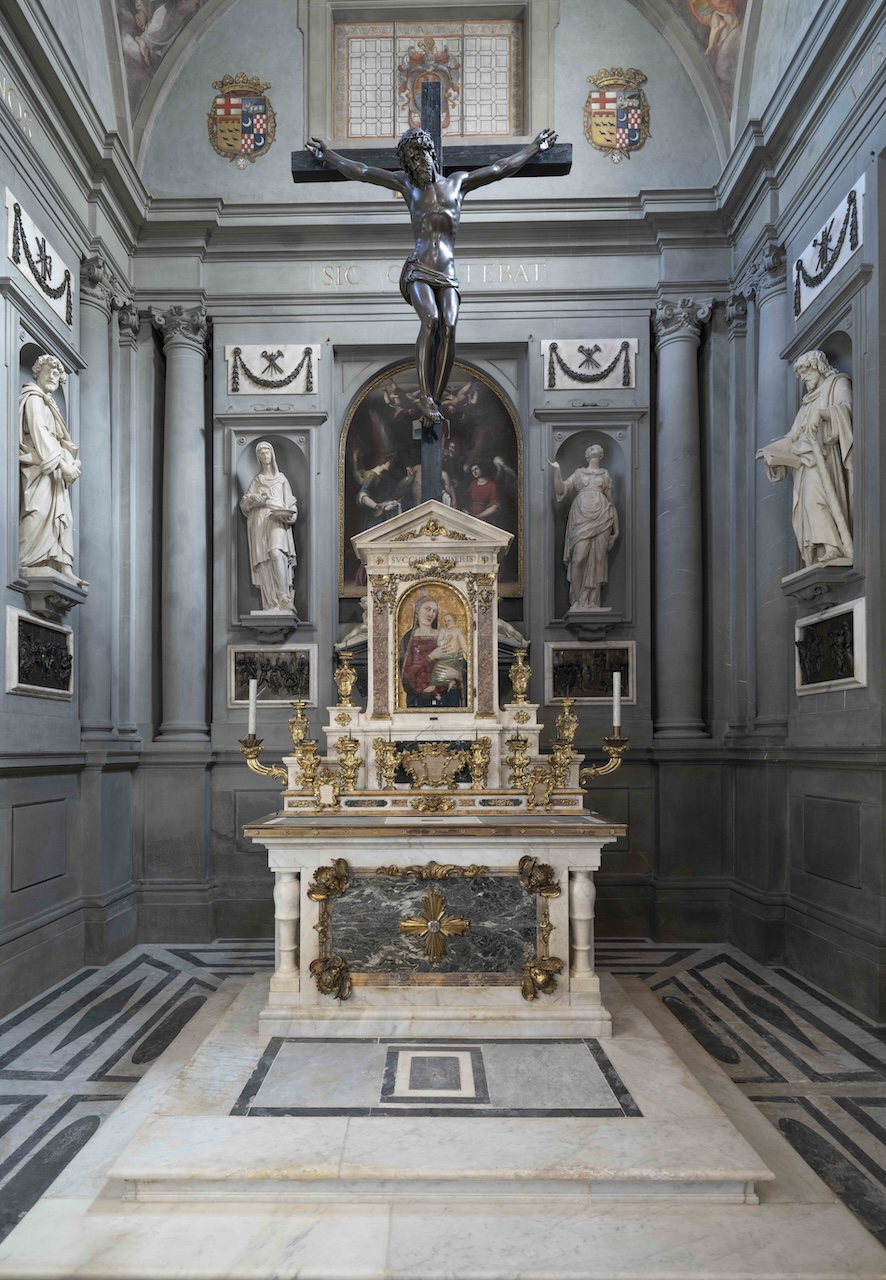
The six bronze reliefs on the chapel walls depict episodes from the Passion. A panel of the Madonna del Soccorso, attributed to the school of Bernardo Daddi, is set into the altar. The chapel also contains marble statues by Pietro Francavilla and figures in unfired clay attributed to Tacca.
A restoration in stages
The first restoration work began in 2008 with the frescoes in the dome and the pendentives, completed in 2009. The project then advanced in stages, with different works supported by a range of donors and institutions. Friends of Florence funded the restoration of the Crucifix in 2010–11, followed by the bronze reliefs and the Madonna del Soccorso panel.
The latest phase, completed in early 2026, brought the chapel’s various components together again. It also included the return to their original setting of the Crucifix, the Madonna del Soccorso and Passignano’s Resurrection, which had remained in the convent after restoration.
Other contributions over the years came from a bequest to the Servite friars, Fondazione CR Firenze, Intesa Sanpaolo, the Italian Environment Fund (FAI), Abercrombie & Kent Europe, the Centro Associazioni Culturali Fiorentine and private donors. The work was directed by the City of Florence’s Service for Fine Arts and Palazzo Vecchio, under the supervision of the heritage authority responsible for the Metropolitan City of Florence and the Province of Prato.

What the restoration revealed
Before the work, soot from devotional candles, dust and pollutants had darkened the chapel’s surfaces and obscured details across the paintings, sculptures and stonework. Moisture had also caused damage, through leaks, condensation and rising damp; the effects of the 1966 flood had aggravated the deterioration.
The conservation work clarified both the appearance and the materials of several works. The four figures in the side niches, long described as stucco, were found to be made of unfired clay. Restorers cleaned the soot from their surfaces and consolidated areas where the painted finish had lifted or detached.
Diagnostic investigations on Paggi’s Adoration of the Shepherds, painted in 1598, revealed changes made during the work’s development. An earlier composition placed Saint Joseph at the same height as the Madonna and included an angel to her right. The canvas also required structural treatment after moisture had caused tears and loosened its attachment to the frame.
The marble altar had suffered from deposits of soot and wax, as well as cracks, voids and sections detached from their supports. Restorers cleaned its coloured marbles, stabilised loose elements and repaired losses. Work on the chapel’s metal decoration included the cleaning of bronze and gilded fittings and the restoration of a wrought-iron gate, which was returned to the chapel in 2026.
A continuing commitment to Giambologna
The chapel is part of Friends of Florence’s long-standing work on Giambologna’s art. The foundation’s first project in 1998 supported the restoration of his Rape of the Sabine Women beneath the Loggia dei Lanzi. Its work at the Santissima Annunziata began more than a decade later with the Crucifix and continued through several phases of the chapel’s restoration.
With the completion of the project, the chapel’s paintings, sculpture and architectural decoration can once again be read as a connected whole. It remains both a place of worship and a monument to Giambologna and the artists who worked in Florence.
❤️ Support Florence Daily News
If you liked this article, please consider supporting Florence Daily News.
We are an independent news site, free from paywalls and intrusive ads, committed to providing clear and reliable reporting on Florence and Tuscany for everyone.
Your support — whether a one-time gift or a regular contribution — helps us stay independent and keep telling the stories that matter.
Donate securely via Stripe below.
Make a one-time donation
Make a monthly donation
Make a yearly donation
Choose an amount
Or enter a custom amount
Your contribution is appreciated.
Your contribution is appreciated.
Your contribution is appreciated.