


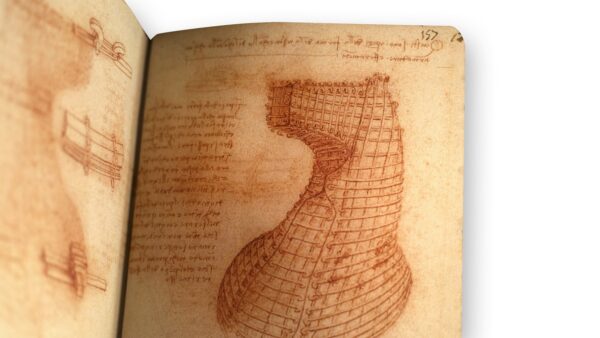
Researchers presenting a new study in Florence have suggested that Leonardo da Vinci’s unfinished works may, in some cases, have reflected a desire to retain control over his work and his relationships with patrons.
The paper, The Unfinished as Gesture: Leonardo da Vinci, the Facetia in the Madrid Codex, and Silent Protest against Power, was presented on 7 November 2026 at Palazzo Strozzi Sacrati, the headquarters of the Tuscany regional government. The study is by Andrea C. da Montefeltro, Annalisa Di Maria and Lucica Bianchi. The event also featured the presentation of a facsimile of Leonardo’s Madrid Codices I and II.

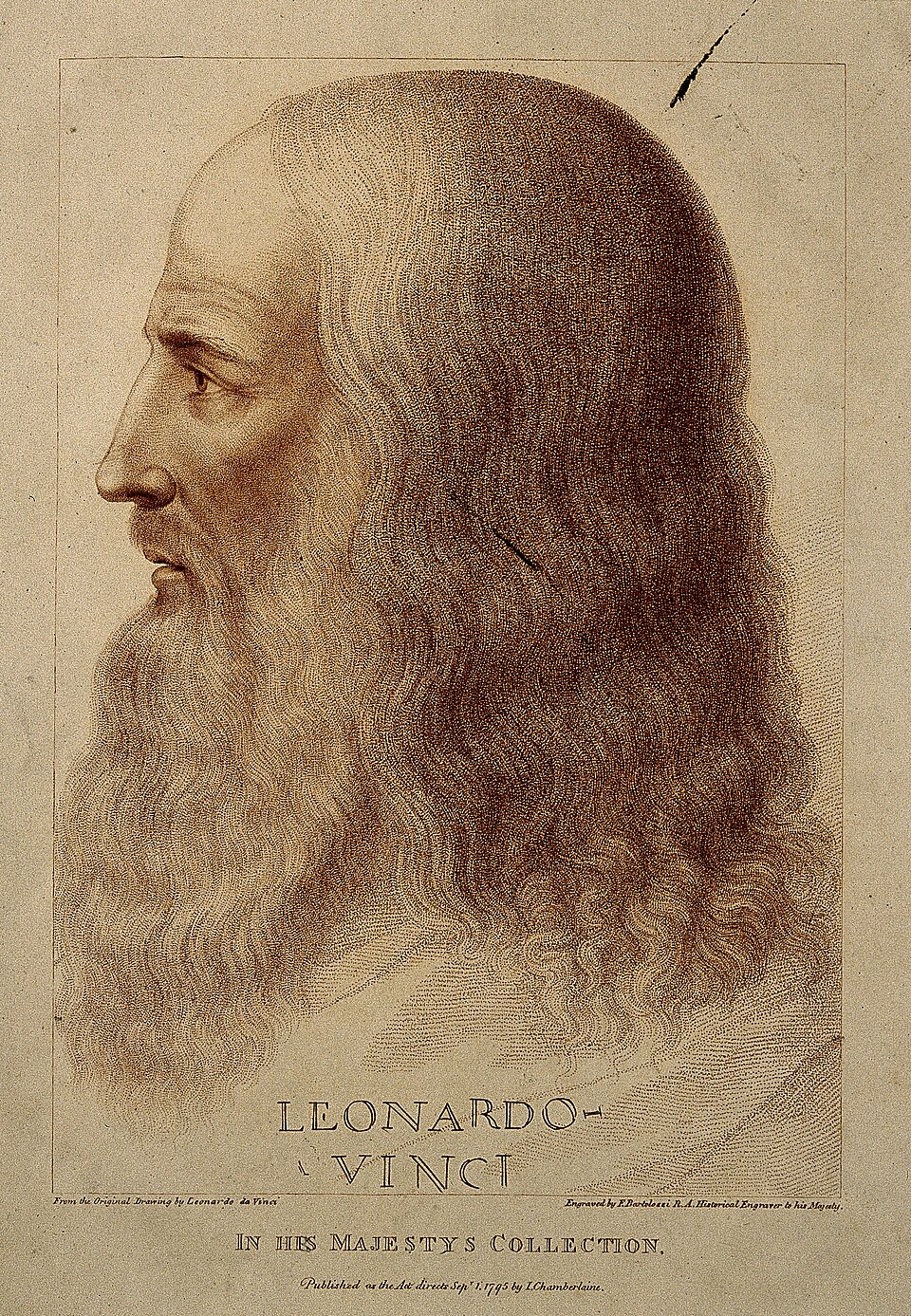
How incompletion could preserve independence
The authors’ argument rests on the difference between making a work and handing it over. A patron who commissioned a finished painting or object could use it to serve their own purposes, including displaying wealth or reinforcing political standing. While the work remained unfinished, the authors suggest, Leonardo retained more control over its development and timing—and could continue to treat it as an ongoing process of study and experiment.
In this reading, leaving a work incomplete could offer a way to delay or withhold the final result without openly refusing the commission. It would not necessarily free Leonardo from his dependence on patrons, but it could give him room to limit their control over how and when the work was completed. This is the researchers’ interpretation of some cases, not an established explanation for Leonardo’s unfinished works as a whole.

A story about privilege and power
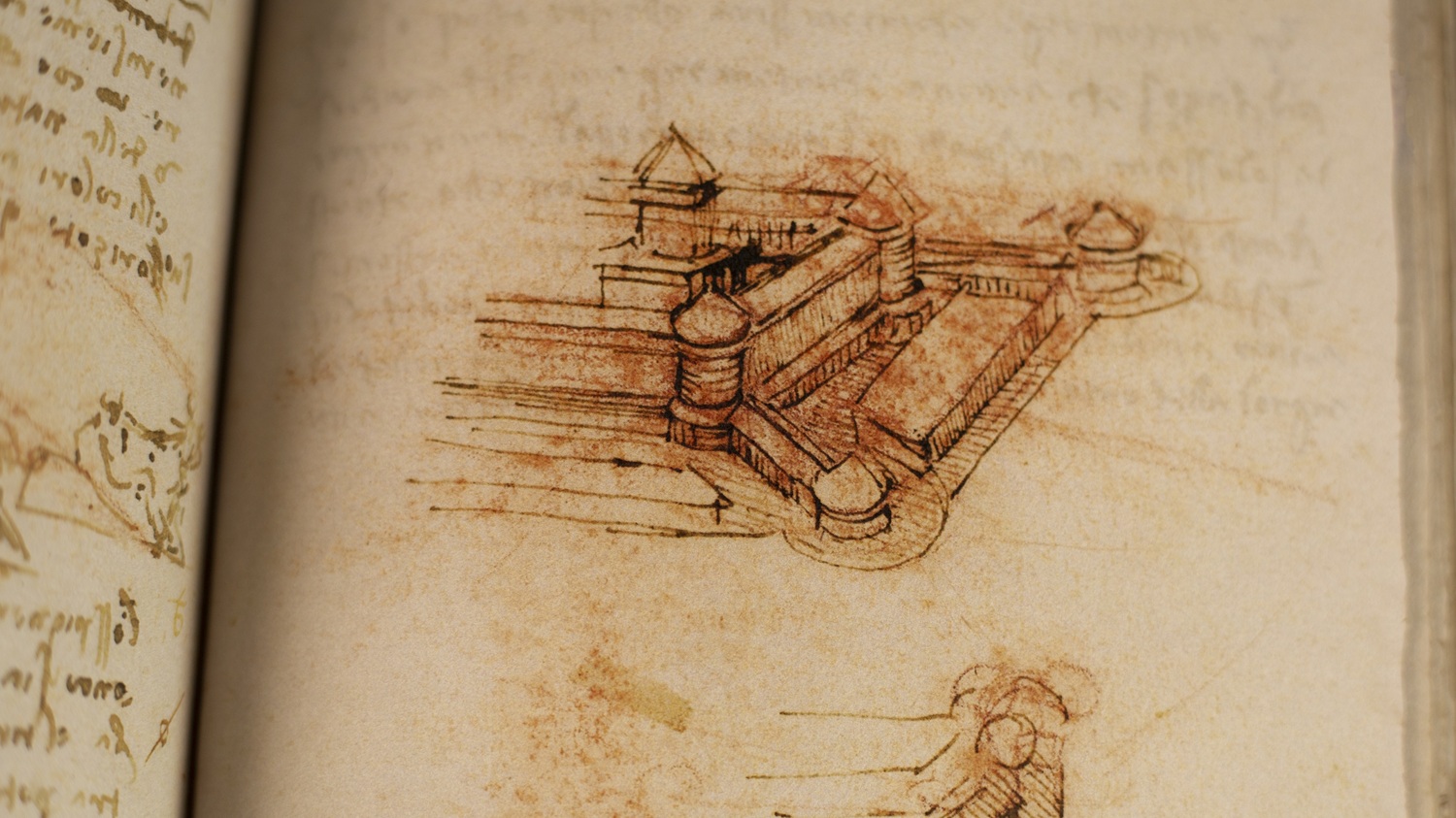
The authors build their interpretation partly around a short humorous story recorded in Madrid Codex II. It concerns a poor man who appeals to a wealthy lord as a fellow descendant of Adam, but receives only a token amount. The researchers read the anecdote as a reflection on the gap between the moral principles powerful people profess and the privileges they are unwilling to give up.
They suggest that, in certain cases, leaving a work unfinished could have limited a patron’s control over it. Their paper does not argue that every incomplete project was deliberate: it distinguishes possible symbolic or relational motives from technical problems and Leonardo’s ongoing experimentation.
A personal understanding of power
The story may have had a particular resonance for Leonardo. Born outside marriage to the notary Ser Piero da Vinci and Caterina, he grew up within his father’s family at Vinci, but his status limited the future open to him: he could not follow Ser Piero into the notarial profession or claim an automatic share of his father’s estate.
His uncle Francesco later named him as an heir, a reminder that family recognition and inheritance could depend on decisions made by those with power. Against this background, the facetia about a poor man asking a rich lord for his share of a common inheritance takes on a more personal edge.
It may reflect Leonardo’s early awareness of the gap between kinship in principle and privilege in practice. That connection remains an interpretation, however: the documents do not tell us how Leonardo felt about his birth, or prove that the anecdote was autobiographical.
Not every unfinished work had the same cause
That qualification matters. The Uffizi Galleries’ account of Leonardo’s unfinished Adoration of the Magi, for example, links its interruption to his departure from Florence for Milan in 1481–82, while also noting that scholars have debated the reasons behind the unfinished state of some of his other works. The painting remains at the Uffizi in Florence.
The Madrid Codices are two Leonardo manuscripts held by Spain’s National Library in Madrid. The event’s facsimile presentation brought the manuscripts back into focus alongside a new, distinctly interpretive argument about the artist’s relationship with patrons and power.
(Cover photo: cARTEm Codex Madrid)
❤️ Support Florence Daily News
If you liked this article, please consider supporting Florence Daily News.
We are an independent news site, free from paywalls and intrusive ads, committed to providing clear and reliable reporting on Florence and Tuscany for everyone.
Your support — whether a one-time gift or a regular contribution — helps us stay independent and keep telling the stories that matter.
Donate securely via Stripe below.
Make a one-time donation
Make a monthly donation
Make a yearly donation
Choose an amount
Or enter a custom amount
Your contribution is appreciated.
Your contribution is appreciated.
Your contribution is appreciated.