


There is something strangely cyclical about the way politics returns to the question of rights.
Every time a society seems to have taken a step forward, someone proposes taking a step back. Not necessarily by erasing everything, but by reopening questions that once seemed settled: the right to abortion, the recognition of same-sex couples, the freedom to live one’s identity without the state dictating what that identity ought to be.
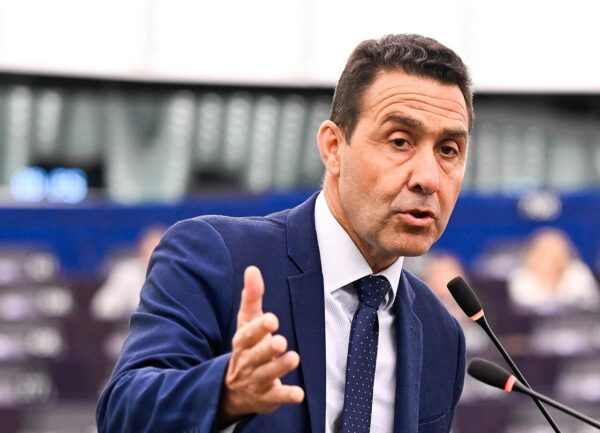
In recent days, Roberto Vannacci and his party, Futuro Nazionale, have brought these questions back to the center of Italy’s political debate. The party’s program describes abortion as “not a right,” calls for the repeal of civil unions, and proposes restrictions on homosexual and gender-related content in the media.
The most immediate reaction is the familiar one: debate. Refute. Explain why these ideas are wrong. Bring evidence, arguments, historical precedents. Try, in other words, to change the minds of those who hold them.
But there is another question worth asking: When does debate cease to be useful?
A democracy must allow opinions to be expressed, even when they are conservative, unpleasant, or profoundly at odds with the sensibilities of the majority. But that does not mean that every opinion deserves the same moral weight. And it certainly does not mean that every civic achievement must constantly be dragged back to the starting line, as though the dignity of a portion of the population were still something to be decided.
Perhaps this is where we confuse two different things: the possibility of changing a law, and the possibility of continually reopening the principle that gave rise to that law in the first place.
A right can be modified. A law can be debated. But when a society has come to recognize that certain people are entitled to the same freedom and dignity as everyone else, that recognition should become something more than a political opinion. It should settle into institutions, into culture, into collective memory.
Otherwise, every generation starts over.
And perhaps this is what episodes like Vannacci’s reveal: we have not yet fully institutionalized human rights. We have won them, but we have not yet made them entirely unavailable to political nostalgia.
Nostalgia, after all, is a human impulse. The past has one advantage over the present: it has already happened. It no longer contains the uncertainty of the future. It can be simplified, ordered, even beautified. It is easy to imagine that once society was more stable, families were stronger, roles were clearer, and people were more certain of who they were.
The real past, of course, was considerably more complicated.
But politics does not always need the real past. Sometimes it needs an imagined one: a place to return to when the present becomes too difficult to govern.
That is when nostalgia becomes a political project.
The problem, then, is not only Vannacci. And perhaps it is not even particularly useful to ask whether we can convince Vannacci that he is wrong. The more important question is this: Why does a society that has already fought certain battles feel compelled to fight them all over again?
Perhaps because no human achievement is ever completely secure.
But perhaps also because a genuinely democratic society is not one that has permanently eliminated the ideas that threaten it. It is one that has built institutions strong enough to prevent the nostalgia of some from becoming the loss of rights for others.
We do not need to persuade the past to become the present.
We need to decide how much of the past we are willing to let return.
(Cover photo: Roberto Vannacci by Zio27 via Wikimedia)
❤️ Support Florence Daily News
If you liked this article, please consider supporting Florence Daily News.
We are an independent news site, free from paywalls and intrusive ads, committed to providing clear and reliable reporting on Florence and Tuscany for everyone.
Your support — whether a one-time gift or a regular contribution — helps us stay independent and keep telling the stories that matter.
Donate securely via Stripe below.
Make a one-time donation
Make a monthly donation
Make a yearly donation
Choose an amount
Or enter a custom amount
Your contribution is appreciated.
Your contribution is appreciated.
Your contribution is appreciated.


Eirini Lavrentiadou is an actress and singer, born in Thessaloniki in 1992. She lives in Florence, where she trained at the city’s Theatre Academy and the Fiesole School of Music. She has performed in classical Greek and European plays, worked with international directors and companies, and appeared in concerts ranging from opera to jazz. She contributes to Florence Daily News as a writer and social media creator.