


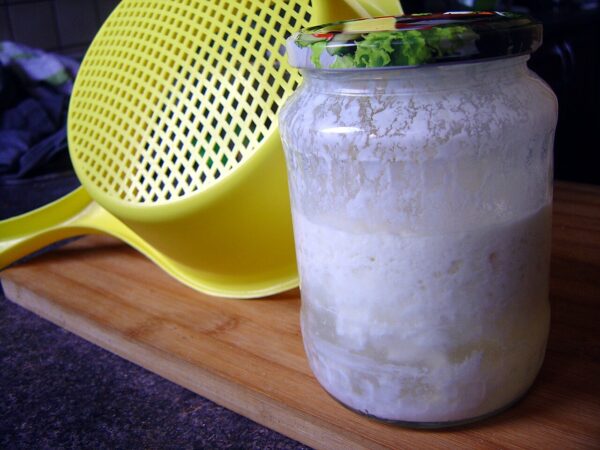
A University of Florence research team has investigated how yeasts found in traditional fermented dairy products may contribute to the beneficial properties associated with kefir and other foods containing live microorganisms.
The research, coordinated by Duccio Cavalieri, professor of microbiology at the University of Florence’s Department of Biology, focuses on Saccharomyces cerevisiae strains from the Yaghnob Valley in Tajikistan, a geographically isolated area of Central Asia with a long tradition of fermenting goat’s milk.
The study, published in the Proceedings of the National Academy of Sciences (PNAS), examines the genomic characteristics that have allowed these yeasts to adapt to a dairy environment.
A microbial ecosystem
Kefir is produced through fermentation and contains a complex community of microorganisms, particularly lactic acid bacteria and yeasts.
Yeasts are single-celled microscopic fungi. During fermentation, they metabolise sugars and produce other compounds, including carbon dioxide, small quantities of alcohol and substances that contribute to flavour.
According to the University of Florence research, the interaction between bacteria and yeasts creates an acidic environment that can make it more difficult for some potentially harmful microorganisms to grow.
The Yaghnob Valley has attracted researchers because traditional fermented goat’s milk is a staple food there and is produced by using part of a previous fermentation to start the next batch. Earlier research involving Cavalieri and other scientists identified several yeast species in these fermented products, including Kluyveromyces marxianus, Pichia fermentans and Saccharomyces cerevisiae.
What researchers found in the yeast DNA
For the latest study, researchers mapped the DNA of the Yaghnob yeasts and compared it with more than 1,000 strains of S. cerevisiae associated with environments including wine, grapes and the human intestine.
The analysis indicates that the Yaghnob strains occupy an early position in the evolutionary history of S. cerevisiae strains associated with fermented dairy products and display distinctive enzymatic characteristics.
One of the most significant findings concerns galactose, one of the sugars produced when lactose is broken down. The researchers found that the Yaghnob yeasts are particularly efficient at metabolising it.
This ability means that the yeasts can compete with lactobacilli for galactose within the microbial community. The Florence researchers say these interactions may help explain how fermented products rich in live microorganisms can influence the balance of the intestinal microbiota.
The findings also provide a possible biological explanation for some characteristics associated with fermented dairy foods, including their reduced lactose content. However, the research concerns the microorganisms and their metabolic and genomic characteristics rather than establishing kefir as a treatment for specific medical conditions.
From an isolated valley to human health research
The work builds on research that the Florence group has carried out for years on the relationship between yeasts, bacteria and their hosts.
University of Florence researchers have also investigated how competitive or cooperative interactions between S. cerevisiae and lactobacilli can affect the host immune response and the intestinal environment.
The Yaghnob research therefore has implications beyond the history of food fermentation. By studying populations that have maintained traditional fermentation practices, scientists can examine how microorganisms have adapted alongside human diets and food production.
The findings could also contribute to future research into food-derived yeasts with potential probiotic applications. The University of Florence’s Department of Biology is currently involved in research examining environmental and food strains of Saccharomyces for their potential probiotic characteristics.
For the Florence team, the study adds another piece to the history of a microorganism best known for its role in bread, beer and wine, showing how some S. cerevisiae populations have also adapted to dairy fermentation and developed close relationships with other microorganisms in fermented foods.
❤️ Support Florence Daily News
If you liked this article, please consider supporting Florence Daily News.
We are an independent news site, free from paywalls and intrusive ads, committed to providing clear and reliable reporting on Florence and Tuscany for everyone.
Your support — whether a one-time gift or a regular contribution — helps us stay independent and keep telling the stories that matter.
Donate securely via Stripe below.
Make a one-time donation
Make a monthly donation
Make a yearly donation
Choose an amount
Or enter a custom amount
Your contribution is appreciated.
Your contribution is appreciated.
Your contribution is appreciated.