


Florence’s Uffizi Galleries are carrying out a programme of works worth around €50 million that is expected to substantially change the museum complex over the next two years, with projects spanning the Uffizi itself, Palazzo Pitti and the Boboli Gardens.
The programme brings together dozens of projects at different stages, from recently completed work to construction sites already active and schemes approaching their start date. They include restoration of historic spaces and artworks, new museum layouts, upgraded lighting and climate-control systems, additional exhibition areas and changes intended to improve visitor reception and circulation.
Director Simone Verde said the programme follows roughly two years of planning and administrative procedures. According to the museum, the scale of the work has required the involvement of staff across the institution.
The programme is particularly significant because the Uffizi Galleries are not a single museum. The institution manages the Uffizi Gallery beside Piazza della Signoria, Palazzo Pitti on the south side of the Arno, the adjoining Boboli Gardens and the Vasari Corridor connecting the Uffizi area with the Pitti complex.
The result is a series of simultaneous projects affecting both some of Florence’s most visited museum spaces and less familiar parts of the complex that are being prepared for public use.

Uffizi: new entrance areas and a rethink of the galleries
At the Uffizi, one of the main projects is the creation of introductory rooms explaining the history of the collections on the ground floor. The works listed by the museum include expenditure of about €2.4 million for part of this project.
The new section is intended to give visitors more context before they encounter the collections themselves, explaining how the holdings were formed and developed over time.
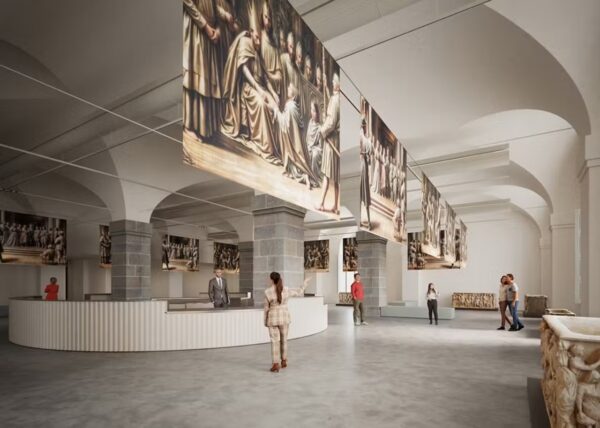
Another major change concerns visitor reception and access control. The programme includes a new reception and security area in the Aula Magliabechiana and a new entrance through a monumental hall overlooking Piazza del Grano, immediately behind the Uffizi complex.
According to the museum, the tender for the latter project has already been completed and the construction site assigned to the successful contractor, with work expected to begin in the coming months.
Changes are also continuing inside the galleries.
The rooms devoted to Flemish painting on the second floor are due to reopen with a redesigned museum layout, new barriers and a new lighting system. The project is valued at approximately €1.2 million.
Other interventions include the rearrangement of the room associated with Filippo Lippi and Andrea del Castagno and the opening of a space displaying Andrea del Castagno’s portraits of illustrious men.
The Uffizi also plans a historically informed restoration of the small area containing ancient inscriptions, with works valued at about €344,000.
Further projects involve the Verone, or upper loggia, and the 20th-century galleries designed by architects Carlo Scarpa, Giovanni Michelucci and Ignazio Gardella. The museum plans to restore elements of those spaces while introducing new interpretative tools for visitors.
Alongside the individual gallery projects, the Uffizi is replacing its system of labels and directional signs. New room screens and other visitor-information tools are also planned.

A €12 million project for the Vasari complex
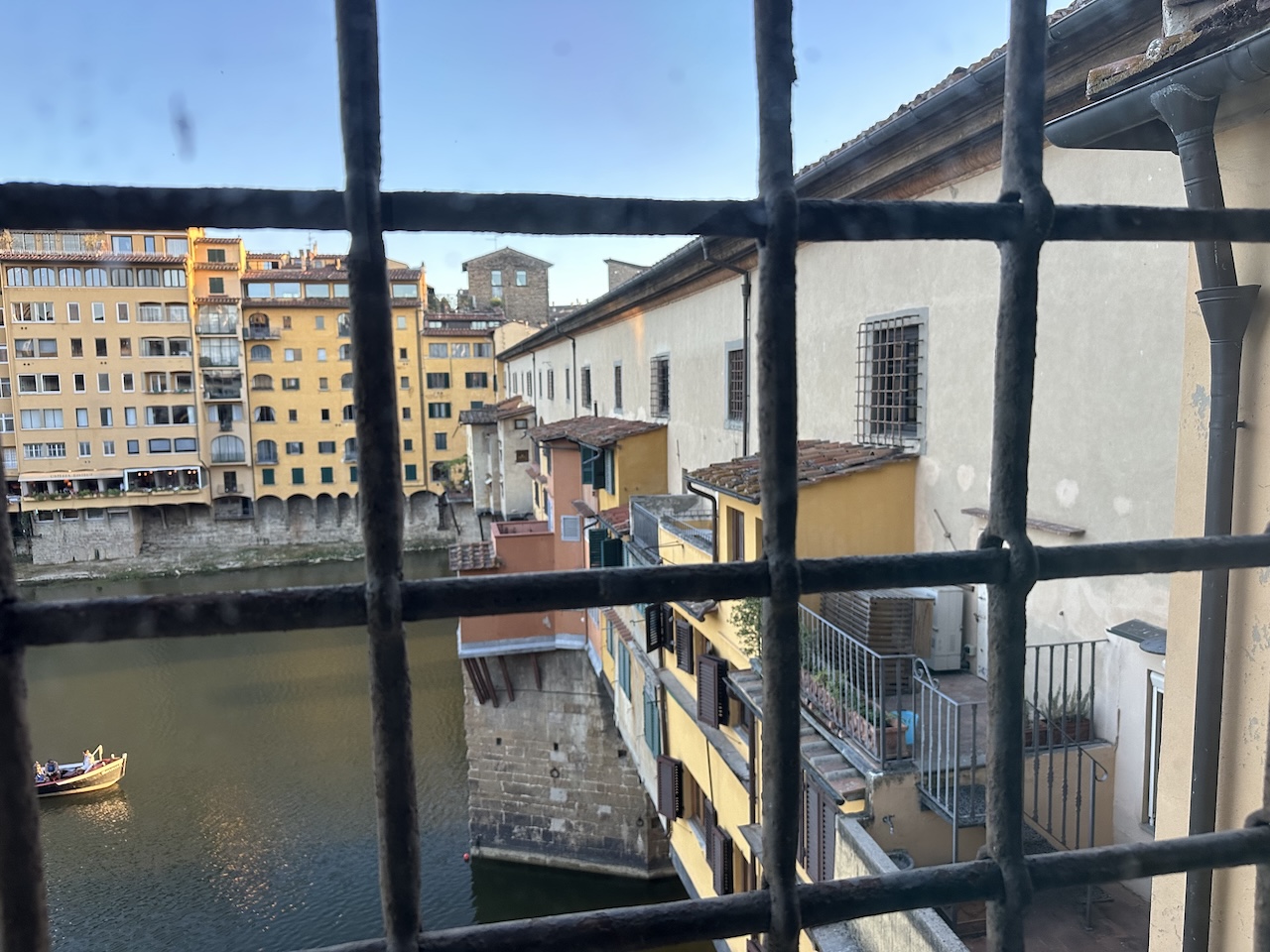
The largest single figure listed in the programme is approximately €12 million for planned restoration of the façades and roofs of the Uffizi’s Vasari complex.
The museum is also working on the technical infrastructure serving the Vasari Corridor. The programme includes completion of air-conditioning and air-treatment equipment in the final section of the corridor.
Other technical investments at the Uffizi include two cooling towers and a procedure for the supply of three water-cooled chillers and two water-to-water heat pumps for the museum’s climate-control systems, with expenditure of about €1.7 million.
These less visible projects form an important part of the programme. Environmental control is essential both for visitor comfort and for maintaining stable conditions around paintings, sculptures, textiles and other sensitive works.
Current administrative records published by the Uffizi also show continuing work in 2026 on safety and building systems across the Uffizi, Palazzo Pitti, Boboli Gardens and Vasari Corridor.

Palazzo Pitti to gain around 1,000 square metres of exhibition space
Some of the most substantial changes are planned across the river at Palazzo Pitti, the former Medici and grand-ducal residence facing Piazza Pitti.
One of the most important is the conversion of the building’s uppermost level, known as the Piano degli Occhi or Mezzanino degli Occhi, into museum space.
The project, valued at approximately €4.9 million, will create about 1,000 square metres of additional exhibition space in an area that remains unfamiliar to most visitors.
Work is also planned for the Tesoro dei Granduchi, the museum on the ground floor of Palazzo Pitti formerly known as the Museo degli Argenti. The programme includes extraordinary building and systems maintenance and a new display, with €380,000 listed for part of the works and approximately €3.5 million for display cases.
The Palatine Gallery, which occupies the palace’s former state apartments and contains a major collection of Renaissance and Baroque paintings, is another focus of the programme.
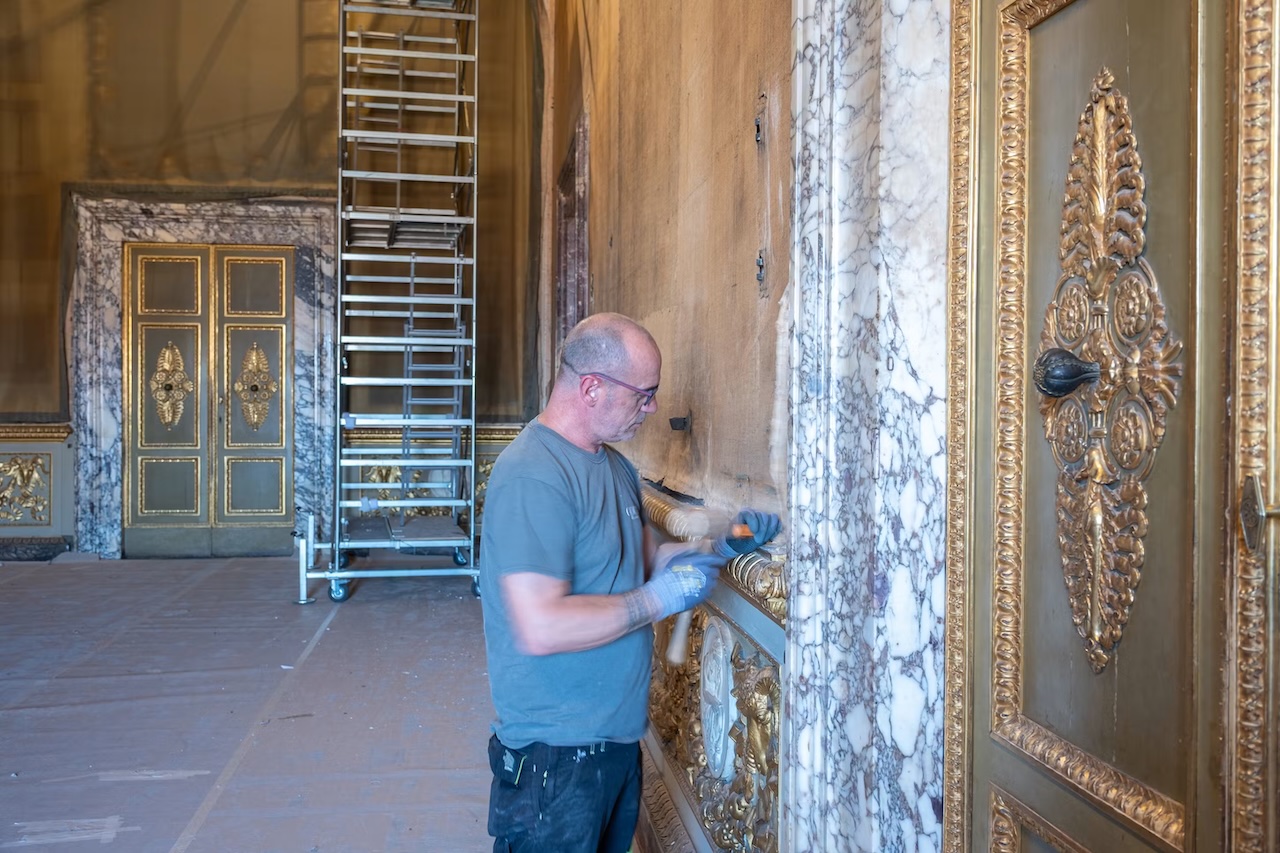
Textile wall coverings are being replaced and rooms restored, while the lighting system is being redesigned. Work involves the Sala di Giove, Sala di Saturno and Sala dell’Iliade, as well as new lighting in the Sala Bianca.
The official Uffizi website currently lists the Sala dell’Iliade as temporarily closed, confirming that work remains under way in parts of Palazzo Pitti in 2026.
Other projects include restoration of the Volterrano apartments and the Sala della Musica, work on the Rondò di Bacco theatre and monitoring and restoration of Palazzo Pitti’s façades.
A new entrance to the palace is also included in the programme.

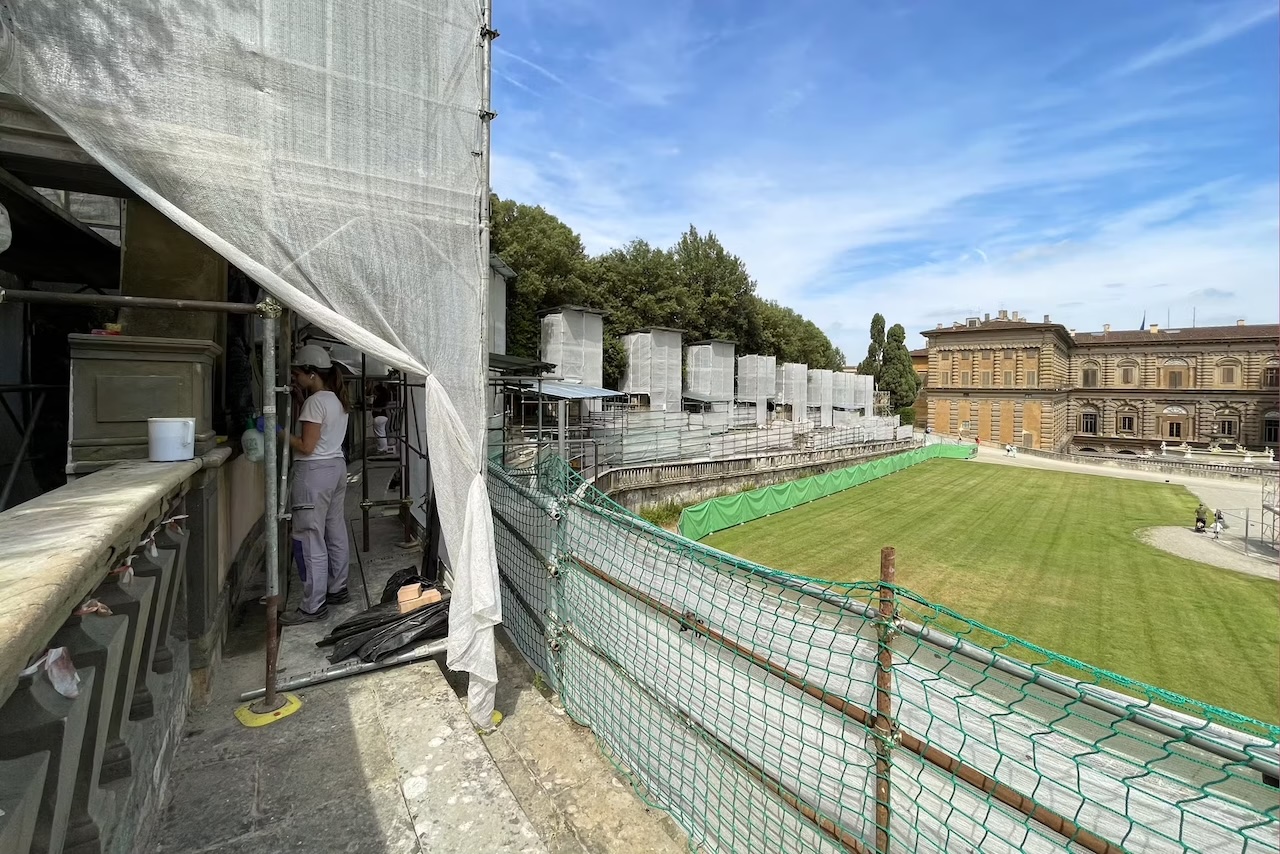
Boboli Gardens: major restoration of fountains and amphitheatre
The Boboli Gardens account for another substantial share of the investment.
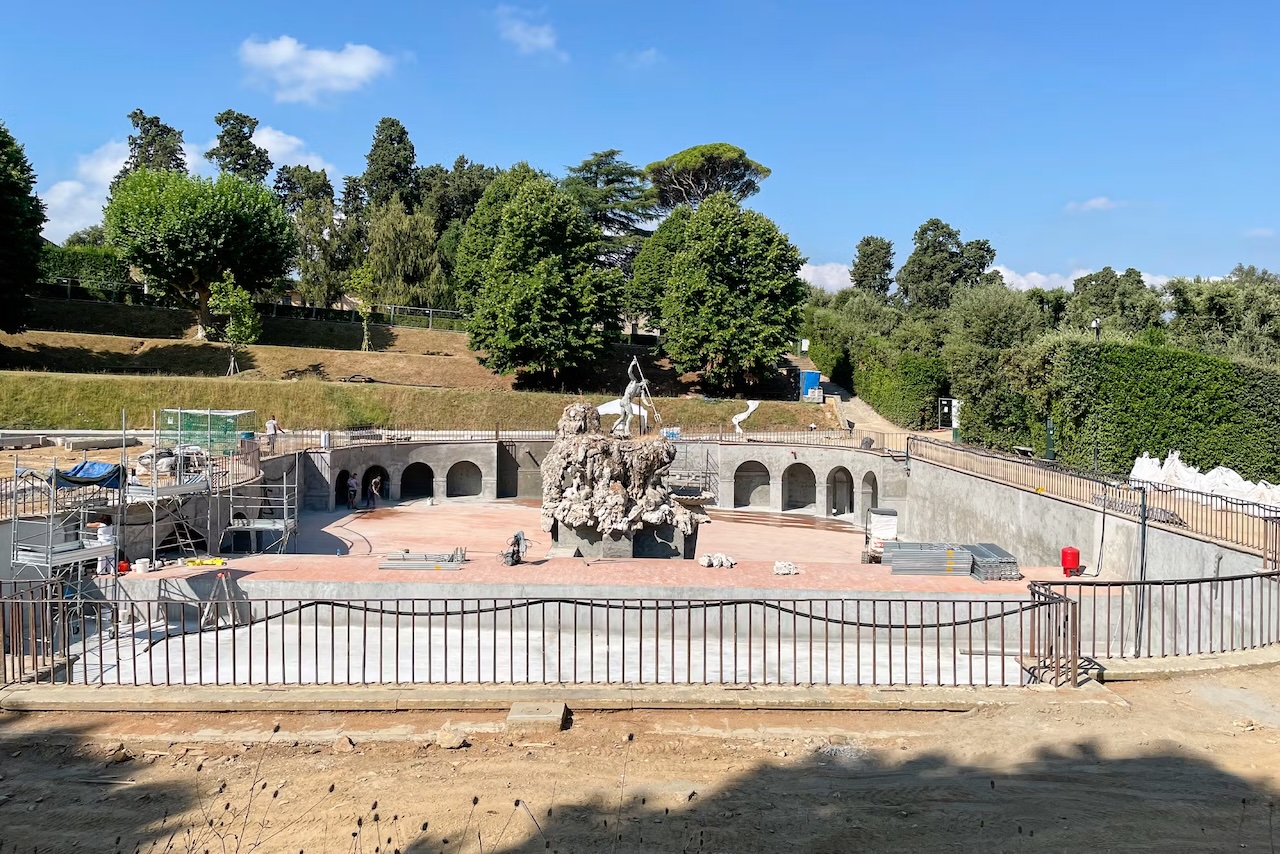
One of the largest projects is the restoration of the Island Fountain basin and surrounding area, combined with completion of restoration work at the Fountain of Neptune. The overall figure given for the Neptune and Island projects is approximately €7.7 million.
Both areas are important elements of Boboli’s historic landscape and its system of architecture, sculpture, vegetation and water features.
Work is also taking place at the garden’s amphitheatre. Approximately €3 million is allocated to its conservation and functional restoration, including preparations that would allow the historic space to be used for public performances.
The amphitheatre occupies a prominent position behind Palazzo Pitti and developed from the area of the former quarry that supplied stone for the palace itself.
The programme also includes approximately €1 million for maintenance and restoration of sculptures throughout Boboli.
Another €800,000 is associated with restoration of the plant heritage and related systems in the Giardino del Cavaliere, while approximately €241,000 is allocated to recovery and restoration of the Medinilla greenhouse.
The museum is also planning changes to internal routes through the garden.
Thousands of new plants at Boboli
The programme is not limited to monuments and buildings.
The Uffizi says more than 2,500 plants have been added to Boboli over the past year. The broader figures supplied by the museum indicate more than 2,600 plantings across different areas over the last two years, with the total rising by more than another 1,000 when plantings carried out in 2024 are included.
The work is part of the continuing management and restoration of Boboli’s historic vegetation.
The approximately 45-hectare garden behind Palazzo Pitti is both a museum site and a historic landscape, meaning its conservation involves plants, water systems, paths, architecture and sculpture rather than buildings and artworks alone.
New storage and collection spaces in the former stables
Another large project concerns the Pagliere complex in the area of the former royal stables.
Around €3.6 million is listed for the recovery of part of the complex for tapestry storage.
The first floor is also intended to become an accessible storage area for furniture and furnishings connected with the dynasties that occupied Palazzo Pitti: the Medici, the House of Lorraine and, after Italian unification, the House of Savoy.
Open storage can allow museums to make parts of their collections accessible that would otherwise remain in conventional repositories because there is insufficient space to include them in permanent displays.
Changes visitors will see — and others they will not
The €50 million programme combines two different kinds of investment.
Some projects will be immediately visible: restored rooms, new galleries, new exhibition spaces, redesigned lighting, reopened historic areas, new labels and improved reception facilities.
Others involve infrastructure that most visitors are unlikely to notice, particularly heating, cooling, ventilation and air-treatment systems.
The emphasis on these systems reflects the particular requirements of museums housed in historic buildings. The Uffizi and Palazzo Pitti have to accommodate large visitor numbers while maintaining environmental conditions suitable for collections inside structures that were not originally designed as modern museums.
The programme also includes new seating, barriers and other museum furniture.
A two-year transformation rather than a single construction project
The scale of the operation does not mean that the Uffizi, Palazzo Pitti and Boboli are becoming one large construction site with a single completion date.
Instead, the approximately €50 million figure covers a network of individual projects with different budgets, schedules and stages of development. Some are already under way, others are being prepared, while some of the listed amounts remain projected expenditure.
That distinction is important for visitors. Individual rooms or sections may close temporarily as work progresses, but the museum complex continues to operate.
The Uffizi’s official 2026 information already records temporary closures linked to work, including the Sala dell’Iliade at Palazzo Pitti and the Tesoro dei Granduchi.
Visitors planning a trip should therefore check the Uffizi Galleries’ official notices shortly before their visit, particularly if they want to see a specific room or collection.
Main projects and announced budgets
Among the largest figures included in the programme are:
- €12 million planned for restoration of the façades and roofs of the Uffizi’s Vasari complex;
- about €7.7 million for the Fountain of Neptune and Island Fountain area at Boboli;
- €4.9 million to convert Palazzo Pitti’s upper Mezzanino degli Occhi into approximately 1,000 square metres of exhibition space;
- about €3.6 million for the Pagliere complex and tapestry storage;
- about €3.5 million for display cases at the Tesoro dei Granduchi;
- about €3 million for restoration and functional recovery of Boboli’s amphitheatre;
- about €2.4 million for part of the Uffizi section introducing the history of the collections;
- about €1.7 million for new cooling and heat-pump equipment at the Uffizi;
- about €1.2 million for the Flemish galleries;
- about €1 million for Boboli’s sculptures;
- about €800,000 for the Giardino del Cavaliere;
- about €344,000 for the Uffizi area containing ancient inscriptions;
- about €241,000 for the Medinilla greenhouse.
The figures should not be read as a complete itemised breakdown of the €50 million total: the museum’s programme also lists projects without individual costs, while some amounts are described as partial, approximate or projected.
What it means for Florence
The programme amounts to a gradual reorganisation of one of Florence’s most important cultural institutions rather than simply a restoration campaign.
It expands the amount of space available for exhibitions, changes how visitors enter and move through the museums, brings less familiar areas into public use and updates the infrastructure needed to protect the collections.
At Palazzo Pitti, the recovery of the Piano degli Occhi alone will add around 1,000 square metres of exhibition space. At Boboli, investment extends from major monuments such as the amphitheatre and fountains to vegetation, sculptures and internal routes. At the Uffizi, meanwhile, the work combines new displays and introductory galleries with changes to reception, signage and environmental systems.
Verde has described the programme as the result of an unusually extensive period of planning involving the museum’s staff. His stated aim is for the projects to improve both the presentation of the collections and the overall functioning of the complex.
For visitors, however, the transformation will unfold gradually. With dozens of projects proceeding on different schedules through 2026 and beyond, temporary closures and changes to individual routes are likely to remain part of visiting the Uffizi Galleries while the work continues.
(Cover photo: design for the visitor reception and access-control area in the Uffizi’s Magliabechiana Hall. Uffizi Galleries)
❤️ Support Florence Daily News
If you liked this article, please consider supporting Florence Daily News.
We are an independent news site, free from paywalls and intrusive ads, committed to providing clear and reliable reporting on Florence and Tuscany for everyone.
Your support — whether a one-time gift or a regular contribution — helps us stay independent and keep telling the stories that matter.
Donate securely via Stripe below.
Make a one-time donation
Make a monthly donation
Make a yearly donation
Choose an amount
Or enter a custom amount
Your contribution is appreciated.
Your contribution is appreciated.
Your contribution is appreciated.