


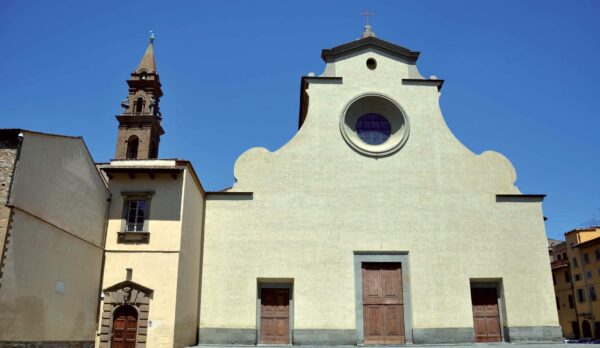
For millions of visitors, Michelangelo in Florence means the monumental David at the Galleria dell’Accademia. But a new article in The New York Times argues that one of the artist’s most moving works is found on the opposite side of the Arno River, inside the Basilica of Santo Spirito.
In a feature published on 15 July, journalist Zachary Fine describes the Santo Spirito Crucifix as a forgotten Renaissance masterpiece, encouraging visitors to look beyond Florence’s most famous attractions and discover a sculpture that reveals a very different side of the young Michelangelo.
A youthful work with an extraordinary history
The limewood crucifix was carved around 1493, when Michelangelo was about 18 years old. At the time, the artist was living and studying at the Augustinian convent attached to Santo Spirito, where the friars gave him access to the infirmary so that he could study human anatomy through the dissection of corpses—a formative experience that profoundly influenced his understanding of the human body.
According to historical accounts cited in the New York Times article, Michelangelo created the crucifix as a gift for the convent in gratitude for that opportunity.
Lost, rediscovered and finally returned
Although early biographers Giorgio Vasari and Ascanio Condivi mentioned the sculpture, it gradually disappeared from public attention.
Its modern rediscovery came in 1962, when German art historian Margrit Lisner recognised the work hanging in an inconspicuous location within the convent during research on Tuscan crucifixes. Her identification revived scholarly interest in what is now widely accepted as an authentic work by Michelangelo.
After decades spent between Santo Spirito and Casa Buonarroti during restoration and ownership discussions, the crucifix returned permanently to the basilica in 2000, where it is now displayed in the sacristy.

A different Michelangelo
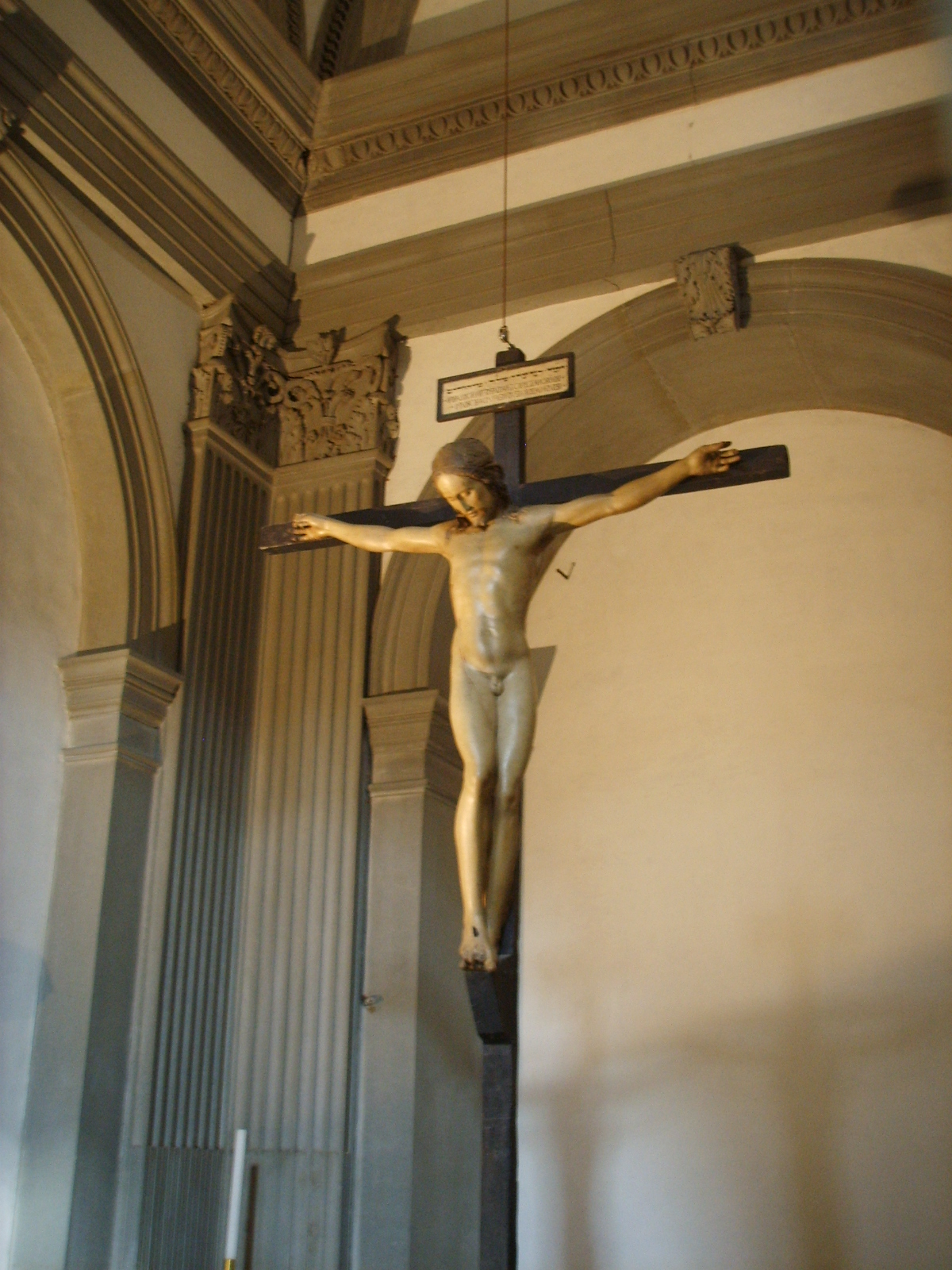
Unlike the monumental figures that made Michelangelo famous, the Santo Spirito Crucifix presents a remarkably intimate image of Christ.
The sculpture is notable for its slender proportions, youthful body and unusual emotional restraint. Art historians have long observed that its anatomy differs from the heroic ideal seen in later masterpieces, yet many regard these qualities as part of its expressive power rather than its limitations.
The New York Times argues that the work offers a rare glimpse into Michelangelo’s artistic development, revealing a quieter, more vulnerable vision than the one associated with the David, the Sistine Chapel ceiling or the monumental projects of his later career.
A reason to cross the Arno
The article also highlights Santo Spirito itself as one of Florence’s most rewarding churches. Designed by Filippo Brunelleschi, the Renaissance basilica remains less crowded than many of the city’s major museums despite housing works of exceptional artistic and historical significance.
Visitors can see the crucifix in the basilica’s sacristy, accessible with a small admission fee, where it hangs suspended beneath the high ceiling in a setting that reinforces its contemplative character.
For Florence, the international attention represents another reminder that some of the city’s greatest treasures remain outside the standard tourist itinerary. While the David continues to attract the largest crowds, Michelangelo’s earliest surviving sculpture invites visitors to discover a more intimate chapter in the artist’s extraordinary career.
❤️ Support Florence Daily News
If you liked this article, please consider supporting Florence Daily News.
We are an independent news site, free from paywalls and intrusive ads, committed to providing clear and reliable reporting on Florence and Tuscany for everyone.
Your support — whether a one-time gift or a regular contribution — helps us stay independent and keep telling the stories that matter.
Donate securely via Stripe below.
Make a one-time donation
Make a monthly donation
Make a yearly donation
Choose an amount
Or enter a custom amount
Your contribution is appreciated.
Your contribution is appreciated.
Your contribution is appreciated.