


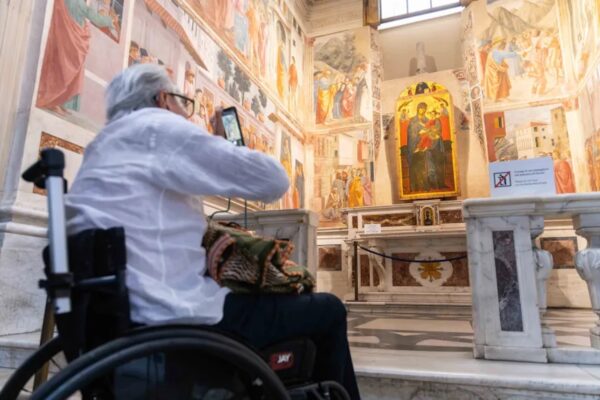
The Brancacci Chapel in Florence has become the Italian pilot site of a European project aimed at improving accessibility and sustainability in cultural heritage sites. The initiative, known as AccesS and funded through the European Union’s Horizon Europe programme, has introduced a range of new technologies and visitor services designed to make the chapel more accessible while supporting the long-term conservation of its renowned frescoes.
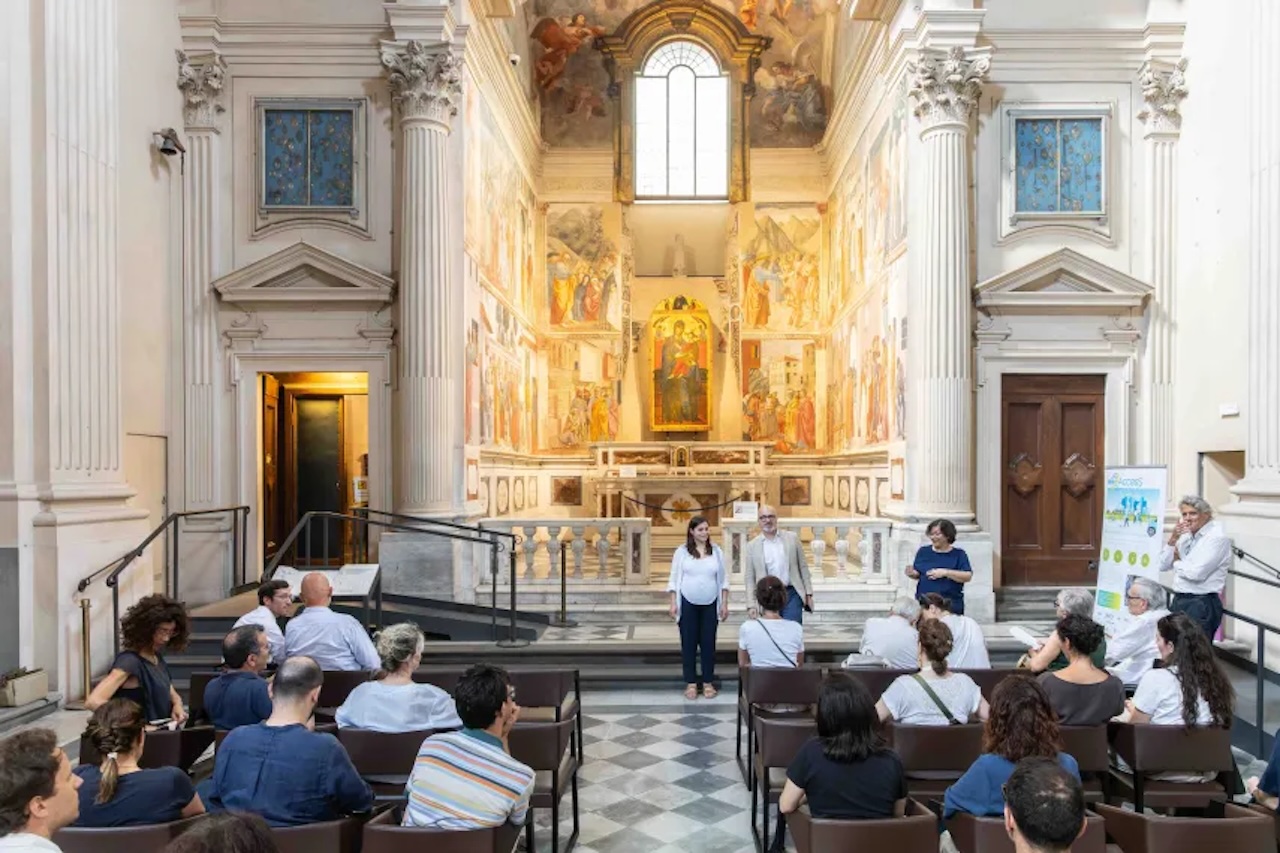
The results of the project were presented on 30 June at the Brancacci Chapel, located inside the Church of Santa Maria del Carmine in Florence’s Oltrarno district. The chapel is best known for its early Renaissance fresco cycle by Masaccio, Masolino and Filippino Lippi, considered a milestone in the history of Western art.
Accessibility and conservation
The Florence pilot combines accessibility measures with conservation tools. New installations include an upgraded lighting system, environmental sensors, visitor-flow monitoring devices and ergonomic seating in the chapel’s transept area.
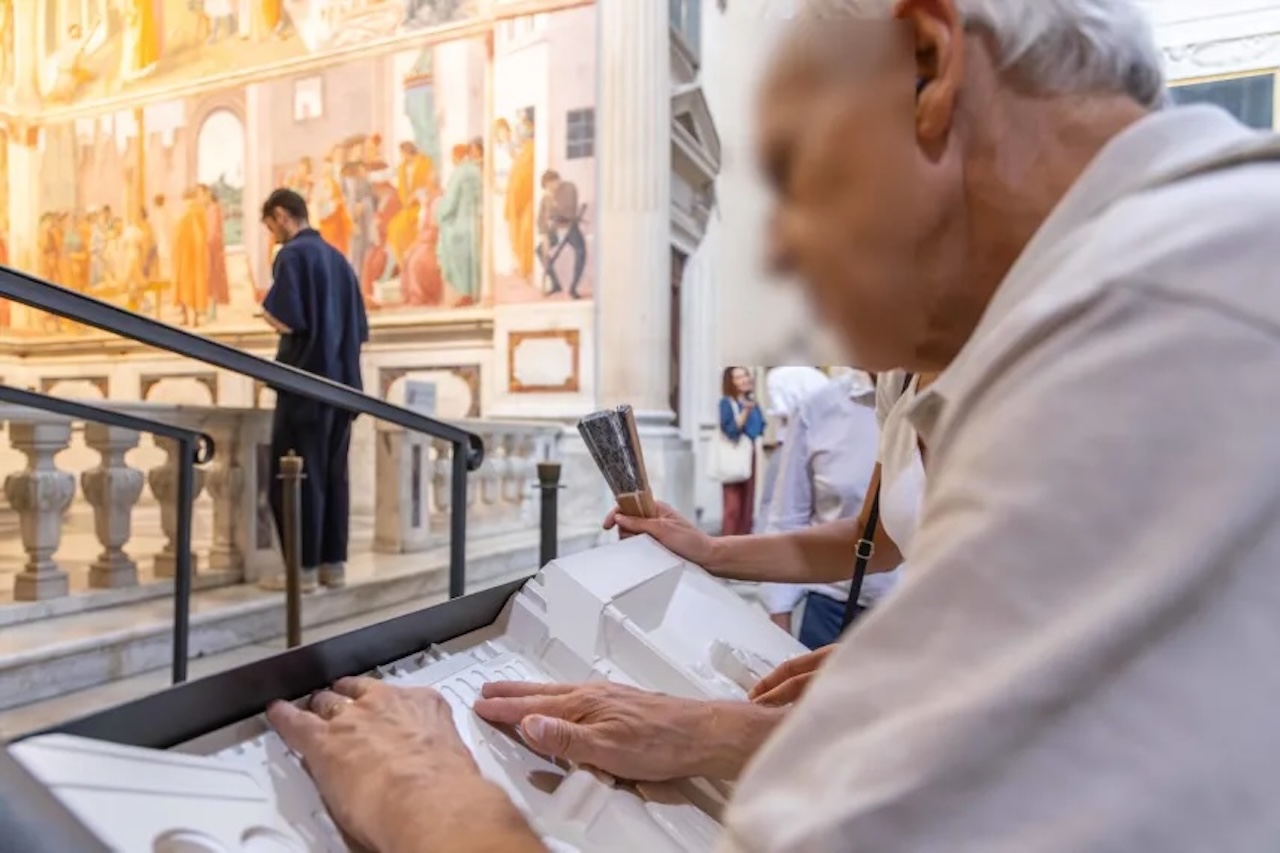
A tactile panel depicting the fresco scene The Healing of the Cripple and the Raising of Tabitha, created by the University of Florence’s Department of Industrial Engineering, has also been added to support visitors who are blind or partially sighted.
According to the project partners, accessibility has been approached in a broad sense, covering physical, sensory, informational and digital access.

Technology without compromising heritage
The AccesS project brings together partners from several European countries to develop tools that can help make buildings and urban spaces more inclusive and sustainable. Technologies involved include Internet of Things (IoT) systems, Building Information Modelling (BIM), artificial intelligence and digital-twin applications.
The Brancacci Chapel is the only demonstration site in the project focused on a major historic monument. The challenge has been to introduce new technologies while respecting strict conservation requirements.
Environmental sensors installed inside and outside the chapel monitor temperature, humidity, carbon dioxide, nitrogen oxides, sulphur dioxide, airborne particles and volatile organic compounds. Additional sensors anonymously record visitor flows and occupancy patterns without storing or transmitting images.
Researchers hope that combining environmental data with visitor information and conservation records will help identify how conditions inside the chapel affect the preservation of the frescoes and support more effective preventive conservation strategies.
Consultation with disability organisations
Before technical work began, project partners spent a year gathering feedback from visitors, museum staff, researchers and disability organisations.
Contributors included the Italian National Deaf Association, the Italian Union of Blind and Partially Sighted People, local disability advisory bodies, tourist guides, restorers and members of the religious community of Santa Maria del Carmine.
The consultation identified several priorities, including multisensory experiences, tactile supports, sign-language guides, improved communication about accessible services and additional support for visitors with sensory disabilities.
Pilot visits and future developments
To mark the presentation of the project, three pilot guided visits were organised on 30 June for deaf and hard-of-hearing visitors, blind and partially sighted visitors, and people with mobility impairments. The visits were coordinated by Florence’s cultural foundation MUS.E.
The project also includes further development of BrancacciPOV, a digital platform created by the National Research Council’s Institute of Heritage Science (CNR ISPC). The platform provides online access to material related to the chapel’s history, conservation and scientific research and can also be used during guided visits.
The AccesS project runs from 2024 to 2027 and includes demonstration sites in Bulgaria, Italy, the Netherlands, Switzerland and Spain. In Florence, the Brancacci Chapel is being used as a testing ground for solutions that could eventually be applied to other historic sites across Europe.
❤️ Support Florence Daily News
If you liked this article, please consider supporting Florence Daily News.
We are an independent news site, free from paywalls and intrusive ads, committed to providing clear and reliable reporting on Florence and Tuscany for everyone.
Your support — whether a one-time gift or a regular contribution — helps us stay independent and keep telling the stories that matter.
Donate securely via Stripe below.
Make a one-time donation
Make a monthly donation
Make a yearly donation
Choose an amount
Or enter a custom amount
Your contribution is appreciated.
Your contribution is appreciated.
Your contribution is appreciated.