


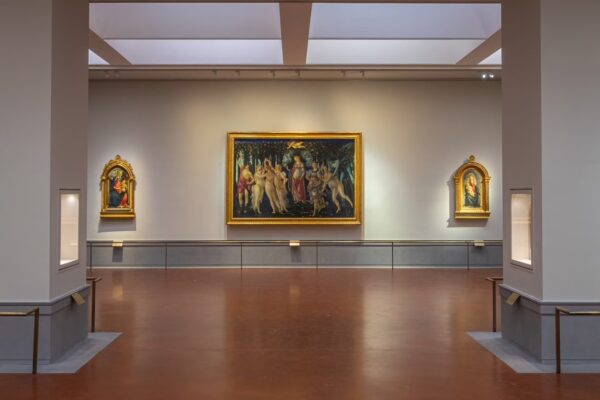
The Uffizi Galleries in Florence have reopened their redesigned Botticelli rooms, giving visitors a new way to see two of the most famous paintings of the Italian Renaissance: The Birth of Venus and Primavera.
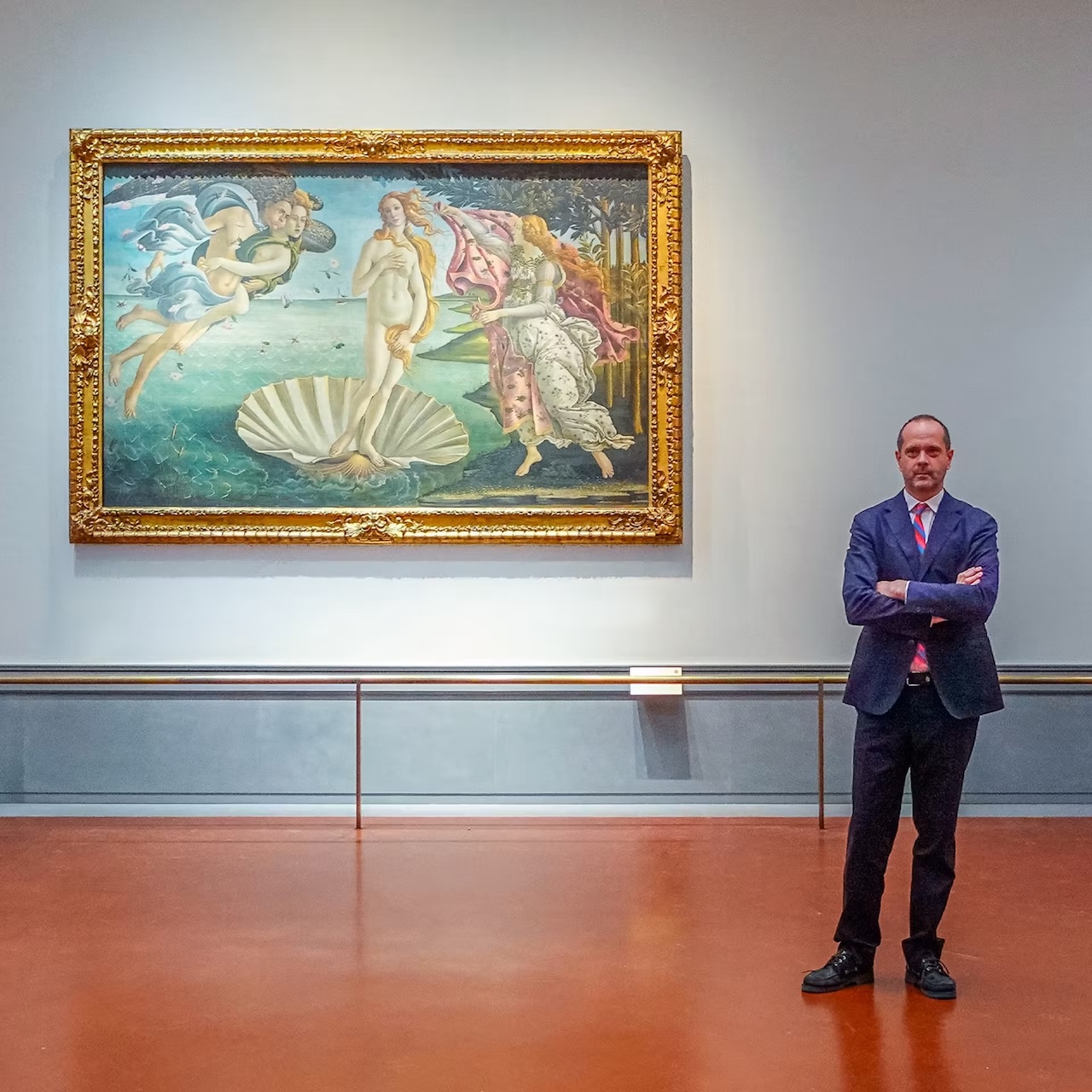
The new permanent display, unveiled on 16 June 2026, places the two works opposite one another across adjoining spaces, creating a direct visual relationship between them. The museum says the arrangement is intended to improve both the visitor experience and the conservation of the paintings.
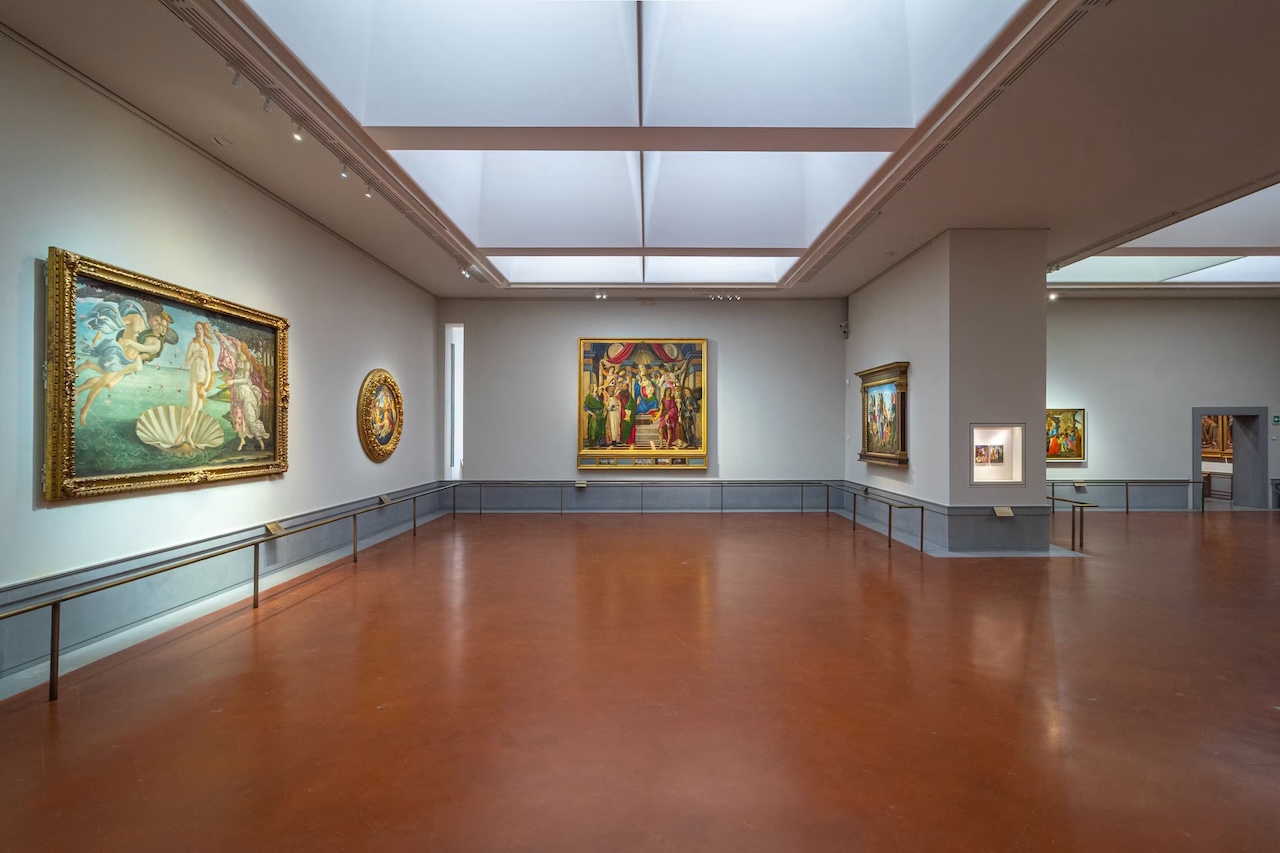
Both masterpieces are now housed for the first time in sealed protective cases, designed to keep them in stable conditions and improve security. This has allowed the Uffizi to remove the large external glass barriers that previously separated visitors from the paintings and affected the view of the works as monumental pictures hanging on the walls.

A new route through Botticelli’s Florence
The redesigned rooms do more than change the position of the museum’s most photographed paintings. They reorganise Botticelli’s works into a clearer historical and artistic route, helping visitors follow the painter’s development from the Florence of the Medici to the troubled years of Girolamo Savonarola.
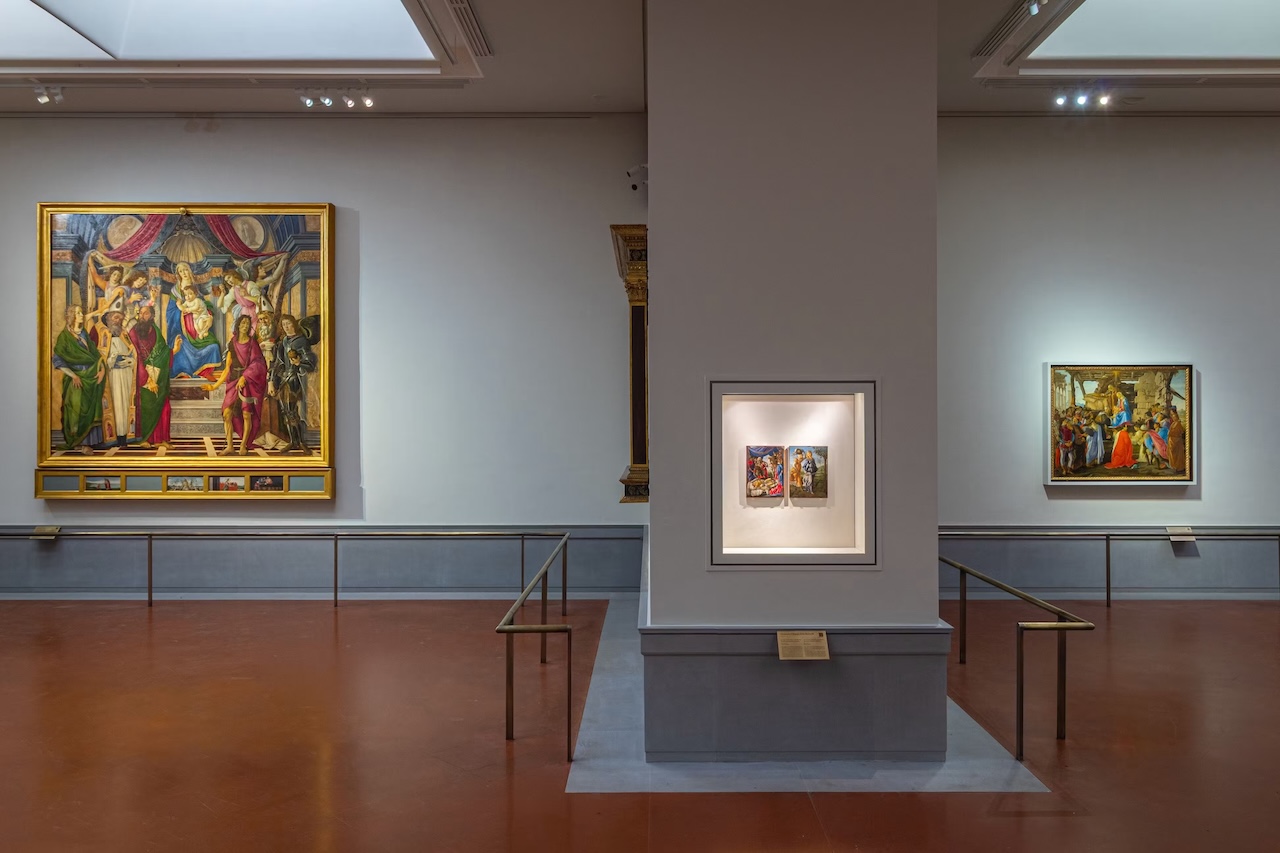
The sequence begins with the Adoration of the Magi, commissioned for the chapel of Gaspare di Zanobi del Lama. The painting is important not only as a religious scene, but also as a representation of Medici power in fifteenth-century Florence. It includes members of the Medici family and a self-portrait of Botticelli, placing the artist inside the civic and cultural world in which he worked.
The route ends with the Calumny of Apelles, painted in 1495, during a period of political and religious upheaval in Florence. By placing these works within the same broader narrative, the Uffizi presents Botticelli not only as the painter of ideal beauty, but also as an artist shaped by the intellectual, religious and political tensions of his city.
Venus, Mary and Neoplatonic thought
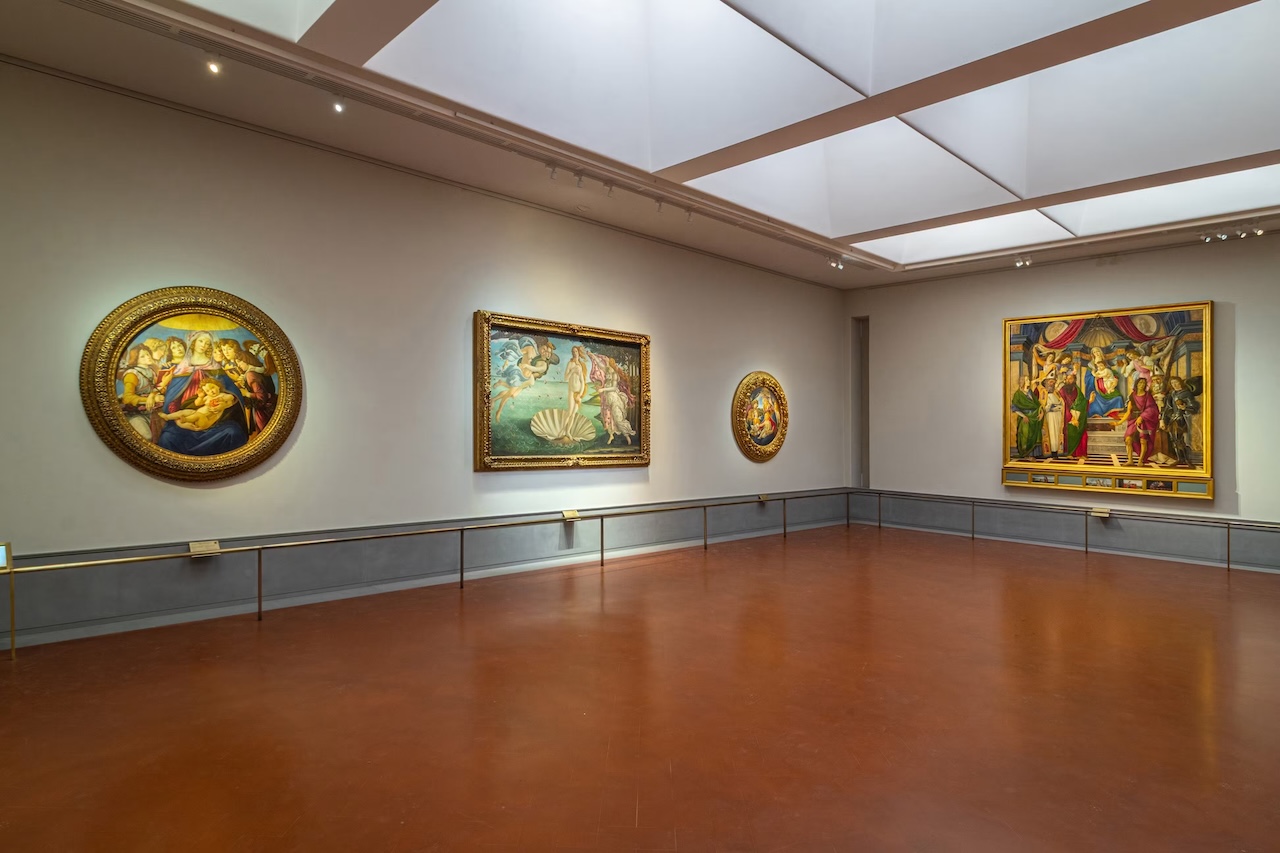
One of the most significant changes is the arrangement around The Birth of Venus. The painting is now flanked by two circular works, the Madonna of the Magnificat and the Madonna of the Pomegranate.
The placement highlights the similarity between Botticelli’s female figures, especially the faces of Venus and the Virgin Mary. It also points to the influence of Neoplatonic ideas in Medici Florence, particularly those associated with Marsilio Ficino and the Platonic Academy.
For international visitors, this context is important. In Botticelli’s Florence, classical mythology and Christian imagery were often read together. Pagan figures such as Venus could be interpreted not simply as ancient myths, but as symbols connected to spiritual beauty, divine love and Christian truth.
A similar arrangement has been created around Primavera, which is now displayed with the Madonna of the Rose Gardenand the Madonna of the Cherubim. The result is a more structured comparison between Botticelli’s mythological and devotional paintings.
Other Botticelli works given new prominence
The museum has also redesigned the display of smaller but important works. Stories of Judith and Man with a Medal of Cosimo the Elder are now shown in new cases in the enlarged passage between the two main Botticelli rooms.
The detached fresco of the Annunciation has also been given a new installation. The aim is to make it appear closer to its original setting as part of a wall, as it once did in the Florentine church of San Martino.
These changes reflect a wider curatorial approach: instead of presenting Botticelli’s most famous works as isolated icons, the Uffizi is trying to show how they belong to a larger artistic and historical system.
Pollaiolo and the world around Botticelli
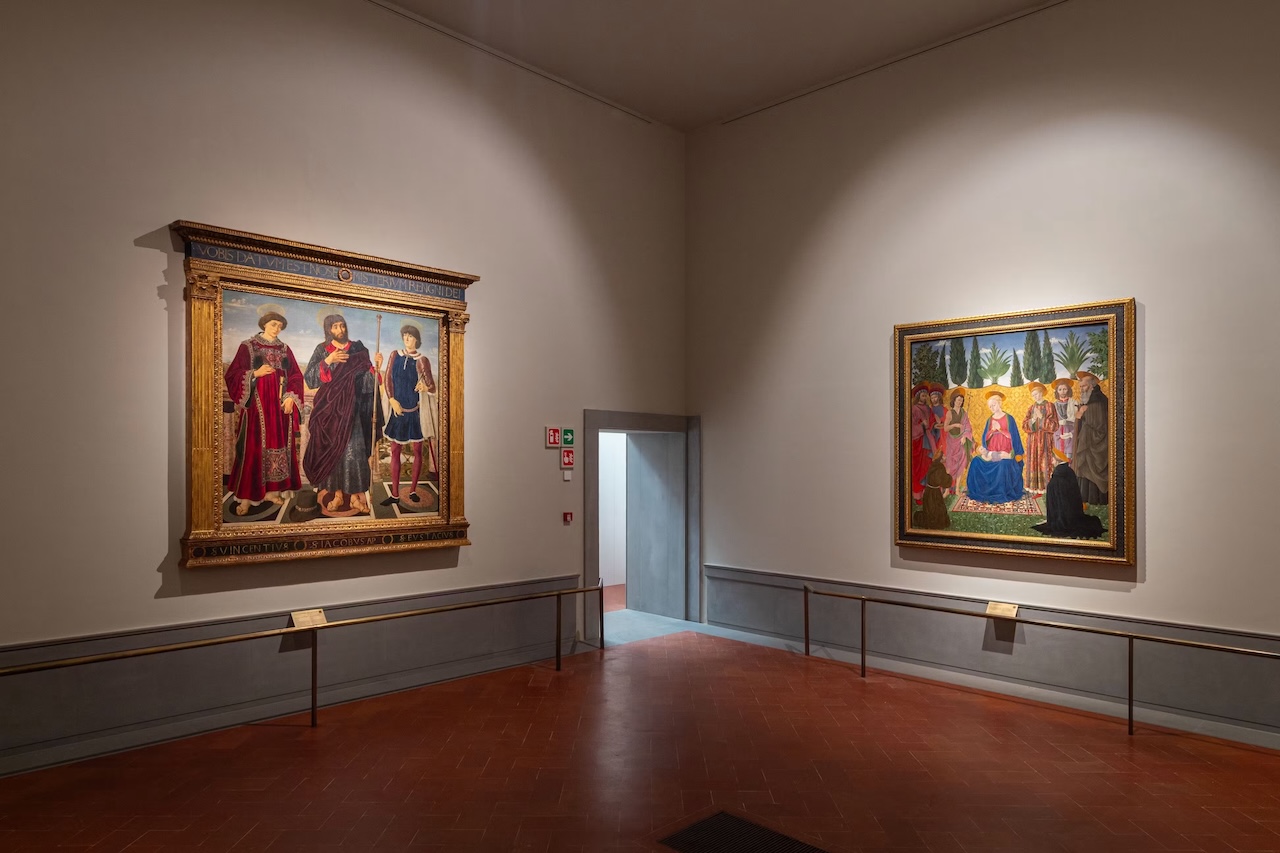
The neighbouring room dedicated to Piero and Antonio del Pollaiolo, contemporaries of the young Botticelli, has also been renewed.
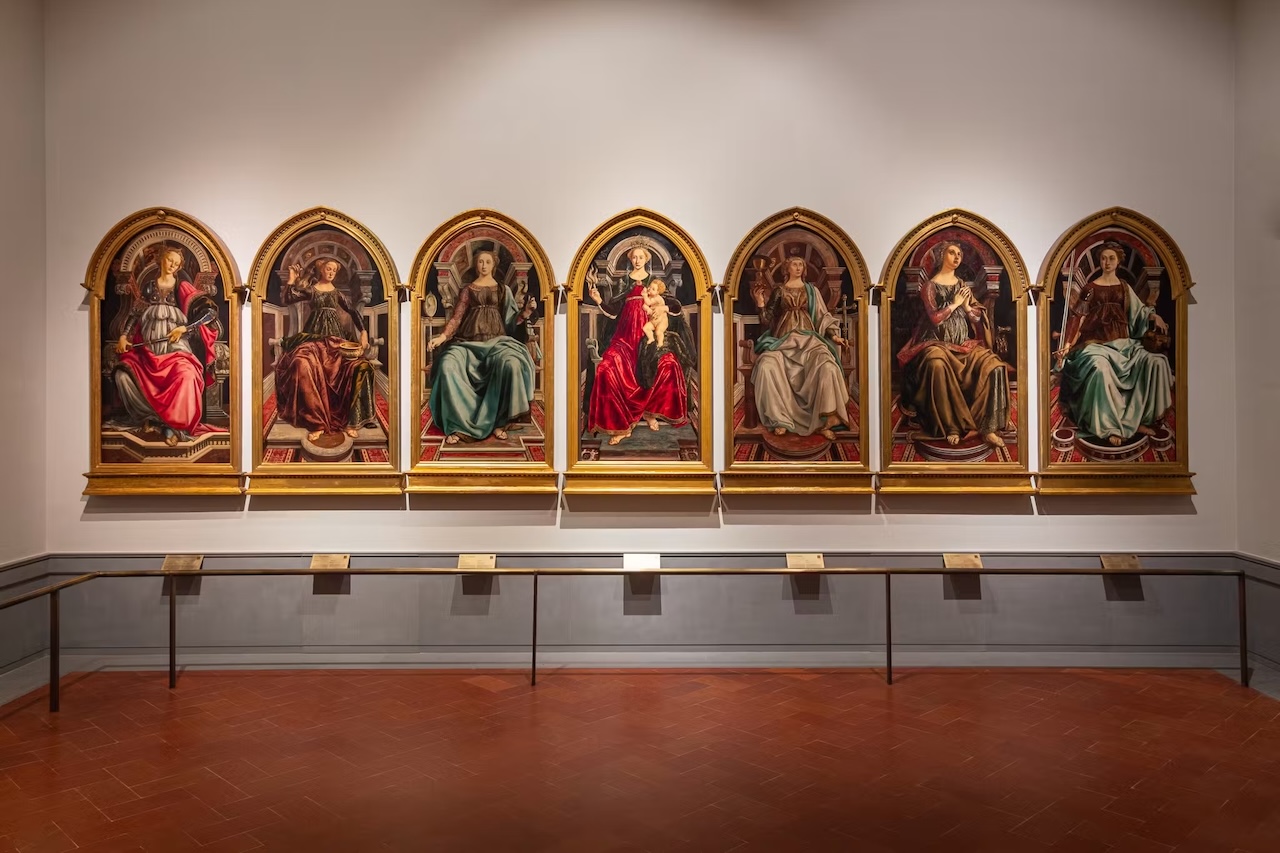
A full wall has been redesigned to display the celebrated series of the Virtues, now returned to their nineteenth-century gilded frames. Particular attention is given to Fortitude, Botticelli’s first documented work, commissioned in 1470 by Tommaso Soderini.
The room also includes works such as Antonio del Pollaiolo’s Altarpiece of the Cardinal of Portugal and Alesso Baldovinetti’s Cafaggiolo Altarpiece. Their presence helps explain the artistic environment in which Botticelli emerged, when Florentine painters, sculptors and workshops were competing for prestigious public and private commissions.
New colour, lighting and visitor tools
The redesigned galleries use a pale “Renaissance grey” on the walls, chosen to recall the chromatic tradition of Florentine architecture. The museum has also introduced a new lighting system, with alternating warm and cool tones intended to bring out the softer colours and details of Botticelli’s paintings.
The architectural design includes a stone base inspired by elements of Giorgio Vasari’s Uffizi building, with materials such as bronze, terracotta and pietra serena used in keeping with the museum’s historic setting.
Visitors will also find new signage, videos in the rooms and QR codes giving access to further information on smartphones. The museum says this is the first time digital mediation tools have been systematically introduced in these spaces.

Part of a wider Uffizi renewal
The Botticelli rooms are part of a broader reorganisation of the Uffizi launched under director Simone Verde, who took up the role in January 2024. Recent projects have included renewed displays for Flemish painting, the Cabinet of Ancient Marbles, the Niobe Room, the Cabinet of Mathematics and works by Andrea del Sarto and early sixteenth-century Florentine painters.
The museum has also begun improving the second-floor corridors, adding wooden benches inspired by Vasari’s designs and replacing signage with bronze information panels.
For the Uffizi, the Botticelli reopening is therefore not a single-room update, but part of a larger effort to rethink how one of Italy’s most visited museums presents its collections to a contemporary public while maintaining its historic identity.
❤️ Support Florence Daily News
If you liked this article, please consider supporting Florence Daily News.
We are an independent news site, free from paywalls and intrusive ads, committed to providing clear and reliable reporting on Florence and Tuscany for everyone.
Your support — whether a one-time gift or a regular contribution — helps us stay independent and keep telling the stories that matter.
Donate securely via Stripe below.
Make a one-time donation
Make a monthly donation
Make a yearly donation
Choose an amount
Or enter a custom amount
Your contribution is appreciated.
Your contribution is appreciated.
Your contribution is appreciated.