



In recent days, a remark by Timothée Chalamet has stirred a small storm in the world of the performing arts. Speaking about his career in film, the actor suggested that he had little interest in working in ballet or opera—places, he implied, where a tradition continues to be preserved despite attracting only limited public attention. The comment, quickly circulated online, irritated many musicians, singers, and choreographers.
Yet the problem is not that Chalamet does not care for opera or ballet. Personal taste is hardly a fault, and no artist is required to love every form of art. The deeper issue lies elsewhere: in the suggestion that the value of an art form can be measured primarily by the size of its audience or the revenue it generates.
This way of thinking has become increasingly common in the modern cultural industry. Films, music, books, and performances are often judged first by their numbers—tickets sold, streams accumulated, box-office returns. Within this framework, commercial success becomes a convenient shortcut for determining what matters and what does not. An artist is considered great because they sell widely; an art form is deemed alive because it fills large venues.
Money, of course, is not irrelevant. Artists must make a living; theaters must keep their doors open; orchestras must pay musicians and technicians. Without financial resources, no cultural institution survives for long. But to confuse economic sustainability with artistic value is a mistake that the history of art has repeatedly corrected.
Many works that are now considered indispensable began without great public triumphs. Some books now regarded as classics sold poorly when first published; certain musical compositions were initially received with indifference or confusion. Art moves on a longer timeline than the market. What appears marginal in one moment may, over time, reveal itself to be essential.
Opera offers a particularly clear example of this distance between cultural value and commercial logic. Born in Italy at the beginning of the seventeenth century, it became one of the most influential artistic forms in Western history. Composers such as Giuseppe Verdi and Giacomo Puccini created works that continue to be performed across the world, from New York to Tokyo. Not because they dominate the contemporary entertainment market, but because they express something audiences still recognize: emotion, drama, beauty.
For many countries—Italy above all—opera is more than a spectacle. It is a piece of cultural identity, an artistic language that has passed through centuries, wars, social transformations, and technological revolutions without losing its expressive force.
To say that “no one cares anymore” about this art is, perhaps unintentionally, to overlook the millions of listeners who continue to find something living within it. One does not have to love opera to acknowledge that. It would simply require resisting the temptation to transform a personal preference into a universal judgment.
In the end, the greatness of an art form cannot be measured solely by the number of tickets sold on a weekend. It is measured by its ability to endure, to cross generations, and to speak again to those willing to listen.
Sometimes, all it takes is a voice.
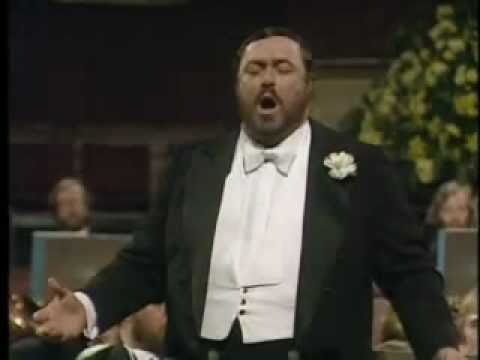
When Luciano Pavarotti sings the aria E lucevan le stelle from Tosca, something happens that statistics cannot quite capture. It is not a matter of market trends or cultural relevance. It is simply a moment in which music does what art has always done: transform a human feeling into something shared.
Opera also reminds us of something increasingly rare in modern entertainment: the sheer power of the human voice. A tenor like Pavarotti could stand on a stage without a microphone and still carry his voice over an entire orchestra, filling a theater with sound using nothing but breath, technique, and years of discipline.
It is a small miracle of human craft—one that no algorithm can measure and no streaming chart can fully explain.
And perhaps that is the level of human expression toward which art should still aspire
❤️ Support Florence Daily News
If you liked this article, please consider supporting Florence Daily News.
We are an independent news site, free from paywalls and intrusive ads, committed to providing clear and reliable reporting on Florence and Tuscany for everyone.
Your support — whether a one-time gift or a regular contribution — helps us stay independent and keep telling the stories that matter.
Donate securely via Stripe below.
Make a one-time donation
Make a monthly donation
Make a yearly donation
Choose an amount
Or enter a custom amount
Your contribution is appreciated.
Your contribution is appreciated.
Your contribution is appreciated.
DonateDonate monthlyDonate yearly

Eirini Lavrentiadou is an actress and singer, born in Thessaloniki in 1992. She lives in Florence, where she trained at the city’s Theatre Academy and the Fiesole School of Music. She has performed in classical Greek and European plays, worked with international directors and companies, and appeared in concerts ranging from opera to jazz. She contributes to Florence Daily News as a writer.