


The same yeast that makes bread rise and turns grape juice into wine has also helped scientists understand some of the fundamental mechanisms of life. Known as Saccharomyces cerevisiae, this microscopic organism has been central to biological research for decades, contributing to discoveries recognised by numerous Nobel Prizes.
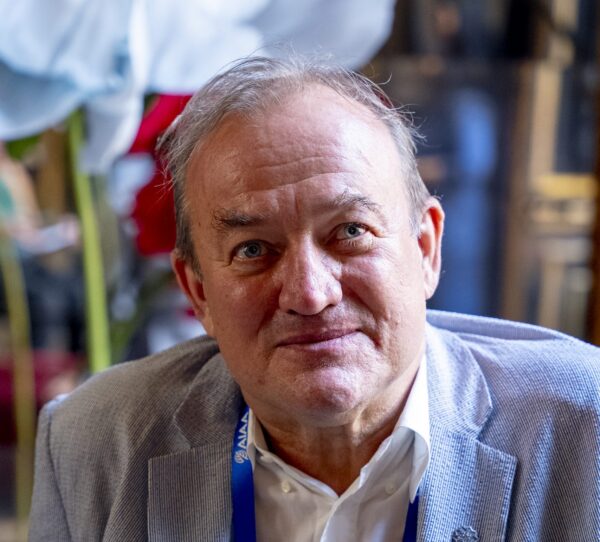
Duccio Cavalieri, a microbiologist at the University of Florence and president of the International Yeast Society, has devoted much of his scientific career to studying this apparently simple organism.
Although most people encounter yeast in the kitchen, scientists see it as something much more important: a living laboratory that can reveal how cells grow, reproduce and function.
Why scientists study yeast
Saccharomyces cerevisiae is a single-celled fungus. Unlike bacteria, it is a eukaryote, meaning its cells contain a nucleus and other structures also found in human cells.
This makes yeast particularly useful for studying biological processes that are shared across many forms of life, including humans.
It is also relatively easy to grow in a laboratory, reproduces quickly and has a genome that scientists can manipulate and study in detail.
These characteristics have made yeast one of the most widely used model organisms in modern biology.
Researchers have used it to investigate how cells divide, how genes control cellular activity and how cells respond to changes in their environment.
The importance of this research extends far beyond yeast itself. Many of the fundamental mechanisms discovered in yeast also operate in more complex organisms.
A microorganism behind major scientific discoveries
Yeast research has contributed to several discoveries recognised by the Nobel Prize in Physiology or Medicine.
In 2001, scientists Leland Hartwell, Tim Hunt and Paul Nurse received the prize for identifying key regulators of the cell cycle, the process through which cells grow and divide. Hartwell’s experiments with yeast were instrumental in understanding how this process is controlled.
In 2013, James Rothman, Randy Schekman and Thomas Südhof were awarded the Nobel Prize for discoveries concerning the machinery that transports molecules within cells. Schekman’s work with yeast helped identify genes involved in this essential process.
Another major breakthrough came in 2016, when Yoshinori Ohsumi received the Nobel Prize for his discoveries about autophagy, the mechanism cells use to break down and recycle their own components. His experiments with yeast helped explain a process that is also important for human health.
These examples show how studying a microorganism associated with food production can provide insights into the biology of human cells and diseases.
Florence’s contribution to yeast research
Cavalieri’s research has placed the University of Florence within this international scientific community.
After spending 15 years working in the United States and the United Kingdom, the microbiologist returned to Florence, where he continued his academic career.
In 2023, during an international congress on yeast research held in Florence, he was elected president of the International Yeast Society.
The organisation brings together scientists working on different aspects of yeast biology, from genetics and cellular mechanisms to the applications of microorganisms in food production and biotechnology.
The Florence conference also helped establish new international research collaborations. According to Cavalieri, contacts developed during the event contributed to the university joining a European research consortium worth €20 million, involving 80 partners.
Approximately €1 million of that funding went to the University of Florence’s Department of Biology.
Making science accessible to the next generation
For Cavalieri, the future of scientific research depends not only on laboratories and funding but also on opportunities for younger researchers to meet and exchange ideas.
He has raised concerns about the cost of attending international scientific conferences, particularly in cities such as Florence, where accommodation can cost €150 to €200 per night.
He believes agreements with student residences could help make conferences more affordable for doctoral students and early-career scientists, including those from countries with limited research resources.
Cavalieri would also like Florence to develop a stronger role in science communication, making scientific knowledge more accessible beyond universities and research institutions.
The history of Saccharomyces cerevisiae offers an example of why that matters. An organism familiar to anyone who has baked bread or enjoyed a glass of wine has helped scientists answer questions about the basic processes that make life possible.
❤️ Support Florence Daily News
If you liked this article, please consider supporting Florence Daily News.
We are an independent news site, free from paywalls and intrusive ads, committed to providing clear and reliable reporting on Florence and Tuscany for everyone.
Your support — whether a one-time gift or a regular contribution — helps us stay independent and keep telling the stories that matter.
Donate securely via Stripe below.
Make a one-time donation
Make a monthly donation
Make a yearly donation
Choose an amount
Or enter a custom amount
Your contribution is appreciated.
Your contribution is appreciated.
Your contribution is appreciated.