


Florence will mark the 60th anniversary of the devastating flood of 4 November 1966 with a programme of ceremonies, exhibitions, conferences, concerts and educational activities. The commemorations will culminate on Wednesday, 4 November 2026, with an official ceremony attended by Italian President Sergio Mattarella.
The anniversary programme, organised by Florence City Council, the Tuscany regional government, the University of Florence and the Metropolitan City of Florence, will run from late October into December.
Alongside remembrance of the victims and the destruction caused by the flood, the events will examine how the disaster changed approaches to cultural heritage conservation, emergency response and flood prevention.
The 1966 flood and its impact on Florence
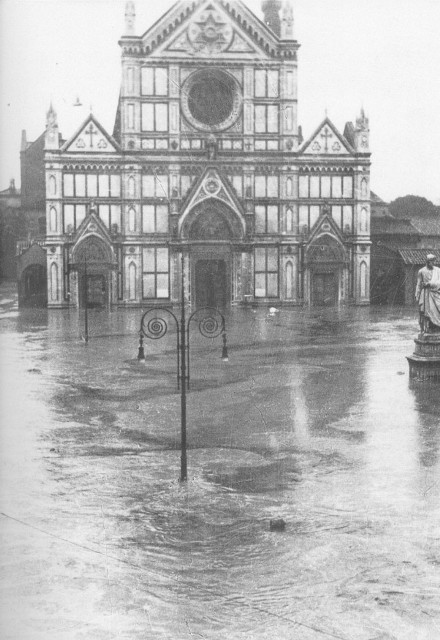
On 4 November 1966, after days of heavy rainfall, the River Arno overflowed its banks, flooding large parts of Florence and surrounding areas.
Water and mud swept through streets, homes, businesses, churches, libraries and museums. The disaster caused widespread destruction and severely damaged the city’s artistic and historical heritage.
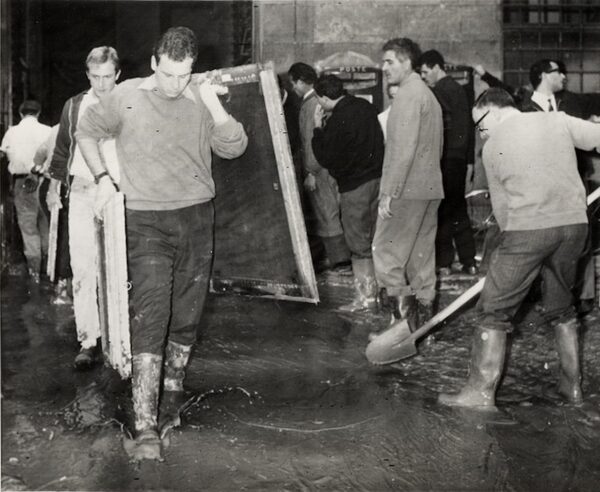
The flood also prompted an international response. Thousands of volunteers travelled to Florence to help rescue books, paintings and other cultural treasures from the mud. Many became known as the Mud Angels, or Angeli del Fango, and remain an important part of the city’s collective memory.
The disaster marked a turning point in the development of modern restoration techniques, particularly for artworks, manuscripts and historic documents damaged by water.
Sixty years later, the anniversary will also provide an opportunity to examine flood risks, environmental protection and the challenges posed by climate change.
President Mattarella to attend the main ceremony on 4 November
The central commemorations will take place on Wednesday, 4 November, exactly 60 years after the flood.
The day will begin at 9 a.m. with a Catholic Mass at the Basilica of Santa Croce, presided over by Cardinal Gualtiero Bassetti.
At 10.15 a.m., a commemorative procession will leave for Ponte alle Grazie, where a wreath will be placed in the River Arno at 10.30 a.m. in memory of the victims.
At noon, the Accademia di Belle Arti, Florence’s Academy of Fine Arts, will inaugurate Le forme del fango (The Forms of Mud), an exhibition examining the flood through art.
The main institutional ceremony will take place at 4.30 p.m. in the Salone dei Cinquecento, the historic hall inside Palazzo Vecchio, Florence’s town hall, in the presence of President Sergio Mattarella.
The day will also include exhibitions, special openings of cultural institutions and evening performances.
Among the scheduled events is a concert by Italian singer Marco Masini at the Mandela Forum at 9 p.m.

Exhibitions explore the flood and its legacy
Several exhibitions will document the events of November 1966 and the efforts to recover from the disaster.
One of the principal exhibitions, Firenze per il mondo, il mondo per Firenze. 60° anniversario dell’alluvione (1966–2026) (Florence for the World, the World for Florence), will open on 4 November in the Sala d’Arme at Palazzo Vecchio.
The exhibition will remain open until 22 November and will examine the relationship between Florence and the international community following the flood.
Other exhibitions will focus on historical photographs, personal memories and the restoration of damaged cultural heritage.
On 3 November, the University of Florence’s Humanities Library will host the opening of Con la bici nel fango (Cycling Through the Mud), a photographic exhibition beginning at 5 p.m.
Additional photographic exhibitions are scheduled at Palazzo Medici Riccardi, while the State Archives, the National Central Library of Florence and the Zeffirelli Foundation will organise special openings and activities.
Events begin on 29 October
The anniversary programme will begin on Thursday, 29 October, with an educational event for schools.
At 10 a.m., the Sala d’Arme at Palazzo Vecchio will host an awards ceremony for Un vicino di casa, l’Arno (The Arno, a Neighbour), a school competition designed to encourage younger generations to reflect on the river and its relationship with Florence.
At 11 a.m., the Italian Red Cross will inaugurate a historical documentary exhibition at Santa Maria Novella railway station.
On Friday, 30 October, a conference on mountain protection and environmental management will take place at the Casentino Tech Hub in Poppi, a town in the province of Arezzo, east of Florence.
The same evening, at 6.30 p.m., the Cenacolo di Santa Croce will host a screening of Bargellini, il sindaco dell’Alluvione, a documentary about Piero Bargellini, who was mayor of Florence during the 1966 disaster.
Conferences and tributes on 2 November
Monday, 2 November, will feature several events dedicated to the Arno and the people who documented the flood.
At 9.30 a.m., the Salone dei Cinquecento will host a conference entitled Arno, a 60 anni dall’Alluvione. Da minaccia a risorsa (The Arno, 60 Years After the Flood: From Threat to Resource).
At 11 a.m., the same venue will host the presentation of a special publication by the Florence-based newspaper La Nazione.
At 6 p.m., the Teatro Nazionale will host the presentation of La fiuma, a book by Dario Franceschini, with representatives of the city’s institutions attending.
The city will also honour journalists who played an important role in reporting the disaster and alerting the country to the emergency.
At 1 p.m., a commemorative plaque will be unveiled at the headquarters of La Nazione in Viale Giovine Italia in memory of Enrico Mattei, the newspaper’s director during the flood.
Mattei wrote an appeal to Italian President Giuseppe Saragat from the newspaper’s offices, which had been invaded by more than four metres of water and mud.
At 2.15 p.m., another plaque will be unveiled in Via de’ Pucci in memory of Dante Nocentini, head of the Tuscany bureau of the Italian news agency ANSA.
Nocentini was among the first journalists to warn the rest of Italy about the rising Arno during the night of 3–4 November 1966.
A third plaque, to be installed at a later date, will commemorate Marcello Giannini, head of the regional office of Italy’s public broadcaster RAI, who reported on the disaster from the broadcaster’s Florence headquarters.

Remembering the Mud Angels on 3 November
Tuesday, 3 November, will focus on the legacy of the volunteers who helped Florence recover after the flood.
At 5.30 p.m., Florence City Council will hold an extraordinary session dedicated to the generation of the Mud Angels.
The day will also include discussions on hydrogeological risks, photographic exhibitions, theatre performances, concerts involving the Accademia del Maggio Musicale Fiorentino and documentary screenings.
The events will explore both the immediate response to the disaster and its longer-term impact on Florence’s cultural institutions.
Further events throughout November
The commemorations will continue after the anniversary itself.
The University of Florence will host The Mud Angels Legacy, a conference examining the contribution of the international volunteers and the continuing significance of their work.
The event is scheduled to begin at 3 p.m. in the university’s Aula Magna.
Additional concerts, theatre performances, photographic exhibitions and historical conferences will take place throughout November, with some activities continuing into early December.
Schools will also be involved in educational projects addressing the history of the flood, environmental awareness and the importance of protecting cultural heritage.
From remembrance to flood prevention
Beyond the historical commemorations, the anniversary programme will address the continuing challenge of protecting Florence and Tuscany from flooding.
The 1966 disaster contributed to major developments in scientific research, conservation methods and the monitoring of rivers and rainfall.
The University of Florence will highlight the work of researchers and restoration specialists, including chemist Enzo Ferroni, whose contributions helped develop techniques for preserving artworks damaged by the flood.
Conferences and public discussions will also consider hydrogeological risks, the management of the Arno basin and the need to adapt prevention measures to changing environmental conditions.
For Florence, the 60th anniversary is therefore not only an occasion to remember one of the most destructive events in its modern history, but also an opportunity to examine how the city can reduce its vulnerability to future floods.
Practical information
The commemorative programme runs from 29 October through November 2026, with further activities scheduled into early December.
The main anniversary events will take place on Wednesday, 4 November, at Santa Croce, Ponte alle Grazie, the Academy of Fine Arts and Palazzo Vecchio.
Exhibitions and cultural activities will be hosted at several venues across Florence, including the National Central Library, Palazzo Medici Riccardi and Santa Maria Novella railway station.
Visitors should check individual event details for admission requirements, opening hours and possible changes to the programme.
(Photos: public domain)
❤️ Support Florence Daily News
If you liked this article, please consider supporting Florence Daily News.
We are an independent news site, free from paywalls and intrusive ads, committed to providing clear and reliable reporting on Florence and Tuscany for everyone.
Your support — whether a one-time gift or a regular contribution — helps us stay independent and keep telling the stories that matter.
Donate securely via Stripe below.
Make a one-time donation
Make a monthly donation
Make a yearly donation
Choose an amount
Or enter a custom amount
Your contribution is appreciated.
Your contribution is appreciated.
Your contribution is appreciated.