


Some of Tuscany’s lesser-known architectural and cultural treasures will open their doors to visitors on Saturday, October 10, and Sunday, October 11, as part of the 15th edition of the FAI Autumn Days (Giornate FAI d’Autunno).
Organised by FAI (Fondo per l’Ambiente Italiano), Italy’s National Trust, the annual event offers access to historic palaces, religious buildings, private collections, theatres, industrial heritage sites and other locations that are rarely accessible to the general public.
More than 700 sites in 350 towns and cities across Italy will participate in this year’s initiative, which aims to promote awareness of the country’s artistic, historical and environmental heritage.
Four exceptional openings in Florence
In Florence, four locations will welcome visitors, offering an opportunity to discover different aspects of the city’s architectural and institutional history.
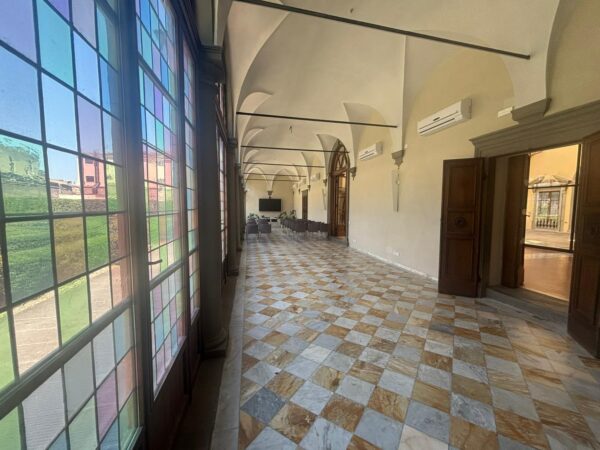
Palazzo Gualfonda, a historic Renaissance residence near Santa Maria Novella railway station, is among the buildings opening their doors. Originally built in the early 16th century, the palace has passed through several prominent Florentine families and now houses the headquarters of Confindustria Toscana Centro e Costa.
Another highlight is Palazzo della Banca d’Italia, built during the period when Florence served as the capital of the newly unified Kingdom of Italy. Visitors will be able to explore parts of the building that are normally inaccessible to the public.
The Istituto di Scienze Militari Aeronautiche, located in the Cascine area, will also offer guided visits. Known historically as the Air Warfare School, the complex preserves interiors, furnishings and decorations dating back to the 1930s, providing an insight into an important example of 20th-century architecture in Florence.
The fourth opening is the former Church of San Carlo dei Barnabiti, in the Oltrarno district. Recently restored and transformed into a cultural space, the former religious building offers an opportunity to rediscover a lesser-known part of the neighbourhood’s architectural heritage.
From historic theatres to industrial heritage
The programme extends across Tuscany’s ten provinces, with visits highlighting the diversity of the region’s cultural landscape.
In Arezzo province, the town of Bibbiena will offer access to four sites: Teatro Dovizi, the Archaeological Museum of Casentino, Palazzo Bellini delle Stelle and Palazzo Dovizi.
In Grosseto province, visitors can explore the village of Gerfalco, near Montieri, through a route combining architecture, local history and music.
Livorno will open the Palazzo della Camera di Commercio and Palazzina Zalum, while Lucca province will feature several locations, including Villino Mezzaluna in Camaiore, the small historic theatre of Vetriano in Pescaglia, and the Convent of San Francesco in Borgo a Mozzano. Other openings are planned in Lucca itself and in Capannori.
In Carrara, visitors will be able to discover the former Walton sawmills, now home to the Cooperativa Scultori Carrara, a site connected to the area’s centuries-old marble-working tradition.
Pisa province will feature Montopoli in Val d’Arno and the Church of Sant’Antonio in Qualquonia in Pisa.
In Pistoia, the programme includes the Accademia d’Organo Giuseppe Gherardeschi and the San Filippo complex, which houses the historic Biblioteca Fabroniana.
In Prato province, Villa Strozzi Marchesi Pancrazi in Montemurlo will be open, while the Fabbrica Lucchesi in Prato will offer a journey through the city’s textile and industrial history.
Finally, Siena province will feature Badia a Coltibuono and Torre e Casa Campatelli in San Gimignano, one of the town’s significant historic residences.
A focus on Italian craftsmanship
This year’s edition also places particular emphasis on traditional craftsmanship and Made in Italy, with special visits highlighting manufacturing traditions, historic trades and the skills that have shaped local communities.
The initiative is organised by FAI’s regional delegations and local groups, with the participation of young volunteers who help introduce visitors to the history and significance of the sites.
Visits generally take place in exchange for a voluntary contribution supporting FAI’s activities to protect and preserve Italy’s cultural and environmental heritage.
How to visit
Most sites in Florence will be open from 10 am to 5 pm on both days, although visiting hours and admission arrangements vary.
No advance booking is required for Palazzo Gualfonda, Palazzo della Banca d’Italia or the former Church of San Carlo dei Barnabiti. Advance online booking is required for the Istituto di Scienze Militari Aeronautiche, where visitors must also present valid identification. Identification checks are also required at Palazzo della Banca d’Italia.
Visitors are advised to check the official programme before travelling, as some visits have limited capacity or specific access requirements.
Full details, opening hours and booking information: FAI Autumn Days 2026 – Places to Visit in Tuscany.
(Cover photo Palazzo Gualfonda, Florence, courtesy from Confindustria Toscana Centro e Costa)
❤️ Support Florence Daily News
If you liked this article, please consider supporting Florence Daily News.
We are an independent news site, free from paywalls and intrusive ads, committed to providing clear and reliable reporting on Florence and Tuscany for everyone.
Your support — whether a one-time gift or a regular contribution — helps us stay independent and keep telling the stories that matter.
Donate securely via Stripe below.
Make a one-time donation
Make a monthly donation
Make a yearly donation
Choose an amount
Or enter a custom amount
Your contribution is appreciated.
Your contribution is appreciated.
Your contribution is appreciated.