


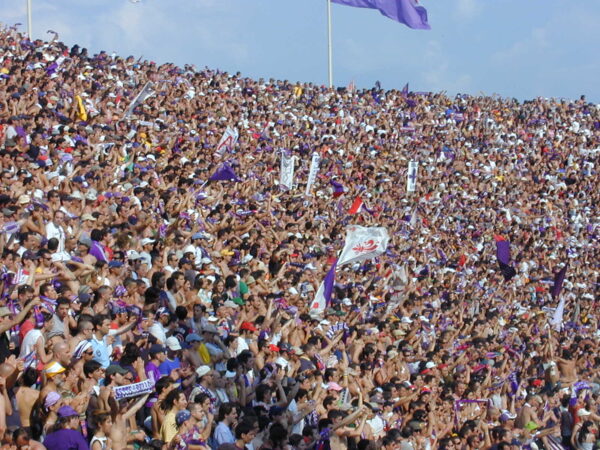
When ACF Fiorentina was founded on 29 August 1926, few could have imagined that a football club would become one of the strongest symbols of Florence. One hundred years later, the purple shirt represents far more than results on the pitch. It embodies the city’s identity, pride and resilience, connecting generations of supporters through unforgettable victories, painful defeats and moments that have become part of local folklore.
A club is born
Fiorentina was created through the merger of the football sections of Club Sportivo Firenze and Libertas, thanks largely to the vision of Marquis Luigi Ridolfi, who believed Florence deserved a team capable of competing with Italy’s footballing giants.
The early years were spent laying the foundations of what would become one of the country’s most respected clubs. Promotion to Serie A arrived in 1930, while the inauguration of the Giovanni Berta Stadium in 1931 — today’s Artemio Franchi Stadium — gave Florence a modern sporting arena that remains an architectural landmark. Around the same time, the club adopted the purple shirt that would become famous around the world. Despite a popular legend, the colour was not the accidental result of washing red and white shirts together, but a deliberate choice inspired by Hungary’s Újpest.

The first trophy
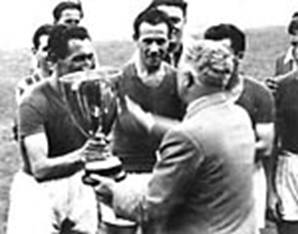
Fiorentina lifted its first major honour in 1940 by winning the Coppa Italia, a success that hinted at the club’s growing ambitions despite the interruption caused by the Second World War.
The post-war years saw the arrival of a remarkable generation of players under coach Fulvio Bernardini. Built patiently over several seasons, the squad would transform Fiorentina into one of Europe’s strongest teams.
The day the sky stopped the match
One of the strangest chapters in Fiorentina’s history came before the club’s greatest triumph.
During a friendly against Pistoiese in the autumn of 1954, players, officials and thousands of spectators suddenly looked up at the sky as bright unidentified objects appeared above Florence. Witnesses later described luminous shapes moving overhead while strange white filaments floated to the ground. The incident became one of Italy’s most famous reported UFO sightings and remains part of Florentine folklore.
Whether the phenomenon was atmospheric, astronomical or something that has never been fully explained, it left a lasting impression. Supporters would later joke that the real “Martians” were the Fiorentina players themselves, because less than two years later they conquered Italian football.

The first Scudetto
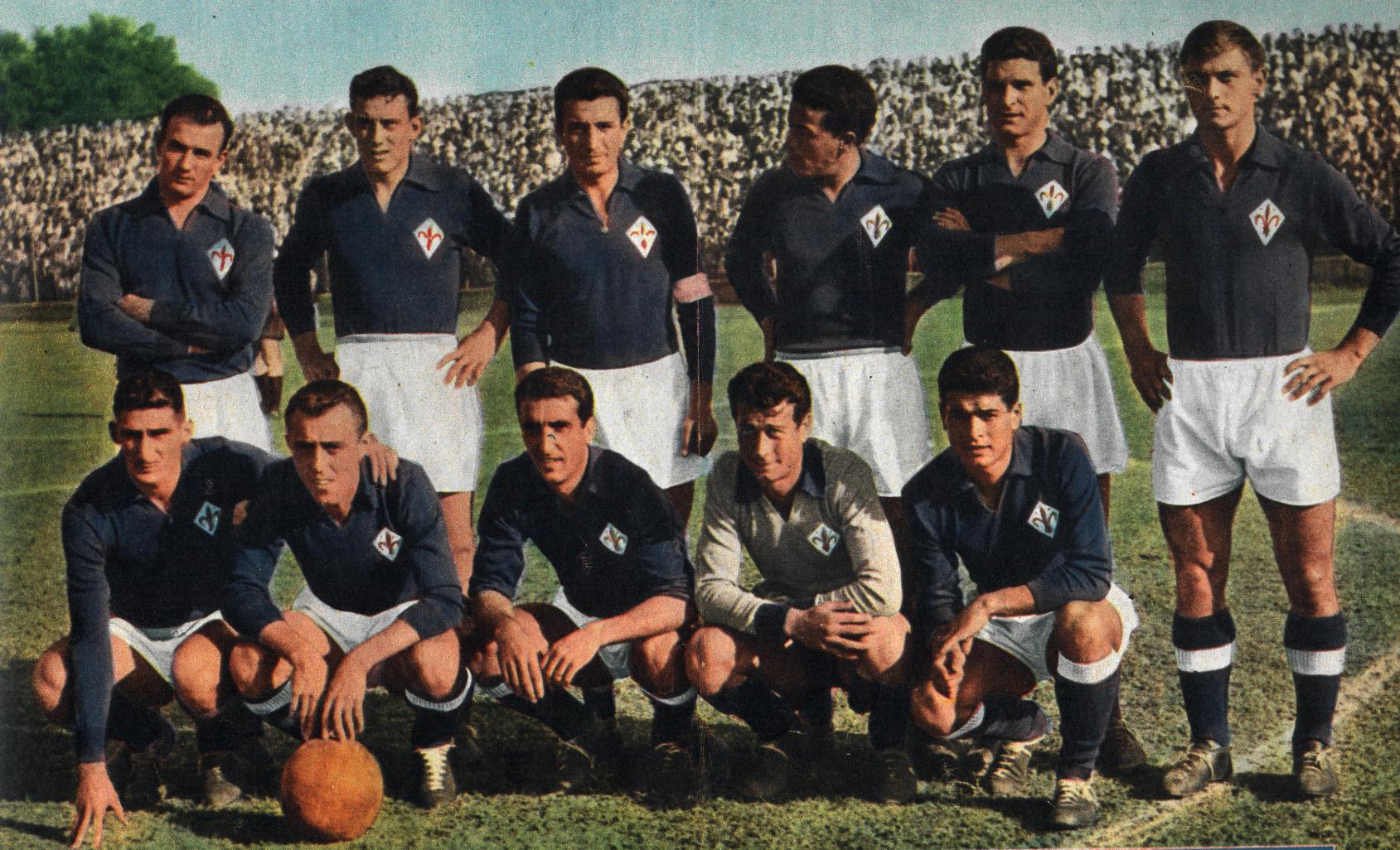
The 1955-56 season remains one of the greatest in Fiorentina’s history. Led by Bernardini and inspired by stars including Julinho, Miguel Montuori, Giuseppe Virgili, Giuliano Sarti and Ardico Magnini, the Viola dominated Serie A, securing their first league title with five matches still to play.
Their success quickly extended beyond Italy. In 1957 Fiorentina became the first Italian club to reach the European Cup final, where they eventually lost to Alfredo Di Stéfano’s Real Madrid in Madrid. Although defeated, the team’s performance earned admiration across Europe and marked the arrival of Italian football on the continent’s biggest stage.
European pioneers
The early 1960s confirmed Fiorentina among Europe’s elite.
In 1961 the club won the inaugural European Cup Winners’ Cup by defeating Rangers over two legs, becoming the first team ever to lift the trophy. Only weeks later another Coppa Italia completed one of the most successful seasons in the club’s history. Fiorentina returned to the Cup Winners’ Cup final the following year, reinforcing its reputation as one of Europe’s leading sides.
The Ye-Ye champions
Fiorentina’s second Serie A title arrived in 1969 with a young, disciplined team coached by Bruno Pesaola.
Nicknamed the “Ye-Ye Fiorentina”, the squad was not considered among the favourites at the start of the season. Yet, through consistency, tactical organisation and players such as Giancarlo De Sisti, Luciano Chiarugi and Mario Maraschi, the Viola claimed another historic Scudetto, sparking celebrations across Florence.
Heroes in purple
Every generation of Fiorentina supporters has its own heroes.
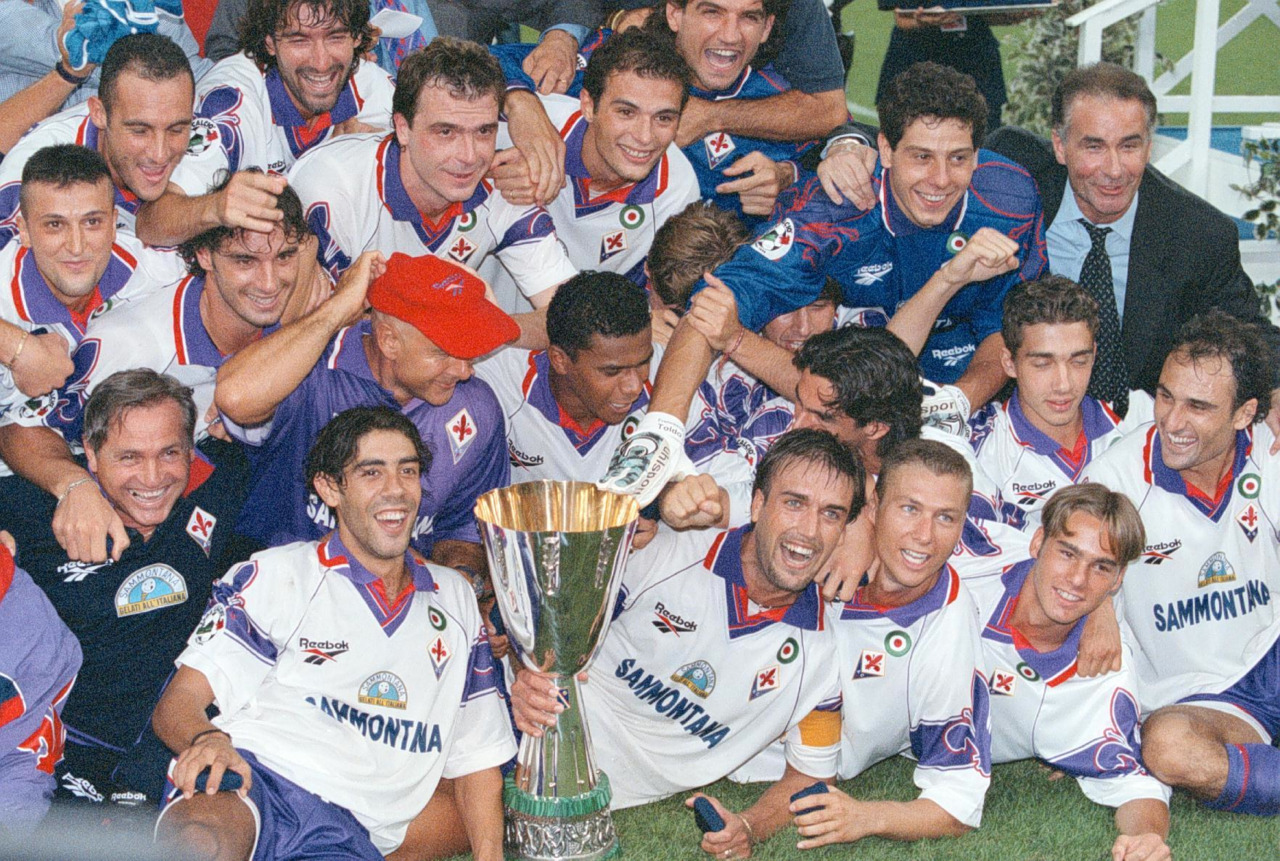
For many, Giancarlo Antognoni remains the ultimate symbol of elegance and loyalty. Roberto Baggio dazzled Florence before his emotional departure for Juventus in 1990, while Gabriel Omar Batistuta became one of the greatest strikers of his era, forming an unforgettable partnership with Rui Costa during the 1990s.
Those years brought more silverware, including the Coppa Italia in 1996 and the Italian Super Cup later that year, while Fiorentina continued to compete regularly in Europe.

Bankruptcy and rebirth
The club’s darkest moment came in 2002.
Financial collapse led to bankruptcy and the disappearance of the historic Associazione Calcio Fiorentina after 76 years. Yet football in Florence survived. A new club, Florentia Viola, was established and began again in Italy’s fourth division. Backed by extraordinary support from the city’s fans, the team quickly climbed back through the leagues, regained the Fiorentina name and returned to Serie A within two seasons. It remains one of the most remarkable revivals in European football.
A new chapter
Fiorentina’s latest chapter began in 2019, when the club was acquired by Italian-American entrepreneur Rocco Commisso. Under the new ownership, the Viola invested in infrastructure with the creation of Viola Park, one of Europe’s largest football training centres, and returned to competing for major honours in Italy and Europe.
Today, as Fiorentina celebrates its centenary, the club continues this journey under the Commisso family’s ownership, looking to build on its rich history while writing a new chapter for future generations.
A club that belongs to its city
During its first century, Fiorentina has won two Serie A titles, six Coppa Italia trophies, one Italian Super Cup and the inaugural European Cup Winners’ Cup. It has played in European finals, produced some of football’s greatest talents and inspired millions of supporters far beyond Tuscany.
Yet statistics alone do not explain what Fiorentina means to Florence.
Its history runs alongside that of the city itself: from the traditions of calcio storico, the historic Florentine ball game that predates modern football, to unforgettable nights at the Artemio Franchi, from the heartbreak of missed championships to the joy of European triumphs. The club has become part of Florence’s cultural identity as much as its artistic and architectural heritage.
One hundred years after its foundation, Fiorentina enters its second century with the same ambition that inspired its founders in 1926: to represent Florence with pride, passion and the distinctive shade of purple that has become one of football’s most recognisable colours.
(Cover photo Pedro Varela via Wikimedia)
❤️ Support Florence Daily News
If you liked this article, please consider supporting Florence Daily News.
We are an independent news site, free from paywalls and intrusive ads, committed to providing clear and reliable reporting on Florence and Tuscany for everyone.
Your support — whether a one-time gift or a regular contribution — helps us stay independent and keep telling the stories that matter.
Donate securely via Stripe below.
Make a one-time donation
Make a monthly donation
Make a yearly donation
Choose an amount
Or enter a custom amount
Your contribution is appreciated.
Your contribution is appreciated.
Your contribution is appreciated.