


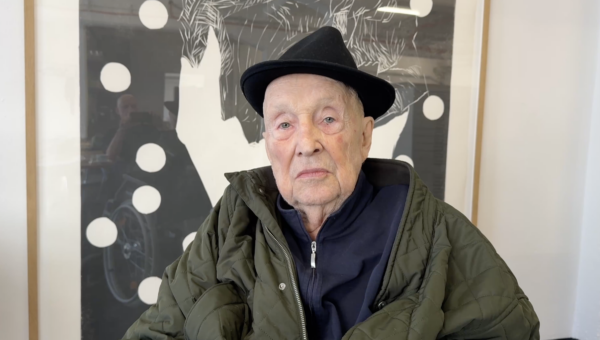
The German artist, known for turning painting upside down, died on April 30. His work is currently on display at Florence’s Museo Novecento, which is preparing further tributes in the coming months.
Florence — Georg Baselitz, one of the most influential European artists of the postwar period, has died at the age of 88. The news was confirmed on April 30 by his long-time gallery, marking the end of a career that reshaped painting from the 1960s onwards.
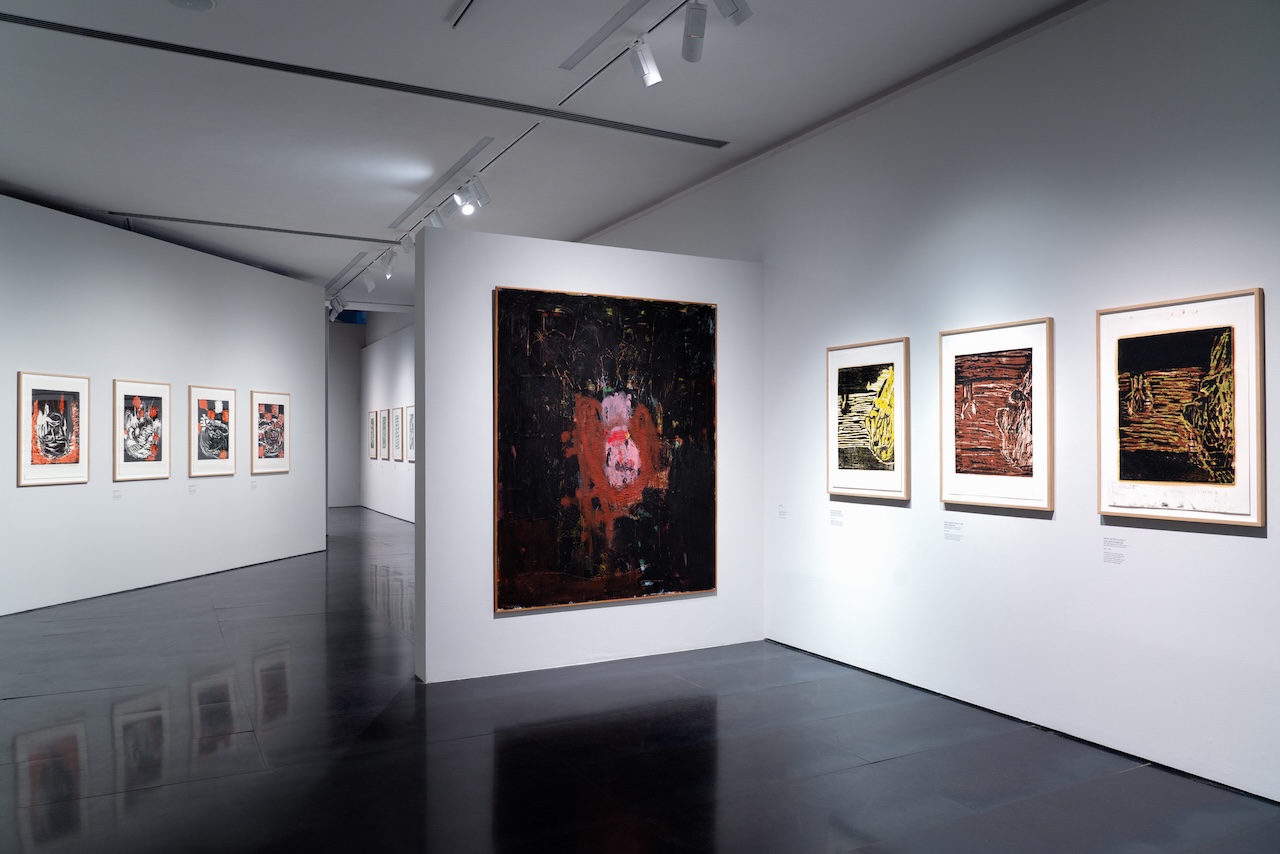
His death comes at a moment of particular significance for Museo Novecento, where the exhibition Baselitz. Avanti! is currently on view, focusing on the artist’s long relationship with Florence and his later work.
A major figure in postwar art
Born in 1938 in Saxony as Hans-Georg Kern, Baselitz grew up in a Germany marked first by Nazism and then by Soviet occupation. That experience shaped a body of work that consistently rejected order, harmony and traditional representation.
After early setbacks — including expulsion from an art academy in East Berlin — he moved to West Berlin, where he developed a radical approach to painting. His early works in the 1960s, often depicting fragmented and distorted bodies, attracted controversy and even censorship.
By the end of that decade, Baselitz introduced the gesture that would define his career: painting subjects upside down. This was not a simple provocation, but a way to detach the image from narrative and force attention onto the act of painting itself — colour, composition and gesture.
Over the following decades, he became a central figure in international contemporary art, participating in major exhibitions such as Documenta in Kassel and the Venice Biennale, and working across painting, drawing, printmaking and sculpture.

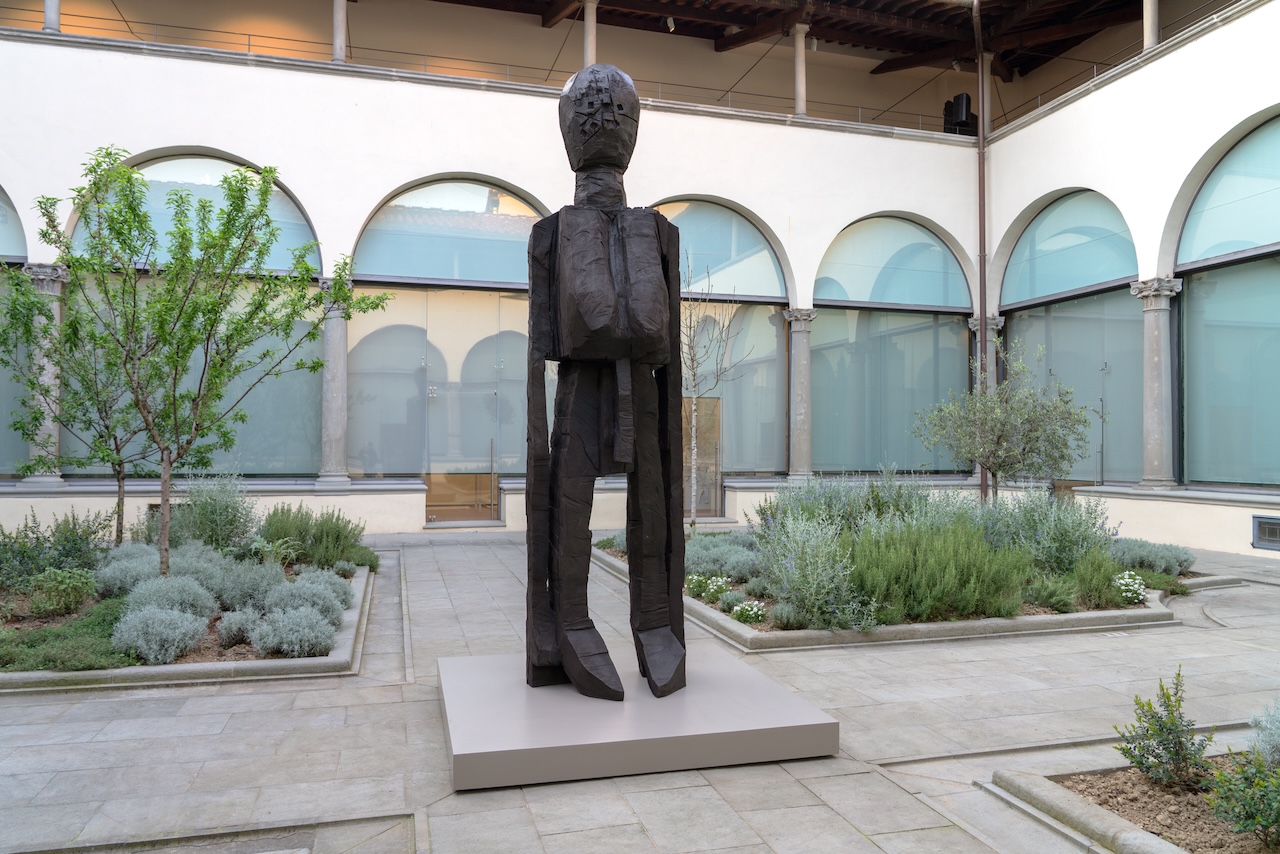
An art built on tension and disruption
Baselitz’s work is often described as raw and confrontational. His figures appear broken, inverted or unstable, reflecting what he saw as the fractured condition of postwar Europe.
Rather than seeking beauty or balance, his paintings emphasise conflict: between figuration and abstraction, control and instinct, memory and destruction. He repeatedly argued that creating new images required dismantling existing ones, placing emphasis on rupture rather than continuity.
From the “Heroes” series of the 1960s — depicting damaged, solitary figures — to later large-scale canvases painted with increasingly direct and physical techniques, his work maintained a consistent focus on tension and transformation.
A long relationship with Florence
Florence played a lasting role in Baselitz’s artistic development. He first arrived in the city in 1965, encountering Renaissance and Mannerist painting at a formative moment in his career.
According to the director of Museo Novecento, Sergio Risaliti, the artist maintained a close relationship with the city over the decades, returning repeatedly and engaging directly with its artistic heritage. In recent months, he remained involved in the preparation of the current exhibition, following its development and catalogue closely.
Shortly before his death, Baselitz also donated one of the works on display to the City of Florence, reinforcing his connection with the local cultural institutions.
Current and upcoming exhibitions
The exhibition Baselitz. Avanti! at Museo Novecento now takes on an added dimension as one of the artist’s final major projects. The show includes recent works and reflects on themes that defined his career, including inversion, repetition and reinterpretation.
Further initiatives are already planned. In September, a new exhibition is expected at Palazzo Medici Riccardi, focusing on Baselitz’s collection of Renaissance prints and drawings, alongside works on paper from the Museum of Fine Arts in Budapest.
This project highlights another aspect of his practice: a sustained interest in graphic techniques and in the history of printmaking, which began during his early encounters with Italian art.
Legacy
Baselitz leaves behind a body of work that challenged viewers and institutions for more than six decades. His refusal to conform — both stylistically and intellectually — helped redefine the possibilities of painting in the second half of the 20th century.
From the scandal of his early exhibitions to his later recognition as a leading figure in contemporary art, his career traced a path that remained deliberately unsettled.
With his death, Florence’s current exhibition becomes not only a major retrospective moment, but also part of the closing chapter of one of the most significant artistic trajectories of the postwar era.
(Cover photo: Georg Baselitz, still from the video message shared during the press conference on 24 March 2026 for the exhibition Baselitz. Avanti! at Museo Novecento)
❤️ Support Florence Daily News
If you liked this article, please consider supporting Florence Daily News.
We are an independent news site, free from paywalls and intrusive ads, committed to providing clear and reliable reporting on Florence and Tuscany for everyone.
Your support — whether a one-time gift or a regular contribution — helps us stay independent and keep telling the stories that matter.
Donate securely via Stripe below.
Make a one-time donation
Make a monthly donation
Make a yearly donation
Choose an amount
Or enter a custom amount
Your contribution is appreciated.
Your contribution is appreciated.
Your contribution is appreciated.