


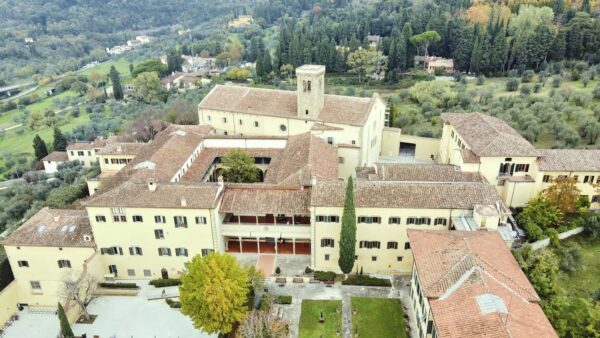
The European University Institute (EUI), founded in 1976 and based in Fiesole (Florence), now celebrating its 50th anniversary, did not develop in isolation. Its evolution closely follows the political, institutional and cultural path of European integration, including both periods of expansion and moments of crisis, and it continues to look ahead to the future of the European Union at a time of renewed political and global challenges.
A project born from early European integration
The idea of a European university emerged in 1949, at a time when countries were beginning to rebuild cooperation through initiatives such as the Council of Europe and, a few years later, the European Coal and Steel Community.
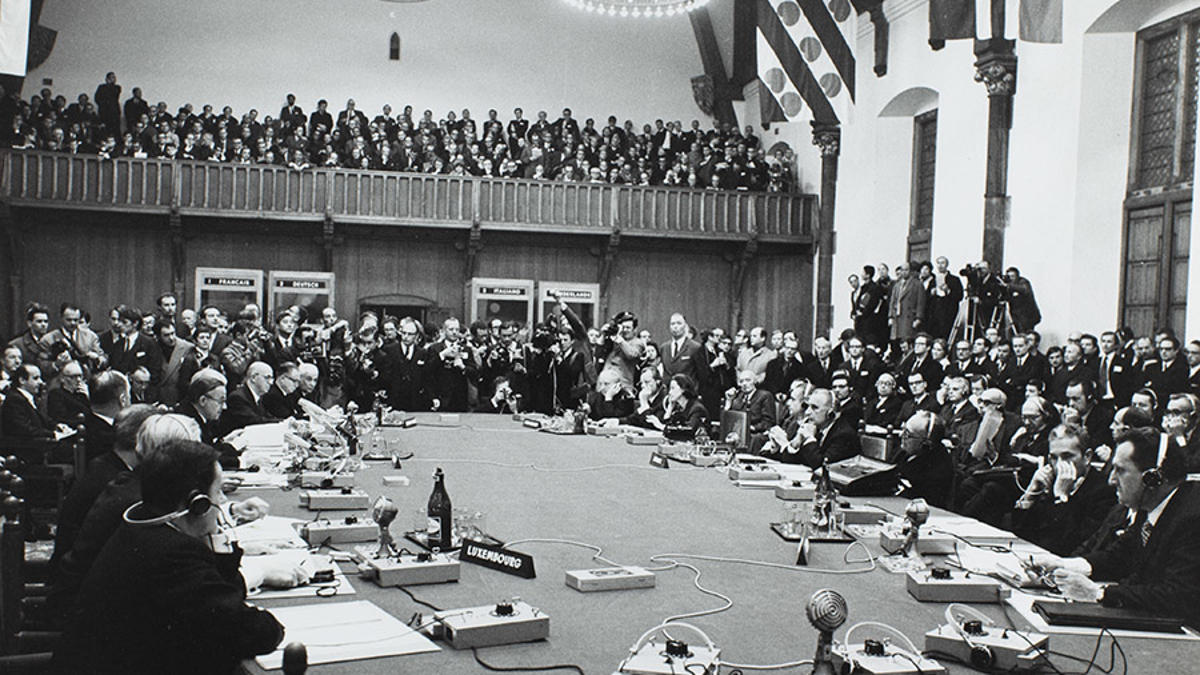
By the time of the Hague Summit of 1969, European leaders were relaunching integration after a period of stagnation. The decision to create a European university reflected the same political will that would soon lead to deeper cooperation and enlargement.

The 1970s–1980s: growth alongside the first enlargements
The EUI opened in 1976, just after the first enlargement of the European Communities in 1973, when the United Kingdom, Ireland and Denmark joined. These countries also became members of the institute shortly afterwards.
In the 1980s, as Greece (1981), Spain and Portugal (1986) entered the European Communities, the EUI expanded its membership and activities. This period also coincided with renewed momentum for integration, culminating in the Single European Act (1987), which aimed to create a single market.
At the same time, the institute strengthened its role in preserving European memory, notably through the creation of the Historical Archives of the European Union. This reflected a broader effort to define a shared European identity during a phase of political consolidation.
The 1990s: post-Cold War Europe and deeper integration
The end of the Cold War and the fall of the Berlin Wall opened a new phase for both the EU and the EUI.
The signing of the Maastricht Treaty (1992) transformed the European Communities into the European Union and introduced new areas of cooperation, including foreign policy and monetary union.
In parallel, the EUI expanded its policy-oriented research, creating centres such as the Robert Schuman Centre for Advanced Studies. Topics addressed at the time (migration, governance, environmental policy) reflected the new challenges facing a more integrated Europe.
The accession of Austria, Finland and Sweden in 1995 was also mirrored in the institute’s growing membership.
The 2000s: enlargement and institutional uncertainty
The early 2000s were marked by the EU’s largest enlargement, with countries from Central and Eastern Europe joining in 2004 and 2007. The EUI followed this expansion, welcoming new member states and reinforcing its international profile.
However, this period also saw institutional difficulties. The proposed European Constitution referendum was rejected by voters in France and the Netherlands in 2005, halting a major reform project.
While the EU entered a phase of reflection, the EUI continued to grow academically, launching programmes such as the Max Weber Fellowships and expanding its research on governance and regulation.
The 2010s: crises and new directions
The 2010s were defined by multiple crises for the EU, including the eurozone crisis, migration pressures and rising political fragmentation.
The most significant rupture came with the Brexit, formalised in 2020. The United Kingdom, one of the founding members of the EUI, also withdrew from the institute.
At the same time, the EUI adapted by strengthening its global dimension. The creation of the Florence School of Transnational Governance in 2017 reflected a shift towards issues that go beyond Europe alone, such as global policy coordination and international governance.
The 2020s: a changing Europe and renewed focus
In recent years, the EU has focused increasingly on digital transformation, information integrity and geopolitical challenges. The EUI has aligned its research with these priorities through new initiatives such as the Centre for a Digital Society.
It also hosts projects linked to EU-level policies, including the European Digital Media Observatory, which brings together researchers, fact-checkers and media organisations to monitor and analyse disinformation across Europe. The initiative reflects growing concern within the EU about the impact of online information on democratic processes.
A shared trajectory
Over five decades, the history of the EUI has remained closely tied to that of the European Union.
Periods of expansion (from the southern enlargements of the 1980s to the eastern enlargements of the 2000s) brought new members and perspectives into the institute. At the same time, moments of crisis (such as the failure of the European Constitution or Brexit) also had direct institutional consequences.
As it marks its 50th anniversary in Florence, the European University Institute stands at a moment when the European project is once again being tested. Russia’s war in Ukraine, rising trade tensions with the United States, instability in the Middle East and growing economic competition from China have all exposed the limits of fragmented responses.
In this context, the need for a stronger and more coordinated European Union has returned to the centre of political debate. Institutions such as the EUI (where generations of scholars have studied integration, governance and policy) continue to contribute to this effort by shaping ideas, training experts and fostering a shared European perspective.
Half a century after its foundation, the institute reflects a renewed awareness that European unity is not only a historical achievement, but an ongoing necessity, one that is also built through research, debate and education in places like Florence.
(Cover photo: the Badia Fiesolana is the EUI’s hub, via EUI website)
❤️ Support Florence Daily News
If you liked this article, please consider supporting Florence Daily News.
We are an independent news site, free from paywalls and intrusive ads, committed to providing clear and reliable reporting on Florence and Tuscany for everyone.
Your support — whether a one-time gift or a regular contribution — helps us stay independent and keep telling the stories that matter.
Donate securely via Stripe below.
Make a one-time donation
Make a monthly donation
Make a yearly donation
Choose an amount
Or enter a custom amount
Your contribution is appreciated.
Your contribution is appreciated.
Your contribution is appreciated.


Marco Bastiani is an Italian journalist based in Florence. He is the founder of Florence Daily News, launched in 2011, and has been working in journalism since 1998. Formerly political editor at Il Giornale della Toscana, he later took on senior communication roles in both public and private institutions. A board member of the Tuscan Foundation of the Order of Journalists and a member of ASET, the Tuscan association of food, wine and agri-food journalists, he loves the sea and Greece, and has two children.